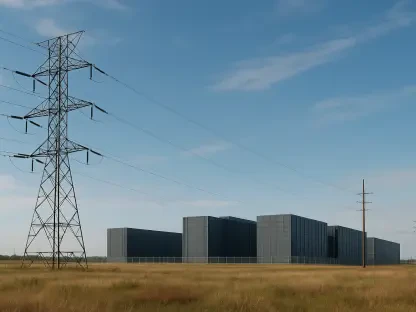

The flickering glow of sprawling data centers stretching across the Buckeye State represents a voracious appetite for electricity that the existing grid is struggling to meet without a massive overhaul. For decades, Ohio utilities were barred from owning the power plants that generate the electricity traveling through their lines, but House Bill 862 is now poised to dismantle those regulatory boundaries. This legislative pivot arrives at a time when residents have felt the sting of rising energy costs, with monthly bills jumping significantly since the beginning of the decade. By allowing companies like AEP and FirstEnergy to own and operate nuclear facilities once more, proponents hope to reclaim control over the state’s power destiny.
A High-Voltage Shift in Ohio’s Energy Playbook
The shift toward utility-owned generation marks a return to a more traditional, vertically integrated energy landscape. Under the current proposal, the state would move away from relying purely on the competitive wholesale market, which many lawmakers believe has failed to provide sufficient long-term reliability. By granting utilities the right to build and maintain nuclear assets, the legislation prioritizes massive infrastructure projects that were previously deemed too risky or expensive for the open market to handle alone. This strategy aims to create a stable environment where utility providers can plan for several decades of operation rather than reacting to short-term market fluctuations.
Furthermore, this proposal represents a tactical move to modernize the grid by integrating state-of-the-art nuclear technology directly into utility portfolios. While the previous deregulated era focused on price competition, the current focus has shifted toward securing a consistent and predictable supply of power. Advocates argue that this model allows for better coordination between generation and transmission, reducing the inefficiencies that often plague fragmented energy markets. This change essentially signals a transition from a consumer-choice focus to a state-managed reliability framework designed to support the next generation of industrial development.
Assessing the Drivers Behind the Push for Nuclear Expansion
The primary catalyst for this expansion is the rapid load growth fueled by the technology sector and its intensive energy requirements. As artificial intelligence and cloud computing continue to expand, the demand for carbon-free baseload power has reached an all-time high, making traditional fossil fuels or intermittent renewables less ideal for constant uptime. Ohio has become a hub for massive data centers, and these facilities require a “twenty-four-seven” energy source that only nuclear power can reliably provide at scale. This surge in demand has forced a reevaluation of how the state generates power to ensure that local businesses remain competitive.
Moreover, energy independence has become a central theme in the legislative debate as Ohio seeks to reduce its reliance on out-of-state resources. Relying on the regional grid often means importing power during peak periods, which can drive up costs for everyone. By incentivizing the construction of local nuclear reactors, state leaders aim to insulate Ohio from regional price spikes and supply shortages. This push toward self-sufficiency is seen as a way to protect the local economy from external market forces while simultaneously meeting ambitious goals for reducing carbon emissions across the industrial sector.
The Mechanics of Utility-Owned Reactors and Cost Recovery Models
The heart of the legislation introduces a sophisticated framework for the deployment of Small Modular Reactors through a retail participation structure. This mechanism is designed to prevent the immediate socialization of construction costs across the entire customer base. Instead, the bill requires utilities to secure long-term contracts, often spanning 20 years, with specific industrial users who agree to purchase the output of the new plants. These agreements act as a financial anchor, providing the necessary capital and certainty for utilities to break ground on multi-billion-dollar projects without placing the entire burden on residential ratepayers initially.
The bill also integrates a mechanism known as construction work in progress, which allows utilities to recover investment costs through rate adjustments while the plant is still being built. However, safeguards are included to ensure that once these initial contracts expire, the assets can be moved into the broader rate base only if the power remains competitively priced compared to market averages. This dual-layered approach attempts to balance the need for massive upfront capital with the requirement to protect captive consumers from potential cost overruns. It creates a pathway where high-usage industrial partners subsidize the early stages of development, eventually leaving the state with a permanent, reliable power asset.
Differing Perspectives: Strategic Reliability versus Ratepayer Risk
A sharp divide has emerged between utility executives and manufacturing advocates regarding the long-term implications of the bill. AEP leadership has characterized the proposal as a critical tool for navigating the massive load growth in the region, arguing that utility-owned nuclear is the only viable path to a stable, carbon-free future. From their perspective, the ability to control generation assets allows for more accurate long-term planning and ensures that the grid can meet the specific needs of high-tech industries. They contend that the previous model of deregulation is no longer sufficient to handle the scale of investment required for modern nuclear technology.
In contrast, the Ohio Manufacturers’ Association has raised significant alarms, suggesting the bill could lead to a repeat of past energy scandals that placed heavy burdens on the public. Critics argue that shifting financial risks from utility shareholders to the public creates a “moral hazard” where utilities might overbuild infrastructure based on speculative demand forecasts. There is a deep-seated concern that allowing utilities to use their own data to justify these projects could lead to the gold-plating of the grid, ultimately resulting in higher costs for businesses and homeowners. The debate highlights a fundamental disagreement over who should bear the financial burden of the state’s energy transition.
The Statutory Framework for Fast-Tracking Nuclear Site Development
To accelerate the traditionally sluggish pace of nuclear permitting, the bill establishes aggressive regulatory deadlines for state agencies. The Public Utilities Commission of Ohio is granted a strict 360-day window to review project applications, with a provision stating that a failure to rule within that timeframe results in an automatic approval. This expedited timeline is intended to provide developers with the certainty they need to move forward with complex projects. By streamlining the administrative process, the state hopes to position itself as a premier destination for advanced nuclear investment, outpacing neighboring states with more bureaucratic hurdles.
The legislation also prioritizes the repurposing of former industrial sites, such as coal mines and brownfields, for new nuclear construction. These projects benefit from even shorter permit windows of 150 days, especially when backed by state incentives like the $100 million JobsOhio Small Modular Reactor program. The decision to pursue utility-owned nuclear power signaled a major transition for the state as leaders sought to balance technological advancement with economic stability. This shift necessitated a robust investment in specialized workforce training and local supply chain logistics to sustain a nuclear-capable economy. Stakeholders recognized that a successful implementation required clear oversight to ensure that the promise of energy independence translated into tangible benefits for all residents.