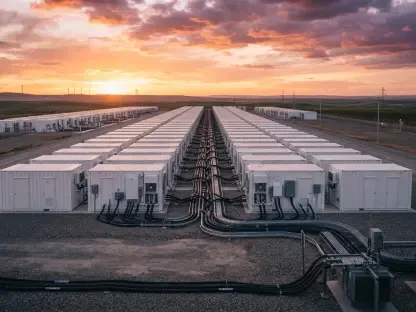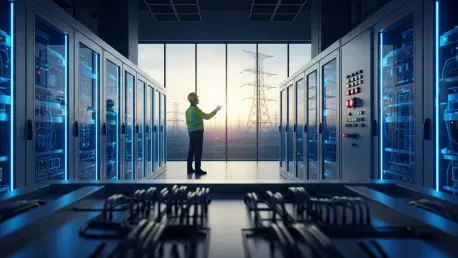

The global competition for artificial intelligence dominance has traditionally been fought in the sterile environments of semiconductor laboratories and the complex architecture of neural networks, but the battleground has now shifted to the heavy copper wires and massive transformers of the electrical grid. While the availability of high-performance graphics processing units remains a critical factor for development, the physical reality of powering these machines has become the most significant hurdle for nations seeking to lead the digital revolution. Data centers are no longer just warehouses for servers; they have transformed into massive energy sinks that require constant, stable, and high-density power delivery that many existing systems cannot provide. This fundamental shift means that the next decade of technological progress will be defined not by who has the smartest algorithms, but by whose infrastructure can sustain the immense electrical load required to run them at scale without causing systemic collapse.
Addressing the Infrastructure Bottleneck: Beyond Simple Supply
Policy discussions often simplify the energy challenge by focusing strictly on increasing generation through the construction of more nuclear plants or expansive solar farms, yet this overlooks the intricate mechanics of delivery. AI workloads do not draw power in the steady, predictable patterns of residential neighborhoods; they create massive, sudden spikes in demand that can destabilize local voltage levels and overheat aging transmission equipment. The issue is not merely the total volume of gigawatts available in the national portfolio, but the ability of the existing conduit to transport that energy to specific clusters of compute-heavy infrastructure. Without a more sophisticated approach to grid balancing and high-voltage direct current expansion, the sheer density of modern server farms will continue to outpace the thermal limits of traditional copper-based distribution networks. Merely adding supply to a congested system is akin to pouring more water into a narrow, leaking pipe.
Indicators from regional transmission organizations like PJM Interconnection suggest that the electrical infrastructure in many developed regions is currently operating at or near its thermal limits. The rapid integration of high-density racks, which can consume upwards of 100 kilowatts each, has created localized energy deserts where new projects are being deferred by several years due to a lack of available interconnection capacity. Research institutes are warning that the reserve margins—the buffer of extra power available during peak demand—are shrinking to dangerously low levels in tech hubs across Northern Virginia and the Silicon Valley. These pressures are compounded by the volatility of renewable energy sources, which do not always align with the 24/7 uptime requirements of large-scale language model training. The resulting strain on the system creates a fragile environment where even minor mechanical failures can lead to widespread outages for both industry and residents.
Rethinking Grid Strategy: Modernization for National Security
Energy infrastructure has rapidly evolved into a cornerstone of national security, prompting new federal initiatives to prioritize the hardening and modernization of the transmission backbone. To remain competitive in the global race for computational supremacy, the strategic focus is moving toward the deployment of advanced conductors and superconducting materials that can carry more current with less heat loss. This shift represents a transition from a reactive model of utility management to a proactive engineering strategy that treats the grid as a programmable asset. Integrated system designs are being developed to allow data centers to act as flexible loads that can throttle their consumption based on real-time grid health, essentially turning massive server clusters into stabilizers rather than stressors. Success in this area requires a departure from the slow, decadal planning cycles of traditional utilities in favor of the rapid, iterative deployment cycles seen in the hardware sector.
Future leadership in the digital economy will be defined by a fundamental shift in how regulators and utility providers quantify the value of an electrical system. Instead of focusing solely on the total capacity or raw megawatt counts, the industry must begin to prioritize operational flexibility and the ability to respond to sub-second fluctuations in load. Developing frameworks that incentivize the use of grid-enhancing technologies, such as dynamic line ratings and power flow controllers, will be essential for maximizing the utility of existing assets without waiting for lengthy permitting processes. These innovations allow for a more granular control over how power is routed through the network, ensuring that high-priority AI workloads receive the stability they require while protecting the broader public interest. By integrating digital twin technology into grid management, operators can simulate the impact of new data centers before they come online.
The New Ceiling: Physical Limits of the Digital Economy
The structural integrity of the power system will ultimately dictate the geographic and economic boundaries of the digital economy for the remainder of this decade. While the international competition for cutting-edge silicon remains intense, the power grid is proving to be the more decisive factor in determining which regions can actually deploy those chips at scale. A nation might possess the most advanced software engineers and the most efficient algorithms, but if the local utility cannot provide a reliable 500-megawatt connection, that intellectual capital remains trapped in a theoretical stage. This physical constraint has already begun to drive data center operators toward unconventional locations where power is abundant, even if the climate or labor market is less than ideal. If energy systems cannot evolve into a high-performance architecture, the grid will become a hard ceiling that halts innovation, effectively neutralizing any advantages gained in hardware or software design.
To navigate these challenges, stakeholders prioritized the implementation of long-duration energy storage and the decentralization of the power architecture to prevent single points of failure. Engineers moved away from relying on centralized coal and gas plants, instead opting for a modular approach that utilized small modular reactors and onsite microgrids to provide dedicated power for mission-critical AI operations. Regulatory bodies reformed the permitting processes to accelerate the construction of interstate transmission lines, recognizing that energy mobility was as vital as energy generation. Furthermore, the industry adopted standardized protocols for grid-interactive buildings, allowing large facilities to communicate directly with the utility to balance supply and demand dynamically. These actions shifted the focus from merely surviving the energy surge to leveraging it as a catalyst for a more resilient and responsive electrical ecosystem. The integration of technology and infrastructure became the primary driver.