
In the quiet stretches of the American heartland, a fundamental promise of modern civilization—the delivery of safe, reliable drinking water—is beginning to fracture under the weight of decades of neglect and economic isolation. For thousands of families living in rural communities, the simple act of turning on a kitchen faucet has become a gamble, often resulting in a stream of discolored fluid that serves as a visceral reminder of a failing system. These small-scale utilities, which often serve fewer than three thousand residents, are currently facing a convergence of crises that threaten to leave entire regions without basic services. While large metropolitan areas have the tax base and technical expertise to overhaul their aging pipes, these smaller providers are often trapped in a cycle of reactive repairs and chronic underfunding. The situation is no longer a distant concern for civil engineers; it has evolved into a public health emergency that demands immediate national attention to prevent a total collapse.
Economic Volatility and the Financial Instability of Small Utilities
Credit Constraints: The Widening Financial Divide
The financial landscape for small water providers has shifted dramatically, as major credit rating agencies have recently moved their outlook for the sector to negative. For the first time in recent history, small utilities are being singled out for their lack of financial resilience compared to larger metropolitan systems that benefit from diversified revenue streams and higher customer density. Statistics indicate that a significant majority of credit downgrades in the water industry are now concentrated in these smaller systems, creating a precarious environment where borrowing money for critical repairs becomes prohibitively expensive. This loss of creditworthiness creates a feedback loop where systems cannot afford to fix the very issues that are causing their financial decline. Without access to affordable capital, many of these utilities find themselves unable to implement anything beyond temporary patches for systemic failures that require complete overhauls.
Revenue Gaps: The Realities of the Expense Squeeze
This financial crisis is further exacerbated by a severe expense squeeze, where the cost of maintaining operations is rising much faster than the revenue collected from the local customer base. Inflationary pressures on essential water treatment chemicals, such as chlorine and specialized filtration media, have increased operating budgets by double digits in just the last few years. Furthermore, federal trade tariffs have added layers of cost to essential equipment like valves and pumps, many of which must be sourced from specialized manufacturers. Because fewer than half of these small utilities currently charge enough to cover their basic operating and maintenance costs, they remain trapped in a cycle of mounting debt. Raising rates in low-income or aging rural populations is often a political and moral impossibility, leaving managers with no choice but to defer maintenance, which only guarantees more expensive and catastrophic failures in the near future.
Supply Chain Pressures: Navigating Material Scarcity
Beyond the immediate financial costs, the logistical challenges of maintaining rural water systems have become increasingly complex due to persistent supply chain vulnerabilities. Small utilities often lack the purchasing power to secure priority from vendors, meaning they must wait months for essential replacement parts that larger cities can acquire in weeks. This delay is particularly dangerous during emergency pipe bursts or treatment plant failures, where every hour of downtime risks contaminating the local supply. The increased lead times for specialized components like high-pressure fittings and electronic monitoring sensors have forced some operators to scavenge parts from decommissioned equipment or rely on outdated technology that is less efficient. These hurdles do not just increase costs; they undermine the basic reliability of the water supply, forcing residents to live under persistent boil-water advisories while the utility waits for a single, critical component.
The Physical Decay of Aging Infrastructure Networks
Systemic Failure: The End of the Infrastructure Life Cycle
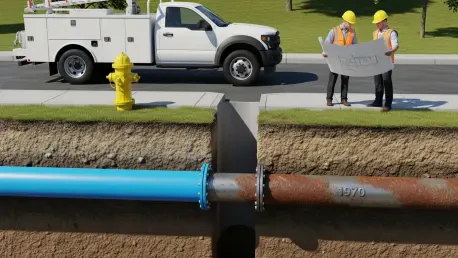
The physical backbone of the nation’s rural water supply is rapidly reaching the end of its useful life, with much of the infrastructure dating back to the major construction boom of the 1970s. These fifty-year-old pipes, treatment plants, and reservoirs are beginning to fail simultaneously, creating a wave of infrastructure collapse that many small municipalities are completely ill-equipped to handle. The lack of routine maintenance over the past several decades means that when components break, they often do so in a catastrophic fashion that requires immediate, high-cost intervention. In many towns, the underground network is so fragile that fixing one leak can cause the pressure to shift and trigger a series of new bursts elsewhere in the system. This cascading failure is a symptom of a network that has been pushed far beyond its intended lifespan, yet the sheer scale of the replacement task often overwhelms the logistical and financial capacity of local governments.
Environmental Stress: Climate Impacts on Rural Pipes
Natural wear and tear on these aging systems is being compounded by the increasing frequency of extreme weather events, which place unprecedented physical stress on vulnerable networks. Droughts followed by intense rainfall can cause rapid shifts in soil moisture, leading to ground movement that easily snaps brittle, decades-old cast iron pipes. Similarly, record-breaking freezes in regions not traditionally prepared for such temperatures have led to widespread service interruptions as shallow lines succumb to the frost. These environmental shocks often result in repair bills that can instantly wipe out a small town’s entire annual budget, leaving nothing for proactive improvements. At the same time, the increasing presence of contaminants in raw water sources, exacerbated by agricultural runoff and industrial changes, requires more sophisticated treatment processes that many older facilities simply cannot accommodate without a total and costly reconstruction of their filtration systems.
Regulatory Burdens: Compliance in an Era of New Standards
Small water systems are also struggling to keep pace with evolving federal safety mandates, particularly those regarding the mitigation of forever chemicals and the replacement of lead service lines. While these regulations are essential for protecting public health, the financial and technical requirements for compliance are staggering for a utility with only a handful of employees. Implementing the specialized charcoal or reverse osmosis filtration systems needed to remove per-fluoroalkyl substances requires millions of dollars in capital investment and significant increases in ongoing energy costs. For many small towns, the administrative burden of testing and reporting alone is enough to overwhelm their skeletal staffs. This creates a paradox where the communities with the most pressing health risks are also the ones least able to afford the modern technology required to mitigate them, leading to a growing disparity in water quality between wealthy urban centers and the rural periphery.
Barriers to Accessing Federal Infrastructure Support
Technical Deficits: The Administrative Gap in Funding
A major obstacle for these struggling systems is a total lack of administrative and technical capacity, as many are managed by part-time staffs or volunteer boards with no formal training in engineering. Unlike large cities, small towns often lack digital records of their infrastructure, sometimes relying on hand-drawn paper maps or the institutional memory of a single long-term employee who may be nearing retirement. This lack of comprehensive data makes it nearly impossible for them to navigate the complex paperwork and rigorous environmental audits required to apply for federal grants or low-interest loans. Without professional grant writers or staff engineers to conduct feasibility studies, these communities are often disqualified from funding opportunities before they even submit an application. This structural disadvantage ensures that federal investment continues to flow toward the most organized and well-resourced systems, rather than the ones in the greatest state of physical distress.
Policy Gridlock: The Challenge of Fund Distribution
The political debate over the allocation of federal infrastructure funds further complicates the crisis, as lawmakers frequently weigh significant cuts to the primary pools used for water projects. While some officials argue that states are sitting on billions of dollars in unspent capital, industry experts point out that this uncommitted money exists because small utilities lack the specialized assistance needed to access it. There is a fundamental mismatch between the high-level policy goals of the federal government and the on-the-ground reality of a rural utility clerk who does not have the software or time to complete a multi-hundred-page application. Without a streamlined process for distributing these funds and dedicated technical assistance programs, the communities that need the most help will continue to be bypassed. The result is a widening gap where state-level funding remains stagnant while the actual cost of bringing these systems into the modern era continues to escalate.
Regional Consolidation: Scaling for Long-Term Stability
Many industry analysts believe that regional consolidation offers the most realistic path forward for small, failing utilities to achieve long-term operational stability. By merging several tiny systems into a larger regional authority, communities can achieve economies of scale that allow for better credit ratings and the ability to hire professional, full-time technical staff. Research suggests that there is a specific target size for water systems where quality violations drop off significantly, making these merged entities much more resilient to economic shocks and environmental pressures. However, the transition to a consolidated model is rarely straightforward and often faces significant local political resistance from residents who fear losing control over their local resources. Furthermore, the initial cost of physically connecting disparate systems and upgrading their shared infrastructure requires a massive upfront investment that remains a significant hurdle for most state legislatures.
Strategic Frameworks for National Water Security
The resolution of the infrastructure crisis required a fundamental shift toward proactive management and the integration of small systems into more resilient regional networks. It was observed that the most successful transitions occurred when states provided dedicated technical assistance teams to handle the administrative complexities of federal grant applications on behalf of rural municipalities. By standardizing the data collection process and digitizing old paper records, these programs allowed small towns to finally compete for the capital needed to replace their failing 1970s-era assets. Policymakers also recognized that financial stability could not be achieved through rate hikes alone; instead, they implemented tiered funding models that incentivized consolidation while protecting the most vulnerable populations from sudden cost increases. These actions demonstrated that solving the water crisis was not merely a matter of engineering, but a commitment to ensuring that geographical location did not determine the safety of a citizen’s basic necessities.