
Beneath the wide, cloudless horizons of the Texas Panhandle, a silent industrial revolution is unfolding that threatens to fundamentally redraw the boundaries of the state’s infrastructure and its relationship with natural resources. For decades, the Lone Star State lured businesses with the promise of cheap land and a deregulated grid, but the current appetite for high-performance computing has created a demand so voracious that it challenges the very logic of industrial growth. This expansion represents much more than a simple scaling of the technology sector; it is a digital transformation that forces a state built on the legacy of oil and gas to reckon with a future powered by silicon and complex algorithms. The arrival of massive data centers is no longer a localized economic boon but a statewide concern that touches everything from the reliability of the light switch to the sustainability of the local aquifer.
The suddenness of this transition has caught many off guard, as the speed of technological development outpaces the ability of physical infrastructure to adapt. In just a few short years, the narrative of Texas as a land of limitless energy has been tested by the sheer scale of connection requests landing on the desks of state grid operators. As the global race for artificial intelligence supremacy accelerates, the state finds itself at the epicenter of a conflict between economic ambition and resource reality. The stakes are high for every resident, as the decisions made in corporate boardrooms in Silicon Valley now directly impact the utility bills and environmental security of families from El Paso to Texarkana.
This unfolding scenario is not merely a technical challenge for engineers but a profound socioeconomic shift that requires a new framework for governance and conservation. While state leadership continues to champion industrial recruitment, the localized impacts in rural and suburban counties are beginning to generate a groundswell of concern regarding noise, land use, and the equitable distribution of costs. As the digital and physical worlds collide, the following analysis explores how Texas is attempting to navigate this unprecedented surge in demand while preserving the resources that make the state a viable home for millions.
A Digital Tsunami Threatening to Consume One-Third of the National Power Supply
The sheer magnitude of the current energy demand is best reflected in the startling reality of 519 new connection requests currently under review by the Electric Reliability Council of Texas. These projects, if fully realized, would represent a collective power drain that exceeds the total energy consumption of New York and California combined. This is not a gradual increase but a vertical spike in demand that characterizes an “unprecedented pace of growth” within the state’s industrial landscape. The shift has transformed Texas from a standard internet market into a global battleground for artificial intelligence, where developers are scrambling to secure every available megawatt of capacity.
This staggering 438,595-megawatt demand represents a figure so large that it challenges the physical and theoretical limits of the state’s energy infrastructure. To provide context, the entire peak demand of the Texas grid during a record-breaking summer heatwave usually hovers around 85,000 megawatts. The fact that proposed data centers are asking for more than five times the current total grid capacity suggests a speculative gold rush that could fundamentally destabilize the reliability of power delivery for everyone else. While many of these projects may never break ground, the sheer volume of interest indicates that the “standard” rules of energy planning no longer apply in the age of hyperscale computing.
The transformation of the Texas landscape is visible not just in spreadsheets but in the physical construction of massive, windowless structures that now dot the horizon in areas once reserved for agriculture or ranching. These facilities are the front lines of a global AI battleground, where the need for computational power is being prioritized over nearly every other form of industrial or residential consumption. The speed at which these projects are moving through the pipeline is straining the ability of regulators to assess the long-term cumulative impacts, creating a sense of urgency among grid officials who are tasked with maintaining a delicate balance between supply and demand.
The Evolution of Texas From a Cloud Hub to an AI Super-Region
The fundamental technological shift driving this boom is the transition from traditional cloud storage to high-intensity generative artificial intelligence computing. In the past, data centers were primarily designed for the “cold storage” of emails, photos, and basic website data, which required relatively modest amounts of electricity. However, the current wave of facilities is built to house high-density clusters of specialized processors that work around the clock to train and run complex AI models. This change in function has necessitated a massive increase in power density, turning what were once quiet warehouses into energy-intensive industrial complexes.
Major tech entities such as Meta, Amazon, and Google are prioritizing the Lone Star State for their next-generation facilities due to its unique combination of available land and a flexible regulatory environment. Texas is currently on a trajectory to surpass Virginia as the world’s largest data center market by 2030, a milestone that reflects the state’s aggressive stance on business recruitment. Yet, this success has created what experts call the “Texas Paradox,” where the very pro-business policies that attracted the tech giants are now creating an urgent need for the kind of resource management and regulation that the state has traditionally avoided.
This evolution into an AI super-region means that Texas is no longer just a participant in the digital economy; it is the engine room that powers it. The strategic movement of these facilities into the state highlights a belief that Texas can provide the scale required for the next decade of digital growth. However, this status comes with a high price tag in terms of infrastructure strain. Balancing the desire for economic dominance with the need to protect the grid and water supply is becoming the defining challenge of the current era, as state officials attempt to keep the lights on for residents while fueling the most energy-hungry industry in human history.
Assessing the Infrastructure Impact: Megawatts, Millions of Gallons, and Urban Sprawl
The power requirements of modern artificial intelligence facilities represent a five-fold increase over their predecessors, a shift that has profound implications for local infrastructure. Unlike traditional office buildings or manufacturing plants, a single hyperscale data center can consume as much electricity as a medium-sized city. These facilities operate twenty-four hours a day, providing a constant “base load” that places relentless pressure on the power grid. As these behemoths multiply, the cumulative effect is a thinning of the margins for grid reliability, leaving less room for error during extreme weather events or equipment failures.
Examining specific case studies reveals the staggering scale of these “behemoth” projects. In Amarillo, the Fermi America project is designed for a capacity that could satisfy the energy needs of over two million homes, effectively creating a virtual metropolis that produces nothing but data. Similar projects in Abilene and Pecos County rival the energy consumption of major metropolitan areas, yet they offer only a fraction of the permanent employment that a traditional industrial plant would provide. This disparity between resource consumption and community benefit is fueling a debate over whether the state is trading its future stability for the short-term gains of construction jobs and temporary tax revenue.
Water scarcity concerns are also mounting as these data centers transition from minor consumers to an industry that rivals the entire manufacturing sector in water usage. Data centers require millions of gallons of water for evaporative cooling systems to keep their high-performance processors from overheating. In an arid state like Texas, where the water supply is already under stress from drought and population growth, the introduction of massive new water users is causing alarm. Furthermore, the strategic movement of these facilities into unincorporated areas allows developers to bypass local zoning and regulatory hurdles, leaving rural communities with limited power to protect their local resources from industrial overreach.
ERCOT’s Strategy and the Economic Reality for Residential Taxpayers
The leadership at the Electric Reliability Council of Texas is currently attempting to manage what CEO Pablo Vegas has described as a “tsunami” of energy demand. To maintain grid reliability, the council is moving toward a more structured review process that evaluates connection requests in batches rather than on a first-come, first-served basis. This shift is intended to provide a clearer picture of the cumulative impact on the state’s transmission infrastructure. However, the speed of the AI boom is so intense that even these revised strategies are struggling to keep pace with the sheer volume of new megawatts being added to the queue.
To filter out speculators and ensure that only serious projects proceed, ERCOT has implemented what some call the “Seawall” strategy. This involves the introduction of fifty-thousand-dollar-per-megawatt fees for connection studies and strict requirements for developers to prove they already own the land for their proposed sites. These financial and logistical hurdles are designed to discourage companies from “squatting” on grid capacity that they do not intend to use immediately. While these measures may thin the herd of speculative developers, they do not address the fundamental problem of how the state will generate enough power to meet the needs of the legitimate projects that do move forward.
The financial burden of this massive industrial expansion often falls directly on the shoulders of residential electric bill payers. Building the high-voltage transmission lines and substations required to serve a multi-gigawatt data center campus costs billions of dollars, and these costs are typically distributed across the entire customer base of the utility. This reality has sparked a debate over the equity of the current system, as households are effectively subsidizing the infrastructure for some of the wealthiest corporations on earth. This financial anxiety is compounded by the lingering legacy of the 2021 winter storm, which left many Texans skeptical of any plan that increases the load on an already fragile and expensive power grid.
Strategies for Resource Conservation and Navigating the Regulatory Vacuum
One of the primary strategies for mitigating the impact of the data center boom involves the implementation of “closed-loop” cooling systems. Unlike traditional evaporative cooling, which loses millions of gallons of water to the atmosphere, closed-loop systems recycle their cooling fluid, significantly reducing the facility’s water footprint. While these systems are more expensive to install and operate, they are becoming a necessity in regions of Texas where water rights are contested or supplies are dwindling. Transitioning to water-efficient cooling is a critical step in ensuring that the digital economy does not come at the expense of the state’s agricultural and municipal water needs.
The current situation has also highlighted a significant statutory gap that leaves county officials largely powerless against industrial overreach in rural, unincorporated areas. Unlike cities, which have robust zoning and permitting powers, Texas counties have limited authority to regulate the location or intensity of industrial development. This regulatory vacuum has allowed massive data centers to emerge in quiet rural communities, often with very little public input or environmental oversight. Governance reform at the state level is increasingly seen as a necessity to provide local leaders with the tools they need to balance economic development with the preservation of their communities’ quality of life.
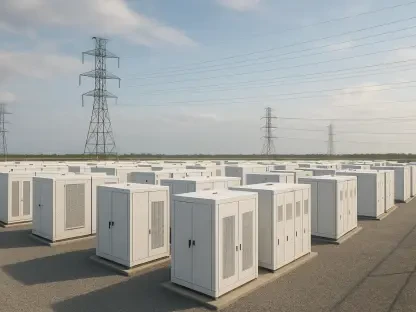
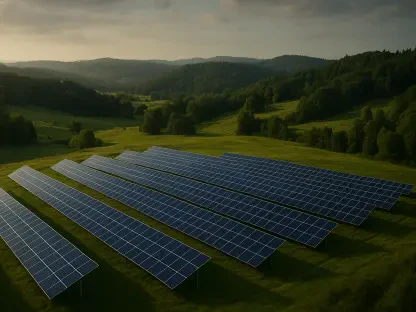
Grid modernization tactics are also being deployed to offset the massive AI load, including incentives for developers to build on-site generation. By incorporating gas-fueled generators, solar farms, and large-scale battery storage directly into their campuses, data center operators can reduce their reliance on the public grid during times of peak demand. This “microgrid” approach can help stabilize the larger system and provide a layer of redundancy that benefits the entire region. Ultimately, successful community engagement strategies must move beyond the promise of tax revenue and focus on a holistic approach to resource management that respects the limits of the Texas landscape.
The legislative response following the initial surge in connection requests focused heavily on redefining the rules of engagement between high-tech industries and the state’s power providers. Regulators eventually implemented a tiered system of connection fees that required large-scale users to pay a greater share of the infrastructure costs they necessitated. This shift allowed for the expansion of the transmission network without placing the entire financial burden on residential households, who had previously subsidized industrial growth. The state also prioritized the development of “dual-fuel” facilities that could operate independently of the grid during emergency situations, which enhanced the overall resilience of the energy market.
This period of rapid expansion taught state officials that the era of unrestricted energy growth had reached its natural limit, necessitating a more disciplined approach to resource allocation. Public-private partnerships emerged as the primary vehicle for funding water-recycling infrastructure, ensuring that the technology sector did not deplete the aquifers essential for agriculture. The transition to a more sustainable model of data center development helped preserve the state’s reputation as a business hub while addressing the very real anxieties of its citizens. By the time the dust from the AI boom finally settled, the state had successfully integrated its digital ambitions with a renewed commitment to environmental and infrastructural stability.