
The volatile intersection of climate risk and corporate solvency has reached a fever pitch in California as the state’s primary utilities struggle to balance clean energy goals against a mountain of wildfire litigation. This precarious situation was underscored by the recent legislative deadlock in Sacramento, where the failure to establish clear liability protections has left the energy sector in a state of financial suspension. As the current landscape evolves, the relationship between regulatory stability and market confidence has become the primary driver of utility strategy and public policy advocacy.
The Financial Landscape and Legislative Stalemate
Quantifying the Economic Strain and Market Volatility
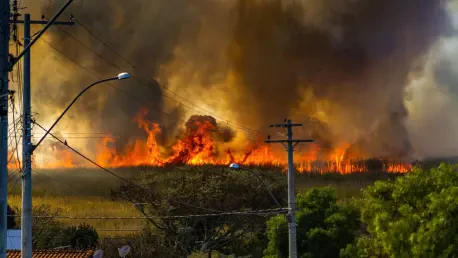
The sudden 23% plunge in Edison International’s market value this past September served as a stark reminder that financial markets have little patience for legislative hesitation. Following the California Legislature’s refusal to advance Governor Newsom’s liability cap proposal, the utility remains exposed to the compounding weight of legal claims. The fiscal pressure is exemplified by the 2025 Eaton Fire, which resulted in $1.8 billion in gross losses and sparked a legal battle involving 2,000 active lawsuits and roughly 38,000 plaintiffs.
This litigation uncertainty creates a cascading effect on the cost of capital, manifesting as a “credit spread” penalty that impacts every ratepayer in the state. Financial analysts suggest that the ongoing ambiguity could force utilities to pay an additional $300 million in interest for future bond issuances. These elevated borrowing costs effectively act as a hidden tax, diverting funds away from essential grid improvements and toward the servicing of debt necessitated by a volatile legal environment.
Case Studies in Utility Resilience and Risk Management
Despite these significant headwinds, Southern California Edison (SCE) continues to navigate its 2026-2030 capital plan with operational focus. The utility reported $1.88 billion in year-to-date core earnings, demonstrating that the underlying business remains robust even as settlement obligations mount. However, these earnings are increasingly viewed through the lens of liability risk, with investors questioning how much of this capital will ultimately be redirected toward resolving historical claims rather than building future infrastructure.
Strategic resource allocation has become the primary defense mechanism against these systemic risks. SCE has earmarked 12% of its $41 billion five-year budget specifically for wildfire management and another 22% for infrastructure replacement. While the California Wildfire Fund serves as a temporary liquidity bridge, leadership argues that this mechanism is insufficient for long-term solvency. The fund acts as a buffer but does not address the root cause of the liability crisis, which is the unpredictable nature of shareholder exposure in the current legal framework.
Expert Perspectives on Policy and Fiscal Stability
CEO Pedro Pizarro has been vocal about the dire and escalating impacts of legislative delays, noting that the regional economy cannot sustain the current level of uncertainty. Pizarro and other industry leaders emphasize that a definitive cap on shareholder liability is the only way to restore the sector to a position of stability. They argue that without a durable liquidity source independent of existing state funds, utilities will remain in a state of perpetual financial defensive maneuvering, unable to commit to the large-scale projects required for California’s modern grid.
CFO Aaron Moss has focused his advocacy on the preservation of credit ratings, which he identifies as the backbone of the energy transition. Moss warns that if a durable liability framework is not established by the 2026-2027 legislative window, the resulting credit downgrades will make clean energy investments prohibitively expensive. The push for regulatory reform is not merely a corporate priority but a fiscal necessity to prevent the crowding out of electrification efforts by safety compliance costs and litigation settlements.
The Future of Utility Stability and the Energy Transition
The most significant threat posed by the lack of liability reform is the potential derailment of California’s decarbonization timeline. When utilities are forced to pivot capital toward immediate legal settlements, the investment in electric vehicle infrastructure and renewable energy integration naturally suffers. This conflict of priorities places the state’s environmental goals in direct competition with its wildfire safety requirements, creating a zero-sum game that threatens long-term climate progress.
Looking at the legislative outlook for 2026-2027, the emergence of a durable liquidity source remains the most anticipated development for the energy sector. There is a growing risk of a “utility death spiral,” where the rising costs of insurance and litigation drive customer rates to a level that makes the clean energy transition unaffordable for the public. If California can resolve this liability crisis, the resulting framework could serve as a global blueprint for other regions struggling with the systemic risks of climate-driven disasters.
Summary and the Path Forward
The intersection of utility solvency, legal reform, and state climate goals remained a critical focal point for policymakers and investors alike. It was understood that the ability to fund a green future was inextricably linked to resolving the financial burdens of the past. Stakeholders recognized that legislative intervention was the only viable path to stabilize the energy sector and protect the regional economy from systemic collapse.
The discussion moved from temporary liquidity measures toward a focus on permanent structural changes that could decouple wildfire risk from grid investment. Legislative bodies were encouraged to act decisively to ensure that the clean energy transition did not become a casualty of legal uncertainty. Ultimately, the resolution of the wildfire liability crisis was seen as a prerequisite for maintaining the state’s position as a leader in global climate policy.