
The rapid expansion of artificial intelligence and cryptocurrency mining is currently pushing the Texas electricity grid to its absolute breaking point as developers scramble to secure massive amounts of power for their facilities. As of 2026, the state is witnessing a gold rush of data center construction, fueled by the global race for computational supremacy and the decentralized finance boom. While these industries bring significant investment and high-tech jobs to the region, they also introduce a level of volatility that the Electric Reliability Council of Texas (ERCOT) was never originally designed to handle. Grid managers are now tasked with the monumental challenge of integrating these gigawatt-scale loads without compromising the stability that millions of residents rely on for their daily lives. The central conflict lies in how these massive facilities interact with the grid during times of stress, particularly their tendency to disconnect almost instantly when they detect minor electrical anomalies.
Technical Foundations: The Physics of Power Stability
Frequency Imbalance: The Domino Effect
Maintaining a consistent frequency of exactly 60 hertz is the fundamental requirement for any modern power grid to function without damaging equipment or causing blackouts. In the Texas ecosystem, which operates largely as an isolated energy island, this balance is exceptionally delicate because there are limited avenues to import emergency power from neighboring states. When a large industrial user, such as a massive AI training cluster, suddenly stops drawing power, it creates an immediate surplus of electricity relative to the current demand. This surplus causes the grid’s frequency to spike, much like a car engine revving out of control when the transmission is suddenly shifted into neutral. If the spike is high enough, it can trigger protective relays at other power plants, leading to a chain reaction where generators shut down to protect themselves, potentially resulting in a widespread “cascading outage” across the entire state.
The sheer scale of modern crypto and AI operations has transformed this theoretical risk into an immediate operational nightmare for grid controllers who must manage second-by-second fluctuations. Some of the newest facilities proposed for the Texas market are designed to consume upwards of one gigawatt of power, which is roughly equivalent to the entire output of a large nuclear reactor or the energy used by hundreds of thousands of homes. If such a concentrated load were to vanish from the grid in a matter of milliseconds, the resulting frequency surge would be so violent that existing mechanical backup systems might not react fast enough to compensate. This has led to the proposal of strict “ride-through” regulations, which would mandate that these high-capacity data centers remain connected during minor voltage sags or frequency deviations, effectively forcing them to act as a stabilizing anchor rather than a volatile variable.
Automated Systems: The Vulnerability of Rapid Response
The vulnerability of the grid is exacerbated by the highly sophisticated software that governs how data centers protect their own expensive hardware from electrical fluctuations. Modern servers and specialized AI chips are incredibly sensitive to changes in power quality, and as a result, many facilities are equipped with automated “tripping” mechanisms that disconnect the entire building from the grid at the first sign of a flicker. While this protects the multi-million dollar investments of tech companies, it places a massive burden on the public infrastructure by dumping a sudden excess of energy back into the system. From a technical standpoint, the goal of ERCOT is to transition these facilities from being “unreliable loads” to “controllable resources” that can actually help the grid during times of peak demand through coordinated response programs.
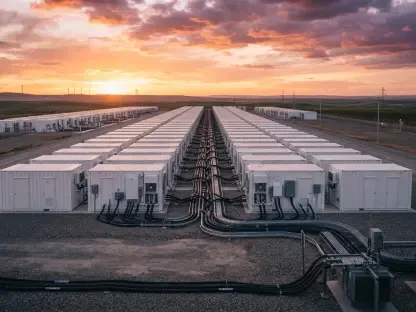
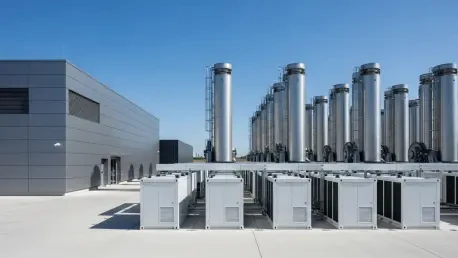
However, the implementation of these stabilizing technologies is not as simple as flipping a switch or updating a piece of software in a central office. To comply with the proposed “ride-through” mandates, many data center operators would need to install massive banks of capacitors, uninterruptible power supplies (UPS), and flywheel energy storage systems to bridge the gap during grid disturbances. These engineering solutions are designed to absorb small shocks and keep the servers running even when the incoming voltage dips, but they represent a significant capital expenditure and a departure from standard data center architecture. Without these upgrades, the risk remains that a single software glitch or a minor lightning strike on a transmission line could trigger a massive load drop that sends ripples through the entire Texas energy market, proving that the digital economy and the physical grid are now inextricably linked.
Economic Realities and Regulatory Friction
Infrastructure Costs: The Billion-Dollar Compliance Gap
The proposed regulations have sparked a fierce debate among tech giants and crypto miners who argue that the financial burden of these mandates could stifle the very innovation that Texas has spent years attracting. Companies like Google and Meta have voiced concerns that retrofitting existing data centers or designing new ones to meet these specific “ride-through” requirements would cost billions of dollars across the industry. They contend that these costs are being unfairly shifted onto them, despite their role as major taxpayers and economic drivers for local communities. From their perspective, the grid’s instability is a systemic issue that should be solved by upgrading the transmission infrastructure and increasing the total generation capacity, rather than forcing individual customers to build their own protective barriers at such a high price point.
Beyond the immediate financial outlay, there is a growing concern about the long-term hardware implications of being forced to stay connected during grid instability. Engineers at these large facilities worry that “riding through” a significant voltage sag could expose sensitive AI accelerators and storage arrays to “dirty power,” leading to premature failure or data corruption. This creates a fundamental misalignment of interests where the grid operator prioritizes the collective stability of the state, while the data center operator prioritizes the integrity of their specific hardware and the continuity of their services. If the costs and risks of operating in Texas become too high, there is a legitimate fear that these companies will pivot their investments to other regions with more favorable regulatory environments, potentially ending the high-tech boom that has characterized the Texas economy for the past several years.
Sovereign Reliability: Texas as a National Energy Blueprint
The conflict unfolding in the Lone Star State is serving as a critical case study for how the United States will manage the transition to an increasingly power-hungry digital future from 2026 and beyond. Because Texas manages its own grid through the ERCOT system, it acts as a unique laboratory where new energy policies can be tested without the interference of federal oversight from the Federal Energy Regulatory Commission (FERC). This independence allows Texas to move faster than other states, but it also means that the state must solve its own problems without the safety net of the national interconnections. Other major tech hubs, like Northern Virginia or the Pacific Northwest, are watching these developments closely to see if the “Texas model” of aggressive load management will become the new standard for the entire country as AI demand continues to skyrocket.
Recent events in other parts of the world have already demonstrated the dangers of unmanaged industrial growth, with some regions experiencing localized blackouts when crypto mining peaked during periods of low generation. However, the scale of the AI revolution is an order of magnitude larger than the crypto boom, requiring a completely different approach to long-term planning and grid resilience. The decisions made by Texas regulators today will likely dictate the technical specifications of data centers built globally for the next decade. If ERCOT successfully integrates these massive loads through rigorous “ride-through” standards, it could provide a blueprint for a more resilient and flexible national power system that can support the next generation of technological advancement while keeping the lights on for everyone else.
The state of Texas eventually transitioned into a more collaborative regulatory phase as 2026 came to a close, recognizing that neither the tech industry nor the grid operators could succeed in isolation. Policymakers moved toward a hybrid model that incentivized the installation of onsite battery storage and modular nuclear reactors to buffer the impact of large-scale data center operations. This shift allowed for a more granular control of energy distribution, ensuring that the critical frequency of the grid remained within safe parameters even during peak computational cycles. By focusing on a combination of hardware mandates and financial incentives for grid-stabilizing technologies, Texas established a framework that balanced the high-energy needs of the digital age with the physical realities of power generation. The lessons learned during this period of intense growth provided a roadmap for other national jurisdictions to modernize their aging infrastructure in response to the global artificial intelligence arms race.