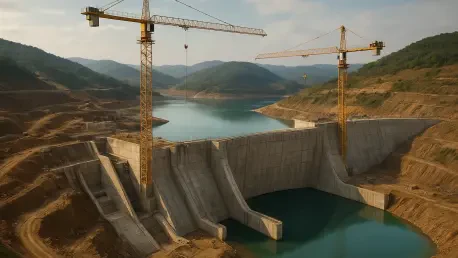

Namibia currently functions as a net importer of electricity, leaving its domestic economy vulnerable to the volatile exchange rates and supply constraints of neighboring power grids. This precarious situation has forced the government to re-evaluate its energy strategy, placing the Baynes Binational Hydropower Project at the center of its development agenda. Recently, Modestus Amutse, Namibia’s Minister of Mines and Industries, expressed a firm stance during a high-level bilateral meeting in Luanda, stating that the time for feasibility studies has passed. The project, which utilizes the Kunene River flow along the border, is no longer just a conceptual vision but a necessity for regional stability. By moving toward physical construction, both nations aim to foster industrialization and secure a dependable energy future. This shift signals a departure from years of delays and highlights a commitment to creating an infrastructure that supports the growing economic demands of Southern Africa.
Strengthening Domestic Resilience: Industrial Growth and Energy Sovereignty
The drive for energy independence is inextricably linked to the success of Namibia’s industrial sectors, particularly mining and manufacturing. Without a reliable source of base-load power, these energy-intensive industries remain at the mercy of external supply chains that are often unpredictable. The proposed 600-megawatt facility at Baynes is designed to provide the consistent electricity needed to power mineral beneficiation processes, which add value to raw exports before they reach the global market.
By localizing power generation, Namibia can stabilize electricity costs and reduce the financial drain caused by cross-border energy purchases. This strategy is not only about keeping the lights on but also about creating a predictable environment where large-scale projects can thrive without the constant threat of load-shedding. As regional demand for energy continues to outpace supply, the completion of this project will serve as a buffer against broader economic shocks while fostering a more resilient and self-sufficient national economy.
Overcoming the Legacy: Addressing Historical Delays on the Kunene River
The historical timeline of the Baynes project reveals a long history of deliberation that has often tested the patience of regional stakeholders. Discussions regarding the potential of the Kunene River for hydroelectric generation began in the 1990s, initially focusing on the Epupa site before shifting to the more viable Baynes location. Since 2008, multiple feasibility studies and impact assessments have been conducted, creating a mountain of data but little physical progress until now.
Government officials have noted that the opportunity cost of these delays has been immense, as the region has missed out on over a decade of potential industrial growth and job creation. The current push for construction is an attempt to break this cycle of perpetual planning and demonstrate that the political will exists to see such a massive undertaking through to completion. For investors, the transition to actual ground-breaking is a vital signal that the project has moved past the theoretical stage and into a phase of tangible execution.
Funding the Future: Public Implementation and Economic Sustainability
A significant departure from typical infrastructure financing is the decision to pursue a state-led implementation model for the Baynes project. While many large-scale energy projects rely on private equity, Namibia and Angola have opted for a public approach to ensure that the primary benefits remain within the domestic economy. This model allows the governments to maintain control over electricity tariffs, ensuring that the power generated remains affordable for both residential consumers and heavy industry.
By avoiding the high-profit margins often required by private developers, the state-led strategy focuses on long-term socioeconomic returns rather than short-term financial gains. This approach is particularly important in a region where high energy costs can be a significant barrier to poverty reduction and economic diversification. To support this vision, the two countries are collaborating with financial advisers to structure a funding package that leverages public resources and international development finance.
Global Cooperation: International Partnerships and Regional Stability
International cooperation has played a pivotal role in moving the project toward financial close, with several global institutions providing technical and monetary support. The African Development Bank has been a key partner, offering guidance on sustainable infrastructure and helping to attract other stakeholders. Additional support has come from countries like Sweden and South Korea, which have provided expertise in hydroelectric technology and environmental management protocols.
This diverse coalition of partners highlights the project’s importance not just as a local power plant, but as a strategic asset for the entire Southern African region. The funding strategy involves a mix of direct government investment and concessional loans from international lenders, designed to minimize the debt burden on the two nations. By creating a transparent financial framework, Namibia and Angola are ensuring that the project is built on a solid foundation that will remain viable for the duration of its operational life.
Modern Energy Integration: Balancing Hydro with Renewable Innovation
Beyond traditional industries, the Baynes project is also a foundational element for the emerging green energy market in the region. As Namibia and Angola seek to position themselves as leaders in sustainable development, the need for a stable power grid becomes even more pronounced. Hydropower serves as a perfect complement to intermittent renewable sources like solar and wind, providing the steady “spinning reserve” required to maintain grid frequency and stability.
This synergy allows for a more aggressive expansion of other green technologies, as the hydro plant can adjust its output to compensate for fluctuations in weather-dependent generation. By investing in this large-scale infrastructure, the two nations are building a backbone for a modern, carbon-neutral economy that does not sacrifice reliability for sustainability. The long-term vision involves an integrated system where hydro, solar, and wind work together to meet total energy needs of a rapidly urbanizing population.
Strategic Next Steps: Ensuring Long-Term Operational Success
In retrospect, the decision to accelerate the Baynes project was a direct response to the growing realization that energy sovereignty is the only path toward true economic stability. The bilateral discussions in Luanda provided the necessary political impetus to transition from a decade of studies into a definitive construction phase. This movement represented a clear acknowledgment that the regional economy could no longer wait for the perfect conditions before breaking ground on vital projects.
Looking ahead, the immediate priority must shift toward the mobilization of the Project Implementation Unit to finalize procurement and secure the local workforce. Authorities should focus on creating specialized training programs for local engineers to ensure the expertise required to operate the facility is developed within the region. Establishing transparent monitoring for environmental plans will also be crucial to maintaining public support. These actions will transform the Baynes project into a functional cornerstone of a shared industrial and energy future.