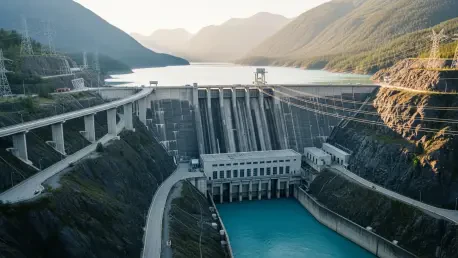

The Susitna River has flowed uninterrupted through the rugged heart of the Alaska Range for millennia, yet for more than fifty years, it has represented a frozen asset in the state’s long-standing quest for true energy independence. This massive waterway holds the potential to generate a staggering amount of renewable electricity, yet the proposed Susitna-Watana Hydroelectric Project has historically occupied a precarious and polarizing middle ground in the state’s infrastructure planning. It is frequently described as a project that is simultaneously too enormous and environmentally sensitive to construct, yet far too transformative and beneficial to be permanently discarded from the public discourse. Consequently, the proposal acts as a reliable barometer for the state’s collective energy anxiety, surging into the political spotlight whenever fossil fuel prices become volatile and receding into the background during periods when natural gas appears to be both abundant and inexpensive. As Alaska moves through 2026, the conversation has shifted from theoretical debate toward a pragmatic necessity, driven by a changing climate and an increasingly fragile energy grid that serves the majority of the state’s population.
The current atmosphere surrounding the project is no longer defined by the grand, speculative ambitions of the mid-20th century but by a stark realization of the vulnerabilities inherent in the Railbelt electric system. This grid, which stretches from the coastal community of Homer to the northern interior city of Fairbanks, provides power to three-quarters of Alaskans and currently relies heavily on a single, depleting source of fuel. Energy experts and policymakers are beginning to view the Susitna-Watana project not as a relic of a bygone era of mega-projects, but as a critical infrastructure requirement for a future that demands decarbonization and price stability. The project would involve the construction of a massive dam and reservoir that could provide a steady, carbon-free baseline of power for nearly a century. With the global energy transition accelerating, the state is forced to decide whether it will finally commit to this generational investment or allow the window of opportunity to close forever, leaving the region’s energy security to the whims of international markets and dwindling local resources.
Historical Economic Barriers and the Legacy of Inexpensive Fossil Fuels
To understand the renewed urgency behind the Susitna-Watana proposal, it is necessary to examine the specific economic conditions that led to its suspension in the mid-1980s. During that decade, Alaska was undergoing a period of rapid development following the discovery of massive oil and gas reserves, particularly the prolific natural gas fields in Cook Inlet. At the time, natural gas was so plentiful and inexpensive that it cost only a few cents per kilowatt-hour to generate electricity, making the multi-billion-dollar capital investment required for a large-scale hydroelectric dam appear financially reckless to many legislators. The prevailing logic of the era was rooted in a “least-cost” planning model, which prioritized the immediate, short-term affordability of fossil fuel generation over the long-term price stability offered by renewable infrastructure. This preference for the status quo created a difficult environment for any project with high upfront costs, regardless of its potential for long-term savings or environmental benefits.
This historical reluctance toward hydroelectricity was not limited to the Susitna River; it even impacted smaller, more manageable projects like the Bradley Lake Hydroelectric Project near Homer. Despite its much smaller scale compared to the Susitna-Watana proposal, Bradley Lake only secured legislative approval by a razor-thin margin, reflecting a deep-seated institutional hesitation to invest in long-term infrastructure when cheap gas was readily available. However, the decades following that decision have provided a clear and valuable lesson in the benefits of diverse energy portfolios. While the price of natural gas has fluctuated and delivery costs have risen, the electricity generated by Bradley Lake has remained remarkably stable and predictable. This has proven to be an effective hedge against inflation and market volatility, prompting a fundamental re-evaluation of why the larger Susitna River project was bypassed. The state is now looking back at that missed opportunity with a sense of perspective, recognizing that the stable rates enjoyed by other regions with hydro power could have been a reality for the entire Railbelt.
The Imminent Energy Security Crisis Facing the Railbelt Grid
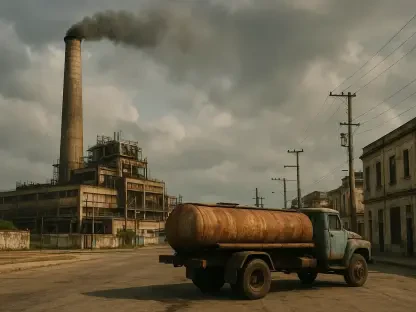
The most pressing driver for the project’s sudden revival is the looming exhaustion of the natural gas reserves in Cook Inlet that have powered Southcentral Alaska for generations. For decades, the region enjoyed a surplus of local gas, but production from these aging fields is now tapering off at an alarming rate. Major producers, most notably Hilcorp Energy, have already signaled to local utilities that they are no longer willing to enter into the kind of long-term, low-cost supply contracts that have historically kept electricity and heating rates manageable for Alaskans. This shift represents an existential threat to the energy security of the state’s most populous region, as the Railbelt grid currently relies on natural gas for approximately 70% of its total electricity production and nearly all of its residential heating. The realization that the era of cheap, local gas is ending has forced a radical change in the calculus used by policymakers in Juneau.
Faced with the very real prospect of having to import expensive liquefied natural gas from international markets, the massive power output of the Susitna-Watana project has become significantly more attractive to both utilities and the public. Proponents of the dam argue that its completion could displace between 60% and 80% of the natural gas currently burned for power generation across the Railbelt. This would not only reduce the state’s carbon footprint but would also provide a level of energy independence that is impossible to achieve while relying on global fossil fuel supply chains. The project is no longer being viewed as a luxury alternative or an environmentalist’s dream; instead, it is being framed as the necessary foundation for a regional grid that can no longer depend on local extraction. The transition from a gas-dominated system to one anchored by a massive renewable source is now seen as the only way to avoid a future of permanent energy insecurity and skyrocketing costs for Alaskan families.
Federal Incentives and the Transformation of Project Viability
The financial landscape for the Susitna-Watana project has been fundamentally transformed by recent shifts in federal policy, most notably through the passage of the Inflation Reduction Act. This landmark legislation introduced technology-neutral tax credits that are specifically designed to incentivize the development of large-scale clean energy projects. Perhaps the most critical component for Alaska is the “direct pay” mechanism, which allows public and cooperative utilities to receive cash-equivalent payments from the federal government in lieu of traditional tax credits. Since many of the utilities in the Railbelt are member-owned cooperatives or government entities that do not pay federal income tax, this mechanism is a game-changer. It effectively bridges the gap between the high upfront cost of hydroelectric construction and the financial capacity of the state’s utilities, potentially covering up to half of the total capital investment required for the dam.
By leveraging billions of dollars in federal support, the state of Alaska could drastically reduce the initial debt burden that has historically been the project’s single greatest obstacle to approval. In previous decades, the high interest payments on the massive loans needed for construction would have led to an immediate and sharp increase in electricity rates for consumers. However, under the current federal framework, the “up-front” cost to Alaskans could be lower than at any point in the project’s long history. These incentives have created a narrow and time-sensitive window of opportunity for the state to act. If the licensing and construction phases do not progress while these federal credits are active, the economic feasibility of the project may disappear forever, leaving the state to fund such a massive undertaking entirely on its own. This realization has added a sense of urgency to the current re-evaluation, as leaders recognize that the federal government is essentially offering to pay for a significant portion of Alaska’s future energy stability.
Adapting to New Demand and the Rise of Variable Renewables
The argument for a 600-megawatt hydroelectric facility is further bolstered by a significant shift in how Alaskans are expected to consume energy over the next several decades. For a long time, energy demand in the state remained relatively flat, which led some critics to argue that the massive output of the Susitna River would be excessive for the local market. However, the rapid adoption of electric vehicles and the transition to electric heat pumps for home heating are poised to drive a substantial increase in demand on the Railbelt grid. Furthermore, the global explosion in demand for data centers and other power-intensive industries presents a new potential revenue base for the state. These modern industrial applications require vast amounts of reliable, base-load power, which a project of this scale is uniquely qualified to provide. This ensures that the energy generated by the dam would be fully utilized, allowing the fixed capital costs to be spread across a much larger volume of sales and stabilizing rates for everyone.
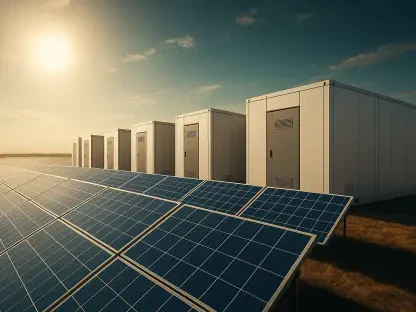
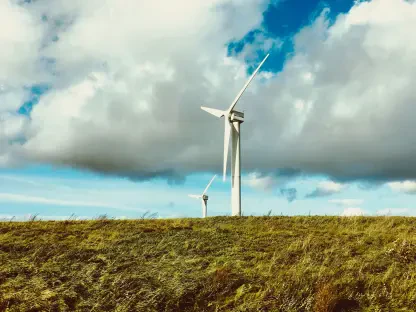
Beyond simple generation, the Susitna-Watana reservoir would function as a massive energy storage system for the entire Railbelt grid, acting much like a giant, natural battery. This capability is absolutely essential for the integration of more variable renewable energy sources, such as wind and solar power, which are currently being expanded across the state. Wind and solar are inherently intermittent; they produce power only when the weather permits. A large hydroelectric dam provides the technical flexibility needed to balance this variability. When the wind is blowing or the sun is shining, water can be held back in the reservoir, effectively storing that energy for later use. When renewable production drops off, the hydro turbines can be ramped up almost instantly to fill the gap. This balancing act would allow the Railbelt to transition away from fossil fuels without sacrificing the reliability of the grid, creating a diversified and resilient energy portfolio that is capable of meeting the complex needs of a modern economy.
Navigating Environmental Risks through Collaborative Frameworks
Modern proponents of the Susitna-Watana project acknowledge that any infrastructure project of this magnitude must move beyond the ecological and social mistakes of the 20th century. Historically, large dams were often built with a “top-down” approach that ignored the concerns of local residents, conservationists, and Indigenous communities. Today, the discourse has shifted toward a more collaborative and inclusive model of development. Advocates point to contemporary projects, such as Canada’s Site C Dam, as evidence that large-scale hydroelectricity can be developed with advanced fish-passage technology and robust environmental monitoring. In Alaska, this means working closely with Alaska Native corporations and tribal governments to explore models of Indigenous ownership and revenue-sharing. The goal is to ensure that the project provides direct economic benefits to the people living in the region while minimizing the impact on the vital salmon runs and wildlife habitats that define the Susitna River basin.
Despite this renewed interest and the potential for a more sustainable approach, the project currently sits in a state of administrative limbo. For several years, the Alaska Energy Authority was directed to archive its research rather than advance the licensing process, leading to a loss of momentum and a risk of data becoming obsolete. To preserve the option of building the dam, the state must find a way to finalize the federal licensing process and bring the project to a “shovel-ready” status. This would allow for a fully informed final decision based on the most up-to-date scientific and economic data, rather than a default rejection caused by bureaucratic inertia or a lack of funding. The path forward requires a disciplined commitment to transparency and public engagement, ensuring that all stakeholders have a seat at the table as the state determines whether the long-term benefits of the project outweigh the inevitable environmental and social costs of such a massive undertaking.
Strategic Recommendations for an Informed Energy Future
The state of Alaska sought to clarify the commercial viability of the Susitna-Watana project by initiating a more rigorous and market-driven evaluation process. Rather than relying solely on state-funded studies, the Alaska Energy Authority began exploring public-private partnerships that could potentially share the financial risk and expertise required for a project of this scale. This approach involved issuing formal requests for information and proposals to gauge the interest of global infrastructure firms and private investors. By testing the market in this manner, the state was able to determine whether the project could attract private capital, which would serve as a powerful validation of its economic potential. This strategy allowed for a more disciplined assessment of the project’s merits without committing tens of millions of dollars in additional public funds before a final investment decision was reached. This market-based feedback provided a clearer picture of how the dam could be integrated into the broader regional economy.
The final phase of this re-evaluation focused on ensuring that the state did not miss the narrow window of opportunity provided by federal incentives and the looming gas shortage. Policymakers recognized that the cost of inaction—potentially leading to a permanent reliance on expensive imported fuels—was far higher than the cost of finishing the licensing work already in progress. By maintaining the “optionality” of the Susitna-Watana project, Alaska ensured that it had a viable, large-scale solution ready to be deployed if smaller-scale renewable projects and gas conservation efforts proved insufficient to meet the region’s needs. The state ultimately moved to treat the project as a critical strategic asset, one that required consistent, incremental progress rather than sporadic bursts of political interest. This disciplined approach allowed Alaska to make a final, evidence-based decision about its energy future, ensuring that the generational opportunity represented by the Susitna River was neither pursued recklessly nor abandoned through simple indecision.