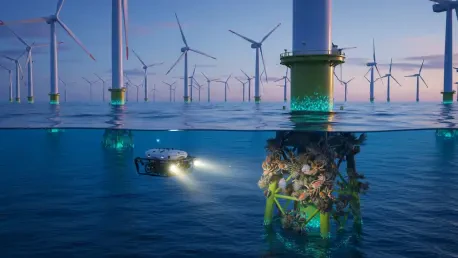

As the global demand for carbon-free energy continues to accelerate, the massive expansion of offshore wind infrastructure across the North Sea and the Atlantic Ocean has fundamentally transformed vast swaths of marine environments into industrial energy zones. These structures, consisting of towering turbines anchored to the seafloor by monopile or jacket foundations, introduce hard substrates into regions that were previously characterized by soft sediment and shifting sands. This sudden change creates a complex ecological scenario where the presence of the turbines acts as a catalyst for local biological shifts, drawing in a diverse array of marine organisms that seek shelter and surface area for colonization. However, the rapid pace of development raises critical questions regarding whether these anthropogenic additions truly foster healthy ecosystems or if they inadvertently lure species into environments that might be detrimental to their survival. The dual nature of these installations necessitates scientific study.
The Reef Effect: Biodiversity in Industrial Zones
The introduction of steel and concrete structures into the water column immediately initiates a process known as the reef effect, whereby benthic organisms rapidly colonize the new available surfaces. Within months of installation, the submerged portions of the wind turbine foundations become covered in dense layers of blue mussels, barnacles, and tube-dwelling amphipods that would otherwise lack a stable home in sandy environments. This localized increase in biomass provides a rich foraging ground for larger species, including crabs and various fish populations, which utilize the complex geometry of the scour protection at the base of the turbines for protection from predators. The concentration of these organisms often results in a higher density of life than in the surrounding open waters, effectively turning the wind farm into a de facto marine protected area where commercial trawling is often restricted. This sanctuary-like status allows benthic communities to flourish without constant agitation.
Building on this biological foundation, higher trophic levels such as marine mammals and predatory fish are increasingly observed frequenting these installations to take advantage of the heightened productivity. Harbor porpoises and seals, for instance, have been tracked using satellite telemetry to visit specific turbine sites, suggesting that these areas function as predictable feeding hubs within their broader migratory routes. The presence of these top predators indicates that the energy transfer from primary colonizers to the rest of the food web is functioning effectively at many established sites. Furthermore, the exclusion of large-scale fishing vessels within the safety zones of the wind farms creates a refuge that supports the recovery of overexploited fish stocks. These findings support the argument that, under the right conditions, offshore wind farms can serve as vital stepping stones for marine connectivity, bridging the gap between fragmented habitats and enhancing the overall resilience of local life.
Evaluating the Potential for Ecological Traps
Despite the apparent gains in local biodiversity, the industrial nature of offshore wind operations introduces stressors that could potentially turn these productive zones into ecological traps for certain species. An ecological trap occurs when environmental cues lead animals to settle in habitats that actually reduce their fitness or survival rates, a risk that is particularly relevant given the continuous low-frequency noise and vibration generated by rotating turbine blades. This acoustic interference can disrupt the communication, navigation, and foraging capabilities of marine mammals and noise-sensitive fish, even if the area appears rich in food. Moreover, the subsea power cables that transmit electricity back to the shore generate electromagnetic fields which may interfere with the migratory patterns of elasmobranchs, such as sharks and rays, and certain crustacean species. These persistent anthropogenic signals create a mismatch between the attractiveness of the artificial reef and the health of inhabitants.
The transition toward a fully integrated ocean management strategy relied on the deployment of advanced sensor networks and autonomous underwater vehicles to provide real-time data on species interactions within the turbine arrays. Scientists and engineers utilized this information to adjust turbine operations during peak migratory periods, effectively reducing the risk of bird collisions through automated shut-down protocols. The standardization of environmental monitoring across all major offshore projects allowed for a comprehensive understanding of the long-term cumulative effects on marine ecosystems. This collaborative framework between government agencies, energy companies, and conservationists fostered a transparent approach to ocean development. The implementation of adaptive management practices ensured that the lessons learned from earlier installations were applied to new projects, moving the industry toward a model where wind farms functioned as genuine ecological assets for a clean future.