
The full-scale commercial activation of an offshore, wind-powered subsea data center near Shanghai marks a pivotal moment in the global race to decouple high-performance computing from carbon-heavy land-based power grids. This $226 million infrastructure project, situated within the Lingang Special Area, represents a sophisticated collaboration between HiCloud Technology, the Lingang Special Area Investment Holding Group, and industrial giants like China Telecom and Shenergy Group. Following a rigorous construction phase that reached its conclusion in late 2025, the facility underwent technical trials in early 2026 before transitioning to its current state of full operational capacity. This milestone signals a shift in how major economic powers approach the massive energy demands of digital transformation. By moving compute resources from traditional terrestrial sites to the ocean floor, developers are testing a radical model that integrates renewable energy production directly with data consumption. This approach potentially offers a solution to the land scarcity and high electricity costs that plague many modern urban technology hubs.
Technical Integration: Wind and Water
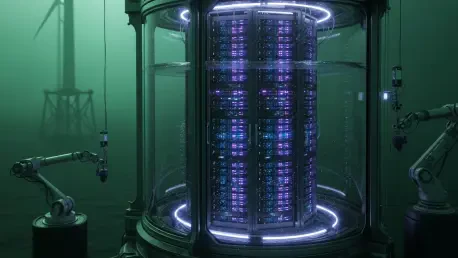
The physical architecture of this subaqueous facility relies on specialized, pressure-resistant modules positioned strategically between the existing phases of the Lingang offshore wind farm. This specific placement is not merely a matter of convenience; it allows for a direct electrical connection to the wind turbines, drastically reducing the transmission losses typically associated with long-distance power distribution. These submerged modules house nearly 2,000 servers, each protected by robust hulls designed to withstand the corrosive saltwater environment and the immense pressure of the seabed. By utilizing the surrounding seawater as a natural heat sink, the facility eliminates the need for the massive, power-hungry industrial chillers that often account for a significant portion of a data center’s energy consumption. This passive cooling approach creates a highly stable thermal environment for high-density hardware, ensuring that the servers operate efficiently without the risk of the heat-induced throttling common in land facilities.
Beyond the cooling advantages, the integration of these modules within a renewable energy zone offers a streamlined power supply that effectively bypasses the congestion of the municipal electricity grid. Operators are able to utilize the clean energy generated by the wind farm in real-time, which aligns with aggressive sustainability targets while lowering the overall carbon footprint of digital operations. The engineering team prioritized structural integrity and environmental isolation to prevent any thermal leakage into the local ecosystem, ensuring that the heat dissipation from the servers remains within strict regulatory limits. This localized energy cycle serves as a blueprint for future coastal developments where land is scarce and energy costs are rising. By treating the ocean as both a source of power and a cooling medium, the project demonstrates a closed-loop philosophy that could potentially transform how jurisdictions with extensive coastlines manage their growing digital footprints in an increasingly data-dependent global economy.
Accelerating AI: The Role of Subsea Compute
The primary function of the Lingang subsea facility is to provide the intensive computational power required for modern artificial intelligence applications, including large language model training and 5G infrastructure. China Telecom has deployed massive GPU clusters within these modules to take advantage of the superior thermal management provided by the subsea environment. High-performance processors used in AI workloads generate immense amounts of heat, which often leads to thermal throttling and reduced efficiency in land-based centers. However, the consistent low temperature of the seabed allows these clusters to operate at peak performance for extended periods without the risk of overheating. This capability is crucial for the development of sophisticated AI models that require weeks of uninterrupted processing time. The facility’s specialized focus on high-density compute highlights a growing trend where the physical location of hardware is dictated by the specific cooling needs of the silicon, rather than just geographical proximity to the user.
This focus on performance is substantiated by the facility’s reported Power Usage Effectiveness, which currently stands at a remarkable 1.15. This metric is significantly lower than the global average for traditional data centers, indicating that a very high percentage of the energy consumed is used directly for computing rather than peripheral support systems. For companies investing in large-scale AI, such efficiency translates into substantial operational savings and a more defensible sustainability profile. The subsea environment effectively serves as a massive heat exchanger, allowing the facility to maintain this PUE even during seasonal temperature spikes that might otherwise stress onshore cooling towers. As the demand for generative AI and real-time data processing continues to expand throughout 2026 and into 2027, the ability to scale compute capacity without an equivalent rise in cooling energy will become a critical competitive advantage for telecommunications providers and technology firms operating in the region.
Operational Realities: Maintenance and Longevity
Despite the clear advantages in energy efficiency, the transition to subsea data management introduces a unique set of engineering and logistical complexities that differ from traditional facility management. Unlike terrestrial centers where technicians can easily swap out failed drives or upgrade memory modules, subsea units are effectively sealed environments that are difficult to access once deployed. This necessitates a high degree of hardware redundancy and the use of ultra-reliable components to minimize the need for physical intervention. Long-distance subsea cabling and underwater connectors must be maintained to ensure data integrity and low-latency connections to the mainland. Operators are also tasked with managing the long-term effects of biofouling, where marine life can accumulate on the exterior of the pressure vessels, potentially impacting thermal conductivity. Balancing the lower steady-state energy costs against the increased complexity of “hard-to-reach” hardware remains the primary challenge for this maritime compute model.
The long-term viability of this initiative was ultimately linked to the transparency of its performance data and the success of its maintenance protocols. Industry observers looked for independent audits of the PUE figures and verified records regarding network latency and system uptime throughout the initial operational year. Decisions made during this period focused on whether subsea modules could consistently match the serviceability of land-based alternatives while maintaining a superior environmental profile. Stakeholders analyzed the total cost of ownership, weighing the initial high capital expenditure of the $226 million investment against the savings generated from renewable energy integration. As a primary case study for sustainable infrastructure, the project provided actionable insights into how coastal regions could leverage natural resources to support digital growth. Ultimately, the successful deployment of these modules established a new benchmark for jurisdictions evaluating modular, offshore solutions for their future computing needs.