
Christopher Hailstone has spent decades at the intersection of utility operations and grid modernization, navigating the shift from centralized fossil fuel generation to a more distributed, resilient energy landscape. As a veteran of energy management and electricity delivery, he has witnessed firsthand how small, member-owned cooperatives are often the true laboratories of innovation, testing solutions that the industry giants later adopt. In this conversation, we explore the tactical shifts occurring within non-profit utilities as they grapple with rising wholesale costs and the urgent need for reliability.
The discussion centers on the transformative role of battery energy storage systems (BESS) within non-profit and cooperative utility frameworks. We delve into how these smaller entities are utilizing behind-the-meter residential batteries to manage demand charges and the economic logic that favors electricity storage over traditional fuel-based generators. The conversation also covers the massive scaling of storage capacity across rural America, the debate over utility-owned versus customer-owned assets, and how remote regions like Alaska and Hawaii are using storage to insulate themselves from volatile fuel costs and transmission vulnerabilities.
Many smaller cooperatives are moving toward behind-the-meter residential battery testing to manage demand charges; what is driving this shift toward consumer-level storage rather than traditional utility-scale projects?
The shift is primarily driven by the unique economic pressures facing member-owned cooperatives, where every cent of wholesale cost is felt directly by the local community. Take a look at Meeker Energy in central Minnesota, which serves about 10,000 homes and businesses; they are seeing that the largest portion of their members’ bills comes from wholesale power demand charges. Unlike the massive investor-owned utilities that focus on gigawatt-scale pipelines, these distribution co-ops have realized that controlling their own consumption through behind-the-meter batteries is one of the few levers they can pull. We are seeing a high level of engagement, with roughly 60% of Meeker’s members already participating in some form of load management. While they have historically used more traditional demand response, they are finding that they can only shed so much load before they need a more sophisticated tool like storage to enhance those mature programs.
When looking at the broader landscape of rural energy, how significant is the growth of storage capacity, and what does this signify for the future of grid reliability?
The growth we are seeing is staggering when you consider the starting point for these smaller systems. Last summer, rural electric cooperatives had 439 MW and 1,047 MWh of operating battery energy storage projects, which is just a sliver of the 28 GW and 57 GWh that connected to the U.S. grid in 2025. However, the momentum is shifting rapidly as the National Rural Electric Cooperative Association tracks projects that could triple that rural capacity by 2028. This isn’t just about adding numbers to a ledger; it is a defensive strategy against the reliability warnings issued by the grid’s watchdog regarding potential electricity shortfalls. By investing in storage now, these cooperatives are creating a hedge against price spikes and providing a critical backup for their members in the event of a blackout or curtailment.
In regions like Texas, we are seeing aggressive expansions of residential battery pilots. Why is the distributed approach suddenly outperforming grid-scale storage in these markets?
In the ERCOT territory, the economic math for distributed storage has become incredibly compelling compared to traditional grid-scale installations. The Guadalupe Valley Electric Cooperative is a perfect example, as they are expanding a pilot program that installs heavily discounted residential batteries with the goal of growing from a 2 MW footprint to a 50 MW powerhouse. This distributed model allows the utility to shave costly demand peaks and firm up intermittent generation without the massive capital outlay required for a central transmission-connected facility. It’s about surgical precision—placing the energy exactly where it is used to defer expensive infrastructure upgrades and boost resilience at the household level. These non-profit utilities don’t necessarily need the “carrots and sticks” of government regulation to innovate because their primary mandate is the direct interest of their members, which fosters a very nimble and experimental culture.
How are wholesale power costs and peak shaving requirements influencing the financial strategies of municipal utilities like those in Chattanooga?
For a utility like the Electric Power Board of Chattanooga, the financial incentive to reduce peak demand is existential because of how wholesale billing is structured. They buy power from the Tennessee Valley Authority, and those monthly demand charges—calculated based on a single hour of highest demand—can account for a full one-third of their total power purchase costs. To combat this, they have deployed 45 MW and 95 MWh of storage and plan to double that capacity in just the next 12 months. One of their most interesting projects is a four-hour system designed to anchor a microgrid in a mountainous area that suffers from a tenuous connection to the main grid. This combination of economic peak shaving and localized reliability ensures that they aren’t just saving money, but also providing a tangible sense of security to members who are prone to frequent outages.
There is an ongoing debate regarding whether the utility or the customer should own these storage assets. What are the primary tensions in these two models?
The tension really boils down to who carries the risk and who reaps the rewards of the investment. In Minnesota, we saw a coalition of nonprofits oppose Xcel Energy’s Capacity*Connect pilot, which seeks to deploy 200 MW of utility-owned storage, because they felt it shifted financial risk onto captive ratepayers. The critics argued that allowing third parties to aggregate customer-owned resources would deliver significantly more value, pointing to similar programs in Colorado that prioritize customer assets. Xcel’s perspective is that utility ownership allows for a more integrated dispatch of resources to complement their growing renewable portfolio as they retire thermal plants. It’s a classic conflict between a centralized, regulated rate-of-return model and a more democratic, distributed approach where the individual member has more skin in the game.
In remote or isolated areas, such as rural Alaska or Hawaii, how does the adoption of battery storage change the day-to-day operations of a utility?
In these environments, storage isn’t a luxury; it’s a vital piece of infrastructure that saves millions of dollars in literal fuel costs. In rural Alaska, the Homer Electric Association installed a 46.5 MW and 93 MWh system because a single failure on their 115-kV transmission line could cost them $20,000 every single day in added fuel expenses. Similarly, the Kaua‘i Island Utility Cooperative in Hawaii is moving forward with a solar-plus-storage project that will cover 20% of their load, with an estimated savings of $365 million over 25 years. For the average resident in Kaua‘i, that translates to a $21 monthly reduction in their bill, which is a massive relief in a high-cost environment. These systems provide “spinning reserve” services and boost reliability in sparsely populated territories where the nearest help might be hundreds of miles away.
Beyond just storing energy, how is storage being used as a substitute for traditional physical infrastructure like transformers and transmission lines?
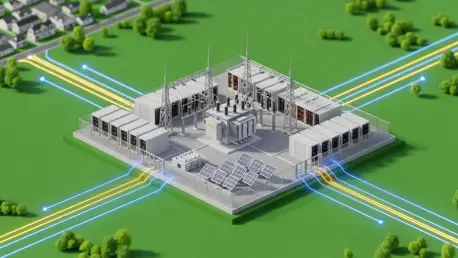
We are seeing a brilliant application of “non-wires alternatives” where batteries are used to solve congestion issues that would otherwise require massive construction projects. Connexus Energy in Minnesota, which serves 150,000 members, pioneered this by installing a 2.5 MW and 10 MWh standalone battery at a substation in a heavily congested area. Instead of going through the disruptive and expensive process of upgrading a large transformer, they use the battery to manage the load locally. Because this system is registered as a capacity asset, they can also capture wholesale market value during high-price periods. It’s a much more elegant solution that saves members money while increasing the overall flexibility of the grid without pouring more concrete or hanging more wires.
What is your forecast for the role of small-scale cooperatives in the national transition to a decarbonized grid?
I believe that over the next decade, small cooperatives will move from being the quiet participants in the energy market to being the primary drivers of grid flexibility and virtual power plant development. As storage costs continue to fall and capacity goes up, these member-owned utilities will weave together thousands of residential batteries, solar arrays, and microgrids into a sophisticated, self-healing network. We will see the “carrots and sticks” of the past replaced by a pure economic necessity where cooperatives lead the way in showing that reliability and affordability are not mutually exclusive. My forecast is that by 2030, the “distributed” model pioneered by these co-ops will be the standard blueprint for the entire industry, proving that the most resilient grid is one that is powered and managed from the bottom up.