
The environmental impact of the project is substantial, as it is estimated to prevent the emission of 5.1 million metric tons of carbon dioxide every single year. This achievement marks the full operational status of the Yangjiang Fanshi offshore wind project, a monumental engineering feat situated off the coast of Guangdong Province. By pushing infrastructure nearly 50 miles into the South China Sea, the development transitions ultra-large-scale wind technology from experimental designs into a standardized industrial reality. The facility serves as a definitive statement on the feasibility of deep-water energy harvesting, utilizing turbines of unprecedented scale to capture the relentless force of oceanic winds. As the global energy landscape shifts toward sustainable alternatives, this project demonstrates how aggressive engineering can overcome the logistical and environmental barriers that once relegated wind power to near-shore shallow waters. It sets a new benchmark for capacity and efficiency in the 2026 energy sector.
Technical Magnitude: Engineering for Extreme Environments
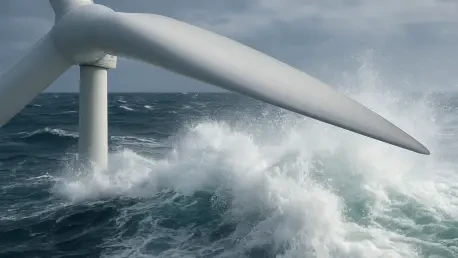
The sheer scale of the Yangjiang Fanshi installation is defined by its array of 131 turbines, which together contribute a staggering 2 gigawatts of power to the regional grid. At the heart of this massive endeavor are 33 flagship units, each boasting a rated capacity of 18 megawatts. These machines are not merely larger versions of their predecessors; they represent a fundamental leap in structural engineering. With a rotor diameter of approximately 958 feet, each turbine sweeps an area equivalent to nine soccer fields suspended in the air. This immense “swept area” allows the blades to capture a vast volume of wind energy, converting even moderate breezes into significant electrical output. The engineering required to manufacture and balance these colossal blades is precise, as the tips rotate at high speeds, creating immense centrifugal force. By standardizing these 18 MW units, the project has moved the industry away from custom prototypes toward a reliable model for offshore growth.
Anchoring such massive structures in the open ocean presents unique challenges, particularly given the 175-foot depths of the South China Sea. To ensure stability against the lateral forces of the frequent typhoons that traverse this region, the project utilizes advanced foundation technologies tailored for deep-water environments. Each turbine sits atop a reinforced steel structure designed to absorb the kinetic energy of both the wind and the turbulent sea. This shift from shallow, near-shore sites to more distant deep-water locations marks a significant evolution in maritime construction. Engineers had to account for seabed soil composition and the corrosive nature of the saltwater environment, ensuring that the hardware remains operational for decades. The successful deployment of these foundations proves that modern material science can effectively mitigate the risks associated with extreme weather, allowing for the expansion of wind farms into previously inaccessible oceanic territories that offer the most consistent wind profiles.
Economic Strategy: Efficiency and Advanced Transmission
The strategic shift toward 18 MW turbines is primarily motivated by economic efficiency rather than a simple desire for record-breaking physical dimensions. In the world of offshore wind energy, the most significant expenses are found in the surrounding infrastructure rather than the turbines themselves. Every individual installation requires a high-cost steel foundation, complex subsea cabling, and a rigorous series of offshore crane lifts. By choosing higher-capacity units, the Yangjiang Fanshi project achieves its 2 GW target with significantly fewer individual turbine positions. For instance, reaching the same capacity with 10 MW units would require almost double the number of foundations and cable connections. This reduction in the total hardware footprint translates directly into lower capital expenditure during the initial phase. Furthermore, minimizing the number of physical structures reduces the complexity of the grid layout, streamlining the construction timeline and lowering the overall financial risk.
A cornerstone of the transmission success is the installation of a 500 kV intermediate reactive power compensation station, which is the first of its kind to be deployed offshore in China. This facility acts as a vital stabilizer for the entire network, adjusting the voltage and maintaining the balance of the electrical load as it travels 50 miles from the sea to the shore. Without this specialized infrastructure, the energy reaching the mainland could be inconsistent, potentially damaging grid hardware or leading to blackouts. The station serves as an offshore “heart,” pumping steady, reliable electricity through the subsea veins of the project. Its successful commissioning proves that deep-water wind farms can achieve the same level of grid reliability as those located in much shallower waters. This breakthrough effectively opens up vast stretches of the outer continental shelf for future development, as distance from the coast is no longer the prohibitive barrier it once was for large-scale projects.
Operational Performance: Future Standards and Actionable Solutions
The performance metrics of the 18 MW turbines were extraordinary when viewed through the lens of regional energy consumption. A single rotation of the massive rotor at full load produced approximately 43 kilowatt-hours of electricity, enough to power an average household for nine days. On an annual basis, the Yangjiang Fanshi farm contributed more than 6.6 terawatt-hours of electricity to the grid, saving 1.92 million metric tons of coal. This massive output directly prevented the emission of 5.1 million metric tons of CO2, reinforcing the role of wind farms as primary tools for national decarbonization. The consistency of oceanic winds ensured that these turbines operated at high capacity factors, providing a reliable stream of power that rivaled traditional baseload plants. By demonstrating the reliability of modern wind technology in 2026, the project confirmed that renewable sources could meet the heavy industrial and residential demands of the Guangdong province effectively.
The full operational status of the Yangjiang Fanshi project in 2026 established a clear blueprint for the international wind industry. To achieve this success, engineers managed “wake loss” by splitting the 2 GW site into two developments, which ensured that turbulent air from the massive 18 MW rotors did not reduce the efficiency of rear turbines. The logistical challenge of transporting seamless blades was met through a specialized maritime fleet capable of handling the volatile conditions of the South China Sea. Industry leaders recognized that prioritizing the standardization of ultra-large components and expanding subsea transmission infrastructure were necessary steps to unlock further deep-water potential. This achievement proved that deep-water installations were commercially viable and technically sound. As nations sought to replicate this success, the lessons learned in Yangjiang provided a vital guide for maximizing oceanic energy. The era of ultra-large offshore wind became a reality.