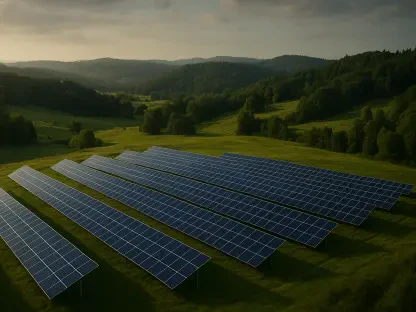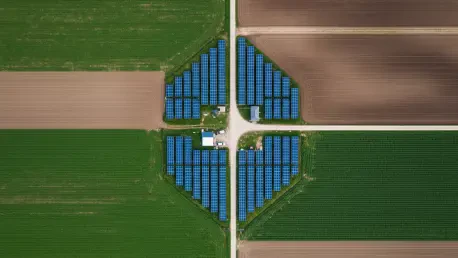

Across the vast stretches of the American Heartland, the traditional economic model for family-owned agricultural operations is currently facing an unprecedented convergence of rising operational costs and extreme climatic volatility. These systemic pressures have forced many multi-generational farmers to look beyond conventional commodity crops like corn and soy to secure their financial futures and preserve their land for subsequent generations. Community solar projects have emerged as a critical alternative, providing a steady, weather-independent stream of revenue that helps offset the high prices of specialized equipment, fuel, and fertilizer. Unlike large-scale utility solar, these localized installations are designed to serve the immediate community while allowing landowners to retain control over their acreage. This shift represents a fundamental change in how rural land is valued, moving from a singular focus on food production to a multifaceted approach that includes energy generation. By integrating these systems, farmers are effectively hedging against the inherent risks of the global commodities market while contributing to the local grid’s overall resilience.
Diversifying Agricultural Revenue Through Renewable Energy Integration
Economic Stability: The Role of Long-Term Solar Lease Agreements
The primary appeal of community solar for the modern agriculturalist lies in the financial predictability of long-term lease agreements which typically span twenty to twenty-five years. While the market value of crops can fluctuate wildly based on international trade tensions or local weather events, the payments received from a solar developer remain constant and guaranteed by contract. This reliable cash flow serves as a third crop, offering a financial floor that allows families to invest in better irrigation tech or more efficient harvesting machinery without taking on significant debt. From 2026 to 2030, the adoption of these leasing models is expected to accelerate as more states pass legislation incentivizing localized energy production. These payments often exceed the per-acre profit margins of traditional row crops, especially on marginal land that is less productive due to soil depletion or drainage issues. Consequently, farmers can keep their most fertile soil in production while utilizing less viable sections of their property to generate a profit.
Maximizing Utility: Agrivoltaic Systems and Land Health
Beyond mere land leasing, the rise of agrivoltaics—the simultaneous use of land for both solar power and agriculture—is proving that energy production and farming are not mutually exclusive. Modern system designs involve raising the height of solar panels or increasing the spacing between rows to accommodate livestock grazing or the cultivation of shade-tolerant specialty crops. For instance, sheep have become an integral part of vegetation management on solar sites, reducing the need for mechanical mowing and providing farmers with an additional revenue stream from wool and meat. Furthermore, the partial shade provided by the panels can actually improve yields for certain vegetables and berries by reducing heat stress and water evaporation during the increasingly hot summer months. This symbiotic relationship enhances the overall biodiversity of the farm, as many solar developers now incorporate native pollinator habitats beneath the arrays. These habitats support local bee populations, which in turn improve the pollination rates and productivity of adjacent traditional fields.
Navigating Structural Barriers to Sustainable Rural Energy Production
Regulatory Navigation: Zoning and Grid Connectivity
Despite the clear economic advantages, the integration of community solar into the rural landscape is not without significant hurdles, particularly regarding local zoning laws and aging electrical infrastructure. Many rural counties were never designed to handle decentralized power generation, leading to lengthy interconnection queues and high costs for upgrading local substations. Farmers often find themselves navigating a complex web of bureaucratic requirements that vary significantly from one jurisdiction to another, sometimes facing opposition from neighbors who fear changes to the traditional viewshed. To address these challenges, many state governments are now implementing standardized permitting processes that prioritize the preservation of prime farmland while encouraging solar development on less productive soils. This balanced approach ensures that renewable energy expansion does not come at the cost of national food security. Collaborative efforts are also beginning to streamline the technical requirements for connecting small-scale arrays to distribution grids, reducing the time it takes for a project to go from the planning stage to energy production.
Future Directions: Toward Sustainable Rural Energy Independence
The successful implementation of community solar initiatives across various agricultural regions provided a clear roadmap for a more resilient and diversified rural economy. By treating sunlight as a harvestable resource, landowners secured the financial capital necessary to modernize their operations and resist the pressure to sell out to developers. Policy makers recognized that the long-term survival of the family farm depended on this flexibility, leading to more robust support systems for multi-use land management. Technological advancements in bifacial panels and automated tracking systems further increased the energy density of these installations, making them more efficient even on smaller plots of land. The integration of renewable energy into the agricultural landscape ultimately proved that economic stability and environmental stewardship were achievable goals. Moving forward, the focus shifted toward expanding microgrid capabilities, ensuring that the power generated on the farm remained a permanent asset for the local community and the next generation of growers.