
A New Milestone in Sustainable Finance
The structural integrity of the American energy transition is increasingly dependent on high-velocity capital deployment, a reality underscored by Crux’s recent acquisition of a $500 million debt financing facility. Secured from Nuveen Energy Infrastructure Credit, this massive capital infusion represents a fundamental pivot in the organization’s role within the financial ecosystem. No longer acting solely as a digital intermediary connecting buyers and sellers, the firm has emerged as a primary capital provider. By concentrating on “tax-driven investments,” particularly through sophisticated hybrid tax equity structures, the firm is positioning itself to dismantle the traditional barriers that have long slowed the rollout of utility-scale renewable projects.
This strategic move comes at a time when the demand for reliable, domestic power generation is reaching a fever pitch. As institutional investors seek more direct paths into the green economy, the ability to mobilize half a billion dollars signals a maturation of the market. This article examines how such substantial funding will bridge the existing gap between stagnant institutional capital and the urgent infrastructure needs of the country. By providing the liquidity necessary to navigate complex tax credit landscapes, this facility ensures that the transition toward a sustainable economy remains both financially lucrative and operationally scalable for developers across the nation.
The Evolution of the Tax Equity Landscape
To appreciate the gravity of this development, one must consider the volatile legislative and market shifts that have defined the early part of this decade. Historically, the clean energy sector operated within a constrained environment, relying on a small circle of specialized tax equity investors. However, the introduction of the “One Big Beautiful Bill Act” forced a rapid adaptation across the industry. While skeptics initially feared that policy shifts would cause a contraction in investment, the market proved remarkably resilient. In fact, the clean energy tax equity sector expanded by 23% year-over-year, reaching a total volume of approximately $36.6 billion by 2025.
This sustained growth highlights a permanent shift in how renewable energy is perceived by the broader financial community. No longer viewed as a niche or experimental asset class, green power is now seen as a cornerstone of American economic infrastructure. The legislative environment, despite its complexities, has provided a roadmap for corporations to leverage tax credits as a primary tool for project financing. This historical context is essential for understanding why a $500 million facility is not just a corporate win, but a reflection of a massive, multi-billion-dollar industry finding its footing in a post-subsidy era.
The Rise of Hybrid Models and Market Resilience
Navigating Complex Hybrid Tax Equity Structures
The core of the current financing strategy lies in the dominance of “hybrid tax equity” investments, which now characterize more than 75% of all tax equity transactions in the United States. These models are frequently organized as partnership flips, a mechanism that allows for the highly efficient monetization of tax credits compared to traditional debt or equity. By utilizing this new facility to support these specific structures, developers are granted the flexible capital needed to move projects from the blueprints into operational reality. This shift toward hybridity reflects a broader demand for specialized financial products that can adapt to the unique needs of different renewable technologies.
Meeting the Surging Demand for Domestic Electricity
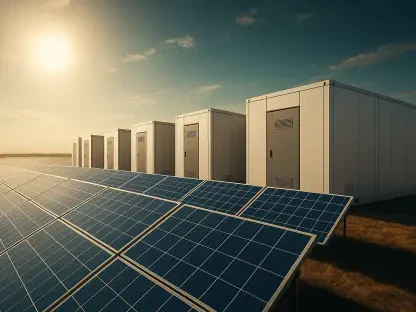
The tangible benefits of this capital deployment are already manifesting in large-scale regional projects, such as a $340 million investment in a 413-MW solar facility in Ector County, Texas. This particular investment addresses a critical economic reality: the unprecedented surge in domestic electricity consumption. This spike is being fueled by the rapid expansion of artificial intelligence data centers, the continued electrification of the automotive sector, and steady population growth in energy-hungry regions. By acting as a direct capital provider, the firm ensures that these utility-scale projects can secure necessary funding without being delayed by the bottlenecks typical of traditional commercial banking.
Overcoming Barriers to Capital Deployment
Despite the optimistic trajectory of the sector, several misconceptions regarding the stability of tax-driven investments persist among more conservative investors. Some market participants remain hesitant due to perceived regulatory volatility or the perceived complexity of credit transferability. However, recent data-driven approaches indicate that the transferability market is maturing rapidly. By serving as both a sophisticated intermediary and a provider of liquidity, firms like Crux mitigate the inherent risks associated with these transactions. This level of expertise is especially vital in regional markets where the energy deficit is highest but the financial arrangements are most intricate.
Innovations Shaping the Future of Green Finance
Looking toward the immediate horizon, the fusion of advanced financial technology with physical energy infrastructure is expected to accelerate. There is a clear trend toward the democratization of tax credit trading, where digital platforms enable a much broader spectrum of corporations to participate in clean energy offsets. As regulatory frameworks continue to stabilize, more disruptive innovations regarding how “transferability” is handled will likely emerge. These advancements could eventually lead to the real-time trading of energy credits, similar to carbon markets but with greater transparency and direct impact on domestic power generation.
Experts in the field anticipate that the combination of AI-driven market analysis and flexible debt facilities will become the baseline for funding the next generation of American power plants. This technological integration allows for more precise risk assessment and faster deal execution, which are both essential for maintaining the pace of the energy transition. Furthermore, the move toward decentralized energy production will require even more creative financing solutions that can handle smaller, distributed assets with the same efficiency as massive utility-scale farms. The intersection of finance and technology is where the most significant gains in efficiency will be found.
Actionable Strategies for Navigating the Energy Transition
For the developers and institutional investors of today, the success of this $500 million facility offers several vital takeaways for maintaining a competitive edge. First, it is now essential to diversify financing structures to include hybrid tax equity, as traditional models no longer provide the necessary speed or tax efficiency. Second, businesses should strategically prioritize projects that align with high-growth sectors, particularly those that support the infrastructure needs of the AI and tech boom. These sectors represent the most stable demand profiles for the coming years, ensuring that energy projects have a reliable end-user base.
Furthermore, professionals within the energy space must deepen their understanding of tax credit transferability. This mechanism remains the most potent lever for scaling domestic energy production and requires a high level of technical proficiency to execute correctly. Leveraging third-party platforms that provide both the necessary liquidity and specialized expertise will likely be the primary differentiator between projects that secure funding and those that stall. In a market where capital is abundant but complexity is high, the ability to navigate the nuances of the tax code is just as important as the engineering of the power plant itself.
The Enduring Significance of Financial Innovation in Energy
The establishment of this $500 million facility functioned as a clear indicator that the clean energy tax equity market reached a new level of sophistication. By effectively bridging the gap between intricate tax legislation and the pressing need for physical infrastructure, the industry moved toward a more resilient and self-sustaining model. The ability to mobilize capital at this magnitude was central to ensuring that the national economy remained powered by domestic and sustainable sources. This development proved that the future of the American power grid was fundamentally tied to the evolution of modern finance.
The successful deployment of these funds demonstrated that innovative financial technology could solve the most persistent bottlenecks in renewable energy development. Stakeholders who embraced these hybrid models were able to bypass traditional constraints, facilitating a faster transition toward total electrification. Ultimately, the maturation of the tax credit transferability market provided a blueprint for how other sectors might handle large-scale infrastructure financing. The project underscored that as the nation’s energy needs continued to grow, the convergence of deep financial expertise and technological platforms remained the most reliable path forward for economic stability.