
Christopher Hailstone brings decades of high-level experience to the table as a specialist in energy management and grid infrastructure. As a utilities expert who has navigated the complexities of renewable integration and grid security, he offers a unique perspective on the tension between rapid technological expansion and the preservation of rural landscapes. Today, he helps us unpack the controversial Valley Link project in Virginia, a massive infrastructure undertaking that highlights the growing pains of a digital-first economy.
The conversation explores the technical scale of 765-kilovolt transmission systems and the unprecedented demand driven by Northern Virginia’s data center industry. We delve into the local resistance from residents and agricultural groups, the legal battles over zoning and land use, and the regulatory hurdles involving regional grid operators and state commissions. Finally, the discussion touches on the future of energy generation, including the potential role of small modular nuclear reactors in balancing reliability with clean-energy mandates.
The Valley Link project is a massive undertaking, featuring 765-kilovolt transmission lines and towers that reach up to 165 feet in height. From a technical and regional perspective, why is infrastructure of this specific magnitude being proposed for the rural corridors of Virginia?
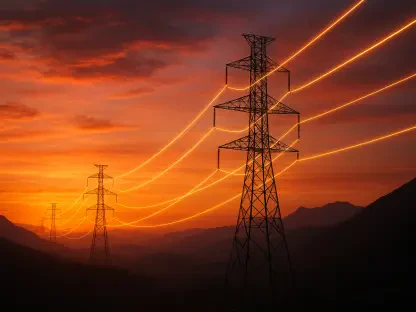
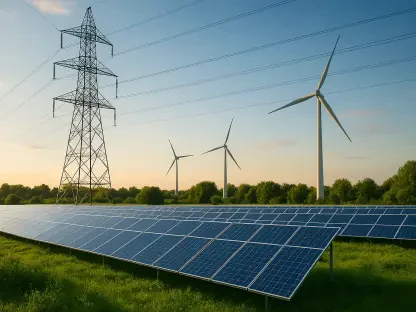
The sheer scale of this project reflects a fundamental shift in how we move electricity across state lines and into high-demand zones. By building a 765-kilovolt system, utilities are essentially creating a high-capacity “superhighway” that can deliver more than six times the amount of electricity than the typical 138-kilovolt lines they are replacing. These towers, which stand as tall as 12-story buildings, are necessary to support the weight and the electrical clearance required for such high voltage over long distances, such as the 115-mile stretch from Campbell County to Culpeper. We are seeing a desire to connect the existing 765-kilovolt networks from states like Ohio, Indiana, and Michigan directly into the Virginia Piedmont to stabilize the regional grid. While the infrastructure is visually jarring, with right-of-way clearings spanning the length of two football fields, the technical goal is to ensure that the massive load requirements of a digital economy do not cause local or regional blackouts.
Many residents in counties like Goochland and Louisa feel this project is designed primarily to benefit data centers in Northern Virginia rather than local communities. How has the rise of these “load centers” changed the logic of grid planning, and is it common for rural areas to bear the brunt of such expansion?
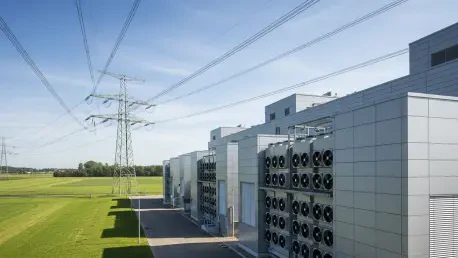
We have entered an era where Northern Virginia is recognized as the data center capital of the world, and that title comes with an insatiable appetite for power. This has forced grid operators like PJM Interconnection to rethink the map, placing these “huge load centers” in what were once quiet, low-demand rural areas. The Joshua Falls to Yeat line is a billion-dollar response to specific requests from data centers to hook up to the grid, creating a scenario where infrastructure follows industry rather than community growth. This often creates a geographical divide where rural farmers and homeowners see their natural environment and “rural character” disrupted to power the digital infrastructure used globally. It is a common friction point in modern utility policy: the costs and physical presence of the grid are concentrated in rural corridors, while the economic activity and service benefits are concentrated in urban tech hubs.
There is a significant legal and regulatory battle unfolding at the local level, specifically regarding “technology overlay districts” and zoning inconsistencies. Could you explain the concerns residents have regarding how these data centers and lines are being approved without traditional public oversight?
The frustration in communities like Goochland stems from a feeling that the rules are being rewritten to fast-track industrial development. The county recently approved a technology overlay district that includes specific requirements like 300-foot setbacks and 250-foot vegetative buffers, but residents argue this creates a confusing double standard for land use. If a data center is proposed within this district on land zoned for light industrial use, it might be built “by right,” meaning it bypasses the public hearing process that residents rely on to voice their concerns. Steve Levet and other locals are taking this to court because they believe the county shouldn’t have two different sets of standards for the same zoning district. This perceived lack of transparency is a major catalyst for the current angst, as residents feel they are losing the ability to influence what happens in their own backyards.
Beyond the visual impact of 160-foot towers, there are deep concerns regarding historic preservation and the environment, with several counties recently added to an endangered historic places list. How do developers and regulators weigh the loss of battlefields and historic districts against the need for grid reliability?
This is one of the most sensitive aspects of the Valley Link project, as the proposed route could impact as many as 11 historic districts and seven battlefields. Organizations like Preservation Virginia have flagged these areas as endangered because a 765-kilovolt line fundamentally alters the viewshed and the historical integrity of the landscape. Regulators like the State Corporation Commission are tasked with a difficult balancing act: they must consider the environmental and cultural stewardship that residents like Anne Dennis and Deborah Blackburn value, while also ensuring the lights stay on for manufacturers and tech giants. The process usually involves open houses and public comment periods where residents can point out route conflicts, but for many, a 165-foot tower in a historic Piedmont field feels like an irreversible loss. In the end, the regulatory decision often hinges on whether the utility can prove that no “reasonable” alternative exists that meets the reliability requirements set by the regional operator.
The financial implications of a $1 billion transmission project are vast. How does the cost of such a massive project eventually find its way to the average consumer, and what does the timeline for this look like?
While the initial billion-dollar price tag is often managed by the utilities and transmission companies, these costs are ultimately recovered through the rates paid by every customer on the grid. These transmission charges appear on consumer bills gradually and eventually as the project moves through construction and into service, which is projected to be around 2029 for the Joshua Falls to Yeat segment. Jon Gordon from Advanced Energy United has pointed out that because the data centers are driving this need, the entire rate-paying base is essentially subsidizing the infrastructure required for these high-intensity users. This is why local officials, such as the Louisa County Board of Supervisors, are willing to allocate $250,000 in legal fees to fight the project; they see it as an economic and environmental threat to their citizens that offers very little in the way of a local discount on electricity. The long-term financial impact is a slow burn, as the infrastructure is built to last for decades, and the costs are amortized over that same long period.
There is also talk of integrating new technologies like small modular nuclear reactors near the Joshua Falls substation. How do these yet-to-be-used energy sources complicate or complement the need for massive transmission lines?
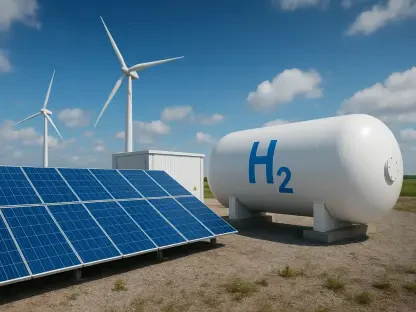
Small modular reactors, or SMRs, represent a potential shift toward localized, zero-carbon-emission electricity, but they are still a few years away from being a practical reality on the grid. Appalachian Power is eyeing the early 2030s for this technology to provide round-the-clock power, which could theoretically reduce the need for some long-distance transmission if power is generated closer to where it is used. However, the current reality is that these reactors would still need to plug into a high-voltage backbone like the 765-kilovolt system to move that power across the state. For residents like Anne Dennis, who moved to the country for a simpler life with her garden and chickens, these technological promises feel like a “mystery” that only adds more industrial infrastructure to her environment. The challenge is that while SMRs might be a “better” solution for carbon goals, they still require the same giant towers and clearings that residents are currently fighting against.
With the State Corporation Commission set to review the final route in September, what is your forecast for how these clashes between rural preservation and digital infrastructure will evolve in the coming decade?
We are witnessing the beginning of a prolonged period of “infrastructure friction” that will likely define energy policy for the next ten to fifteen years. As artificial intelligence and data storage needs continue to skyrocket, the demand for land and electricity will only intensify, forcing more rural communities to face the reality Sarah Schmidtke described as “the change that’s coming your way.” My forecast is that we will see a surge in litigation and a push for legislative changes that require data centers to pay a more direct share of the transmission costs they trigger. However, because the regional grid operator, PJM, has already approved these projects for reliability reasons, the momentum is heavily on the side of the utilities. We can expect more local governments to follow Louisa County’s lead by creating legal “war chests” to force route changes or demand higher compensation for eminent domain takings, but the digital world’s demand for physical space in the analog world is not going away anytime soon.