
Christopher Hailstone joins us to discuss the sharpening tension between federal grid oversight and state-level clean energy transitions. As an expert in energy management and utility reliability, he offers a unique perspective on why the federal government is stepping in to keep aging infrastructure alive against the wishes of local regulators. Our conversation explores the controversial use of emergency powers to maintain coal operations, the escalating financial costs passed on to consumers, and the legal battle over what constitutes a true power crisis in the Pacific Northwest.
The last remaining coal plant in Washington state is currently under federal orders to stay operational despite a scheduled retirement; how does this move reflect the broader struggle between federal reliability concerns and local clean energy goals?
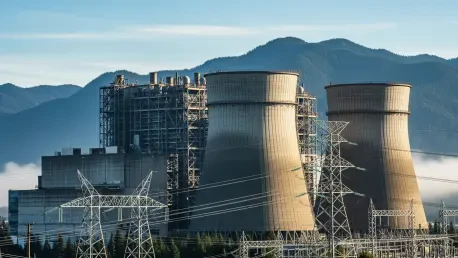
The situation at the 730-MW Centralia Generating Station is a visceral example of the friction we see when federal mandates collide with regional environmental transitions. While Washington had planned to phase out this facility by the end of 2025, the Department of Energy has stepped in for the third time, invoking Section 202(c) of the Federal Power Act to keep the turbines spinning. Secretary Chris Wright has been vocal about the risks, suggesting that Northwesterners deserve the security of this capacity to keep their homes cool during the intense heat of summer demand. It creates a strange, high-stakes atmosphere where a massive facility that was meant to go quiet is instead forced to remain in a state of constant, expensive readiness. This move essentially signals that the federal government views local retirement timelines as secondary to the immediate physical stability of the regional grid.
With the Department of Energy issuing 35 emergency orders so far this year—a massive jump from the 16 issued in 2025—what are the economic and practical consequences of keeping these older plants on life support?
The financial weight of these decisions is becoming impossible to ignore, with research from groups like the Sierra Club indicating that just six of these short-term orders have cost Americans more than $230 million. We are seeing a dramatic escalation in the use of these “emergency” powers, which suggests a growing federal anxiety about the fragility of our current energy infrastructure as we move away from fossil fuels. Practically speaking, it leads to a confusing operational landscape; for instance, TransAlta CEO John Kousinioris recently noted that while they are complying with the order, the plant might not even run because the region is currently flush with hydropower. We are essentially paying a staggering premium for an insurance policy that the plant owners themselves aren’t even sure we need to cash in.
How do the ongoing lawsuits and the federal government’s broad definition of a “power emergency” change the landscape for future energy policy and grid security?
The legal battle currently playing out before the U.S. Court of Appeals for the D.C. Circuit is fundamental because it challenges the very definition of a crisis in the modern age. The agency is arguing that they have the discretion to declare an emergency even if the threat isn’t “imminent” or “unexpected,” which feels like a major departure from traditional emergency management. Washington state and various advocacy groups are fighting back, worried that this broad interpretation allows the government to bypass environmental laws indefinitely. If the courts uphold this view, it creates a precedent where federal authorities can keep any plant running under the guise of potential future reliability issues, making it much harder for states to hit their decarbonization targets. This uncertainty makes it difficult for developers to commit to new projects when the old ones are being forced to stay online through legal maneuvers.
What is your forecast for the future of coal plant retirements in the Pacific Northwest?
I expect we will see a very turbulent period where the technical reality of the region’s hydropower resources continues to clash with federal emergency declarations until at least the end of 2025. While the current order for the Centralia plant only runs through September 12, the trend of issuing 35 orders in a single year suggests that federal intervention is becoming a standard tool rather than a last resort. We are likely entering an era where the transition to clean energy is slowed by these 90-day administrative cycles, potentially keeping 730-MW units like Unit 2 operational far past their intended expiration dates. Ultimately, the path to a coal-free Northwest will likely be decided in a courtroom rather than in a power plant, as the definition of “grid security” continues to be rewritten.