
Greenpeace is demanding that the Chancellor of the Exchequer intervene to impose a mandatory cap on the option fees charged to offshore wind farm developers. This legal maneuver addresses what critics call a systemic failure in how the United Kingdom manages its crown-owned seabed, arguing that the current auctioning system prioritizes short-term revenue over long-term energy security. As the nation moves toward its 2030 Clean Power targets, the cost of securing seabed rights has skyrocketed, creating a bottleneck that could stifle renewable investment. The organization contends that the Crown Estate, acting as a monopoly, has leveraged its position to extract maximum value from developers who have no alternative venues for their projects. By allowing uncapped bidding, the government may be inadvertently undermining its own green energy agenda by making the price of entry prohibitively expensive. This tension between fiscal gain and environmental necessity now sits at the heart of a legal challenge that could redefine the economics of wind power for decades to come.
Financial Impacts: Uncapped Bidding Processes
Rising Costs for British Households
Research from the University of Oxford’s Smith School of Enterprise and the Environment suggests that the current structure of option fees is driving a significant wedge between energy potential and affordability. Specifically, analysts have determined that these seabed leasing costs force developers to set electricity prices at rates 30% to 59% higher than what would be achievable under a capped system. This translates to a staggering financial burden on the British public, with projections indicating a total consumer cost ranging from £36 billion to £72 billion over a twenty-year period starting in 2035. When broken down into monthly bills, the average household could see an annual increase of up to £38, an amount that effectively cancels out previous government initiatives aimed at reducing energy costs through VAT cuts. This discrepancy highlights a growing concern that the profit motives of land management are directly conflicting with the goal of providing cheap, sustainable energy to millions of citizens.
Market Competition and Innovation
The economic ripple effects of these high fees extend beyond individual utility bills, potentially deterring the very innovation required to stabilize the energy grid. Large-scale developers must allocate substantial capital toward these upfront option fees, leaving fewer resources for technological advancements in turbine efficiency or battery storage integration. This financial strain creates a high-risk environment where only a few massive corporations can afford to participate, reducing competition and further driving up prices through market consolidation. Furthermore, the lack of a price ceiling encourages aggressive bidding wars that do not necessarily reflect the true value of the energy generated, but rather the desperation of firms to secure a foothold in the North Sea and Irish Sea. As long as the bidding remains uncapped, the initial investment required for offshore wind will remain artificially inflated, ensuring that the transition to a carbon-neutral economy remains a more expensive endeavor than it fundamentally needs to be.
Accountability: Corporate and Legal Scrutiny
Challenging the Morgan Offshore Wind Project
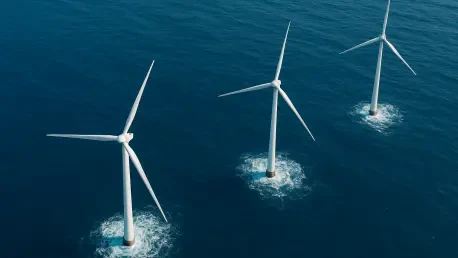
The current litigation centers on the Morgan Offshore Wind Project, a massive 1.5GW site located in the Irish Sea, which serves as a test case for the broader grievances of environmental advocates. Although the Crown Estate recently implemented what it describes as a streamlined process to attract new developers, Greenpeace asserts that the fundamental flaws of the auction system remain unaddressed. Specifically, the absence of a fee cap in this latest round is seen as a continuation of previous legal defects that prioritize profit maximization over public interest. While the project is vital for the UK’s renewable portfolio, the terms of its lease are viewed as a repetition of a lucrative pattern for the Crown Estate, which saw its profits soar above £1 billion in the 2024/25 fiscal year. This financial success has been accompanied by significant internal growth, including a notable rise in pay for the Crown Estate Commissioner, whose salary climbed to £1.9 million recently.
Policy Reform and Environmental Conservation
To resolve these contradictions, the UK government was urged to adopt a more balanced approach that integrated seabed conservation with energy production. The proposed solution involved the Chancellor establishing a clear ceiling on leasing fees to ensure that developers could pass savings directly to consumers through lower strike prices. Policy experts emphasized that redirecting excess profits into marine restoration projects would have mitigated the ecological impact of large-scale wind arrays, creating a holistic model for sustainable development. By prioritizing long-term energy stability over immediate treasury gains, the state could have fostered a more competitive market that encouraged smaller players to enter the renewable sector. Moving forward, the focus shifted toward legislative reforms that transformed the Crown Estate into a vehicle for public utility rather than just a revenue generator. These actions were seen as essential for aligning the nation’s environmental aspirations with its economic realities for future years.