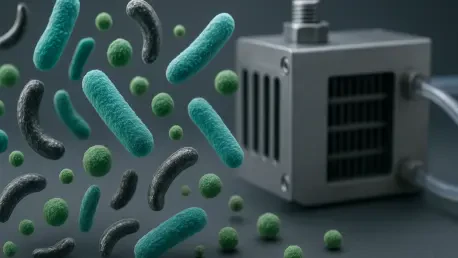

The central challenge in microbial fuel cell technology involves establishing efficient electrical wiring between microscopic living cells and conductive surfaces. As the global demand for sustainable energy alternatives intensifies, the ability of specific microorganisms to convert chemical energy from organic waste directly into electricity has emerged as a cornerstone of bio-electrochemical research. These microbial fuel cells, or MFCs, function by utilizing the metabolic processes of electroactive bacteria that possess the rare capability of transferring electrons outside their cellular boundaries. This biological phenomenon effectively turns a standard wastewater treatment tank into a decentralized power plant, where the oxidation of organic pollutants serves as the fuel for an ongoing electrical current. By bridging the massive gap between microscopic biological metabolism and macroscopic electrical engineering, scientists are developing systems that simultaneously purify water and produce renewable energy. The sophistication of this technology relies on a deep understanding of how these organisms interact with their environment at a molecular level, particularly how they overcome the insulating barrier of their own cell membranes to “breathe” onto an external electrode.
The Mechanisms: Extracellular Electron Transfer Pathways
Extracellular Electron Transfer serves as the fundamental biological process that allows microbes to move electrons from their internal metabolic reactions to an external anode. This complex movement generally follows two primary pathways, with the most direct being known as Direct Electron Transfer. In this configuration, bacteria establish physical contact with the electrode surface, utilizing specialized membrane proteins called c-type cytochromes. Some species have evolved even more advanced tools, such as microbial nanowires, which are conductive protein filaments that extend from the cell like biological power lines to reach distant surfaces. This direct connection is highly efficient because it minimizes energy loss during the transfer and facilitates the growth of a robust, conductive biofilm. This biofilm acts as a living circuit, where multiple layers of bacteria contribute to a collective electrical output, effectively creating a 3D network of biological wires that maintains a steady flow of current as long as organic nutrients are available in the surrounding medium.
In contrast to direct contact, many microbial species utilize Mediated Electron Transfer to bridge the gap between their non-conductive membranes and the fuel cell anode. This process relies on small, soluble molecules known as redox shuttles that ferry electrons back and forth between the cell and the electrode. Some bacteria produce these shuttles naturally, secreting compounds like phenazines or flavins that circulate in the immediate environment to maintain respiration. In other laboratory or industrial settings, synthetic mediators may be added to the system to enable non-electroactive microbes to participate in power generation. While this method allows for a more diverse array of bacterial communities to be involved in the process, it often faces efficiency hurdles due to the slow diffusion rates of these molecules. Additionally, the reliance on chemical shuttles can introduce stability issues, as some mediators may be toxic to the microbial population over long periods or may be lost during the continuous flow of wastewater through the system.
Biological Protagonists: Specialist Microbes and Synergistic Communities
In the search for the most efficient biological catalysts, certain microorganisms have demonstrated extraordinary capabilities, with Geobacter sulfurreducens being perhaps the most prominent example. This bacterium is renowned for its ability to form thick, highly conductive biofilms that allow for seamless electron flow to the anode. When introduced to an electrochemical environment, Geobacter undergoes a fascinating genetic transformation, upregulating the production of specific proteins and conductive pili to maximize its electrical output. This adaptation allows the organism to treat the electrode as its sole source of respiration, effectively “plugging in” to the electrical circuit to survive in anaerobic conditions. The precision with which these bacteria manage their internal energy levels while interacting with a solid-state material has provided a blueprint for designing more efficient bio-anodes that can operate reliably in various industrial waste streams without the need for external chemical catalysts.
While Geobacter excels at direct contact, other species like Shewanella oneidensis employ a more versatile, hybrid strategy to generate power. This organism can perform direct transfer through physical contact with the anode but also secretes riboflavins that function as highly effective electron shuttles. Furthermore, Shewanella utilizes conductive appendages to reach electrodes that may be several micrometers away, providing a level of spatial flexibility that other species lack. Beyond these individual stars, modern research increasingly focuses on the power of microbial consortia, where different species work together in a metabolic division of labor. In these mixed communities, some bacteria specialize in breaking down complex organic polymers, such as cellulose or proteins found in industrial runoff, into simpler organic acids. Electrogenic bacteria then consume these simpler compounds to produce electricity. This teamwork approach often results in significantly higher power densities and greater system stability than those achieved by single-strain cultures, making it the preferred model for real-world applications.
Material Science: Optimizing the Biological-Electronic Interface
The overall performance of a microbial fuel cell is intrinsically linked to the material properties of the anode, which serves as the critical interface between the living microbes and the electrical circuit. While traditional materials like graphite or carbon paper provided an early foundation for this technology, they often lack the necessary surface area and chemical affinity to support high-density power generation. To address these limitations, researchers have turned to advanced nanotechnology, incorporating materials such as graphene and carbon nanotubes into electrode designs. These carbon-based structures offer a massive, porous surface area that allows for the attachment of significantly more bacteria per square centimeter. Furthermore, their exceptional electrical conductivity ensures that electrons are moved away from the biofilm with minimal resistance, preventing the buildup of charge that can inhibit bacterial metabolism and reduce the overall efficiency of the fuel cell.
Beyond increasing surface area, innovation in material science also involves the chemical modification of electrode surfaces to better mimic the natural biological environments that bacteria prefer. By coating anodes with nitrogen-doped carbon or metal oxide nanofibers, engineers can create a surface that is more “hospitable” to electroactive species, promoting faster and more stable biofilm formation. Some advanced techniques involve the use of biomimetic coatings that resemble the iron-porphyrin centers of the bacteria’s own respiratory proteins, which significantly lowers the activation energy required for electron transfer. These modifications not only improve the “stickiness” of the electrode for the microbes but also enhance the long-term durability of the system. By ensuring that the connection between the biological engine and the electronic transmission remains robust, these material advancements are moving bio-electrochemical systems closer to the levels of reliability required for integration into municipal and industrial water treatment infrastructure.
Environmental Integration: Algal Cathodes and Scaling Challenges
A major breakthrough in the evolution of microbial fuel cells involves the integration of photosynthetic microalgae at the cathode to create a self-sustaining energy cycle. In a standard fuel cell, the cathode requires a constant supply of an electron acceptor, typically oxygen, to complete the circuit. In many early designs, providing this oxygen required mechanical aeration, which often consumed more energy than the bacteria produced at the anode. By utilizing algae at the cathode, the system can generate its own oxygen naturally through photosynthesis using only sunlight and the carbon dioxide produced by the bacteria. This configuration creates a “triple win” scenario where bacteria clean the wastewater, the algae provide a sustainable electron acceptor, and the resulting algal biomass can be harvested for use in biofuels or fertilizers. This carbon-neutral loop represents one of the most promising avenues for making MFC technology energetically positive and environmentally sustainable on a large scale.
Despite the clear potential of these systems, several significant hurdles must be cleared before microbial fuel cells can achieve widespread commercial viability. Currently, the power density produced by these biological systems remains several orders of magnitude lower than that of conventional chemical fuel cells or photovoltaic panels. This makes them less suitable for large-scale grid power and more appropriate for specialized, low-power applications such as remote environmental sensors or decentralized wastewater treatment in rural areas. Additionally, the high cost of specialized materials like carbon nanotubes or noble metal catalysts for the cathode can make the initial investment prohibitively expensive. There is also the challenge of long-term stability, as real-world wastewater is a complex and often corrosive environment that can lead to biofouling or the degradation of electrode components. Ongoing research from 2026 to 2028 focuses on developing cost-effective, biomass-derived carbon materials and utilizing genetic engineering to create “super-electrogens” that can withstand these harsh conditions.
Strategic Directions: The Future of Bio-Electrochemical Progress
The investigation into microbial electron transfer mechanisms revealed a profound level of biological complexity that was previously untapped for energy production. It was determined that the evolutionary ingenuity of bacteria, which allowed them to survive in oxygen-poor environments by “breathing” on minerals, provided a perfect template for modern sustainable technology. As researchers moved toward more advanced electrode architectures, the gap between laboratory results and industrial requirements began to narrow. The transition from using pure cultures to robust microbial consortia allowed for the treatment of increasingly complex waste streams, turning environmental liabilities into valuable energy assets. This shift represented a fundamental change in how the relationship between microbiology and power generation was perceived, moving the focus from simple electricity production to a comprehensive model of resource recovery and waste management.
The strategic advancement of this field required a shift toward standardized protocols and the adoption of cost-effective manufacturing techniques like 3D printing for porous electrodes. By implementing these practical solutions, the stability of bio-electrochemical systems was greatly improved, allowing for longer operational cycles in unpredictable environments. Future considerations focused on the integration of these “living batteries” into the existing water infrastructure of smart cities, where every treatment plant operated as a self-sustaining power station. The silent movement of electrons from a microscopic cell to a wire became a symbol of a more integrated approach to technology, where biological systems and human engineering worked in harmony. Continued interdisciplinary collaboration across microbiology, materials science, and electrochemical engineering served as the final key to unlocking the full potential of these microscopic power plants for a cleaner world.