
Christopher Hailstone stands as a cornerstone in the field of modern energy management, possessing a wealth of experience that spans renewable integration, grid security, and the complex mechanics of electricity delivery. As a seasoned Utilities expert, he has spent decades navigating the transition from traditional fossil fuels to a more decentralized, green-powered grid. His insights are particularly vital as cooperatives and major utilities alike face the dual pressure of maintaining absolute reliability while slashing carbon footprints. Today, we explore a landmark achievement in the Colorado energy landscape, where innovative strategy and favorable climate conditions converged to demonstrate that a fully renewable future is not just a theoretical model, but a functional reality.
The conversation centers on the technical and strategic milestones that allowed a major electric cooperative to meet its entire membership’s energy needs through renewable sources for a full month. We delve into the diverse portfolio of assets required to stabilize such a grid—ranging from massive wind farms on the plains to distributed hydro and solar-plus-storage facilities—while examining the critical role of data analytics and regional partnerships. The discussion also highlights the roadmap for the next few years, focusing on how smart electrification and demand flexibility will bridge the gap between periodic successes and a constant, year-round commitment to clean energy.
The achievement of matching 100% of member needs with renewable output this past March is a massive milestone for the industry, but how did the specific weather conditions and consumer demand patterns of that month facilitate such a perfect alignment?
The success we saw in March was a beautiful intersection of a robust renewable portfolio and a “Goldilocks” scenario regarding the weather. During this period, the service territory experienced remarkably mild temperatures, which naturally dampened the heavy demand typically seen during the biting cold of a Colorado winter or the sweltering heat of summer. We saw the peak system demand settle at 222.6 MW, a manageable level that allowed the existing wind and solar assets to breathe and perform at their peak efficiency without being overwhelmed. You can almost feel the relief on the grid when the sun is high and the wind is steady across the plains, providing a clean, silent flow of electrons that matches exactly what the 45,000 members are drawing from their outlets. It is a rare moment where nature and human consumption find a perfect rhythm, proving that when demand is moderate, our current green infrastructure is more than capable of carrying the full load.
Looking at the infrastructure behind this feat, how does the mix of large-scale projects like the Bronco Plains II wind farm and smaller, distributed resources create a more resilient energy ecosystem for the cooperative?
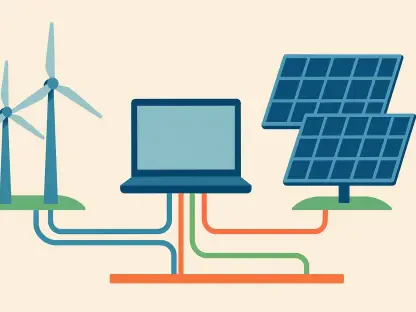
Resilience in a modern grid comes from not putting all your eggs in one basket, and the strategy here is a masterclass in diversification. By utilizing the 200-MW Bronco Plains II wind farm in Kit Carson County alongside the 75-MW Hunter Solar array, the system captures energy from different geographic locations and different meteorological drivers. We also see the vital contribution of three solar-plus-storage facilities that are directly tied into the distribution system, acting like local reservoirs of power that can smooth out the flickering of a passing cloud. Then you have the small-scale hydro facilities tucked away in the service territory, providing that steady, rhythmic baseline of power that complements the more variable wind and solar. It’s a multi-layered defense against outages; if the wind dies down on the plains, the sun over the solar arrays or the rushing water in the hydro plants steps in to maintain that delicate balance of 100% clean delivery.
While March was a success, the year-to-date average for clean energy delivery through April stands at 92%. What are the primary technical hurdles that cause the system to dip below that 100% threshold during other times of the year?
The dip from 100% to a 92% average really highlights the “final mile” challenge of the energy transition, particularly during the non-solar hours of the night and the high-demand spikes of the winter months. When the sun sets and the temperatures drop, the demand for heating can surge just as one of our primary power sources—solar—goes offline, creating a gap that renewables currently struggle to fill alone. To keep the lights on for those 45,000 members during those freezing midnight hours, the utility still has to pull supplemental non-renewable generation through agreements with partners like Xcel Energy. It is a reminder of the physical reality of the grid: electricity must be generated the exact moment it is consumed, and right now, we are still building the flexible capacity needed to cover those dark, cold stretches. Achieving that 92% mark is incredible, but closing that remaining 8% gap requires a level of precision and storage capacity that we are still actively refining.
There has been significant talk about “smart electrification” and “demand flexibility” as tools to reach the 2030 goal. How do these programs actually change the daily relationship between the utility and its members?
Smart electrification is about moving away from the old, passive way of consuming power and instead turning every home into an active participant in the grid’s health. By expanding programs for demand flexibility, the utility can essentially “talk” to smart appliances or electric vehicle chargers to align their power use with the times when the wind is howling or the sun is brightest. Imagine a scenario where your water heater or EV charger automatically waits for a surge in wind production from the Bronco Plains II facility before drawing its heaviest load, effectively storing that green energy as heat or battery power for later. About 60% of the clean energy currently used is already time-matched with Renewable Energy Certificates, and these flexibility programs will push that number even higher by shifting human behavior to match nature’s schedule. It transforms the member from a simple consumer into a vital partner in grid stability, making the entire system more efficient and significantly more affordable for everyone involved.
The role of partnerships, specifically with The Energy Authority and Xcel Energy, seems crucial to maintaining this balance. How does the use of advanced analytics and wholesale agreements ensure that reliability isn’t sacrificed for the sake of sustainability?
No utility is an island, and the strategic partnership with The Energy Authority (TEA) is the “brain” that allows this complex machine to function by using high-level analytics to maximize renewable procurement. TEA works side-by-side with staff to look at the data in real-time, ensuring that every megawatt of green energy is captured and utilized while keeping an eagle eye on affordability for the membership. When the local renewable output isn’t enough to meet the 222.6 MW peak demand, the wholesale power supply agreement with Xcel Energy acts as a vital safety net, providing the residual energy and capacity needed to prevent any flickering of the lights. It’s a dual-layered approach: you use cutting-edge data to squeeze every drop of value out of your own 200-MW wind and 75-MW solar assets, but you keep a strong, reliable connection to the broader grid to handle the unexpected. This cooperation ensures that as we push toward the 2030 goal, the transition remains safe, steady, and grounded in the practical realities of utility management.
What is your forecast for the 2030 goal of providing 100% renewable electricity continually throughout the entire year?
My forecast is that we will reach that 2030 milestone, but the final 8% of the journey will be the most transformative in terms of technological adoption and infrastructure shifts. Between now and then, I expect to see a surge in flexible renewable resources that specifically target the “gap” hours, such as long-duration storage and enhanced geothermal, which will complement the current 200-MW wind and solar portfolios. The grid will become much more “conversational,” with smart electrification programs becoming the standard rather than the exception for all 45,000 members, allowing the utility to breathe with the weather. While we will still face the harsh realities of Colorado winters, the combination of deeper storage, diverse regional partnerships, and a more responsive membership will turn the “first time” success of March into a permanent, year-round standard for the industry.