
Christopher Hailstone brings decades of specialized experience in renewable energy infrastructure and the intricate mechanics of grid reliability. As a leading voice in utility market analysis, he has guided major players through the complexities of decarbonizing heavy industrial loads while maintaining the delicate balance of the electrical grid. Our conversation today centers on the massive “Cowboy Project” in Wyoming, a benchmark initiative that illustrates the growing intersection between tech giants and energy providers. We explore how massive solar arrays and long-duration battery storage are becoming the new standard for powering the digital economy.
How does a 365-MW solar installation paired with an 8-hour duration battery system reshape a local grid, and what technical hurdles arise when integrating high-capacity storage hardware to support data center loads by 2027?
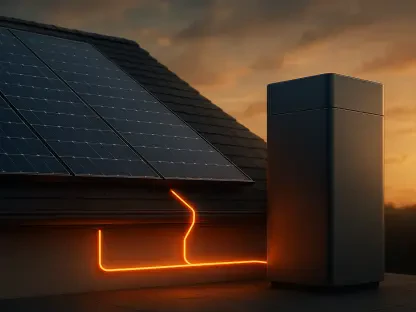
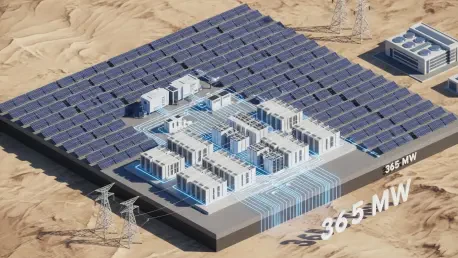
The introduction of 365 MW of solar capacity combined with a 200 MW/1,600 MWh battery system fundamentally shifts the grid from a passive delivery network to a highly flexible, responsive ecosystem. By utilizing an 8-hour battery duration, we can effectively bridge the “duck curve,” storing excess midday solar energy and discharging it during peak evening hours when the sun has set but data center demand remains constant. The technical hurdles for the 2027 startup primarily involve the sheer scale of the hardware; we are deploying Tesla-provided batteries that must be synchronized with the local utility, Cheyenne Light, Fuel and Power. This requires complex inverter tuning and rigorous testing to ensure that 1,600 MWh of stored energy can be dispatched reliably without causing frequency fluctuations on the broader regional grid.
With a total investment reaching $1.2 billion for this phase, what are the primary risk factors in the capital allocation process, and how do you ensure long-term ROI while managing the fluctuating costs of materials and labor over a multi-year construction timeline?
Allocating $1.2 billion requires a meticulous approach to risk management, especially when the timeline extends through the end of 2027. The primary risks involve the volatility of raw material costs for solar panels and the specialized labor market needed for a project of this magnitude in a relatively rural area like Cheyenne. We stabilize the return on investment by securing long-term agreements, such as the battery tolling agreement with the utility, which provides a predictable revenue stream regardless of short-term market swings. Furthermore, by phasing the Cowboy Project, we can lock in procurement contracts early while maintaining the flexibility to adjust our logistics strategies if global supply chains for critical components like high-voltage transformers tighten.
The Large Power Contract Service tariff allows utilities to tap into customer-owned backup generation during peak demand. How does this model protect residential retail rates, and what are the operational trade-offs for a data center when the utility accesses its behind-the-meter storage resources?
The Large Power Contract Service (LPCS) tariff is a brilliant piece of regulatory engineering that ensures massive data center loads do not drive up costs for everyday homeowners. Because the data center investor pays for the behind-the-meter generation and storage, the utility can access that 200 MW of battery capacity during periods of extreme grid stress instead of firing up expensive, carbon-heavy peaking plants. This “virtual power plant” capability prevents the need for costly infrastructure upgrades that would otherwise be passed down to residential customers. For the data center, the trade-off is a temporary reduction in their stored energy reserves, but this is managed through sophisticated software that ensures they always maintain enough “buffer” to protect their critical operations.
Expanding a clean energy portfolio to 1.6 GW of capacity requires significant regional coordination. What logistics and infrastructure challenges are unique to the Cheyenne area, and how do you approach the phased development of massive initiatives like the Cowboy Project to maintain steady progress?
Cheyenne presents a unique logistical landscape where we must balance high-altitude environmental conditions with the need for massive land footprints to house 1.6 GW of solar and wind assets. Moving thousands of components into Wyoming requires heavy coordination with local transportation authorities and a clear understanding of the seasonal construction windows available in the region. We approach this through a phased development strategy, starting with this 365-MW solar and storage phase, which allows us to establish the necessary interconnection pathways before scaling up. This methodical “step-up” approach ensures that we don’t overwhelm the local labor market or the existing transmission capacity, allowing for a smoother integration of renewable energy into the regional mix.
What is your forecast for renewable-powered data centers?
I expect that by the end of this decade, the “off-grid” or “hybrid-grid” data center model will become the industry standard rather than a luxury for tech giants. We are moving toward a reality where data centers will act as the primary stabilizers for the regional grids they inhabit, utilizing massive battery arrays like the 1,600 MWh system in Wyoming to provide essential grid services. As more companies seek to hit 24/7 carbon-free energy goals, we will see an explosion in long-duration storage technologies that allow these facilities to run entirely on sun and wind even during multi-day weather events. Ultimately, the data center of the future will not just be a consumer of power, but a vital, $1.2 billion pillar of energy security for the entire surrounding community.