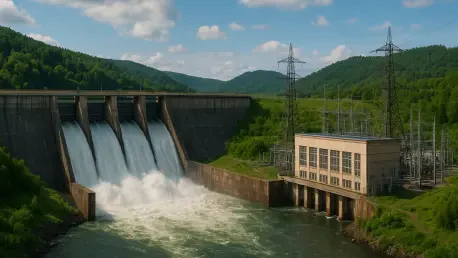

The American power landscape currently relies on a massive, invisible network of flowing water that generates over 80 gigawatts of capacity across more than two thousand active facilities. This sector is undergoing a period of technological optimization and strategic renewal to support a more demanding energy grid. Hydropower provides over five percent of the nation’s electricity, proving its worth as a stable partner to intermittent sources.
The Resilient Backbone: Powering the American Renewable Energy Grid
As the United States accelerates its transition toward a cleaner future, water-based energy remains a steadfast cornerstone of the national power system. Far from being a stagnant industry, the domestic hydropower sector is currently undergoing a period of significant modernization and expansion.
Recent data reveals a landscape defined by 2,258 active plants contributing to the nation’s energy security. This analysis explores how the industry is shifting focus from large-scale new builds to infrastructure optimization and the critical role of storage.
Legacy and Longevity: Tracking the Historical Infrastructure Foundation
Hydropower provided a foundational layer of baseload power for over a century, defining the growth of the American industrial spirit through massive federal projects. Historically, the industry focused on large dam construction, but as the most viable sites were utilized, the emphasis shifted toward maintenance.
Understanding this evolution is vital because it explains the current age of the fleet. Nearly 18% of the installed capacity is currently navigating the complex relicensing process to meet modern environmental standards while ensuring long-term energy reliability.
Modernizing the Fleet: Strategies for Maximizing Existing Assets
The current market environment prioritizes the enhancement of existing facilities rather than the development of entirely new reservoirs. By focusing on efficiency, the industry is finding ways to contribute more to the grid without expanding its footprint.
Strategic Retrofitting: Unlocking Potential in Non-Powered Dams
About 92% of the development pipeline involves adding generation to existing non-powered dams. This strategy minimizes capital risk and land-use conflicts while unlocking energy from already built infrastructure.
Energy Storage Dominance: The Critical Role of Pumped Storage
Pumped storage accounts for over 82% of utility-scale storage capacity. With dozens of new projects in planning, water-based storage remains the preferred solution for long-duration grid reliability.
Global Connectivity: The Rebound of the Turbine Supply Chain
International trade for hydraulic turbines has rebounded significantly, positioning the United States as a major exporter. Trade volume rose notably between 2023 and 2025, ensuring access to high-efficiency components.
Future Innovations: Anticipating Regulatory and Technological Shifts
Future growth will be dictated by streamlined permitting processes. Reducing the six-year relicensing timeline is a priority to ensure that existing plants stay online while maintaining environmental oversight for local ecosystems.
Modular turbine designs may soon allow smaller sites and municipalities to contribute directly to a decentralized grid. These advancements, combined with improved digital monitoring, are turning legacy infrastructure into data-driven power centers.
Strategic Navigation: Actionable Insights for Industry Stakeholders
Stakeholders should focus on modernization and service contracts rather than new builds. Companies specializing in digital monitoring and turbine upgrades are best positioned for success in the current climate.
Navigating the regulatory environment remains essential for project delivery and long-term profitability. Local governments should seek federal funding to evaluate the conversion of existing non-powered infrastructure into viable, revenue-generating energy sources.
Sustained Significance: The Evolving Role of Water-Based Power
The U.S. hydropower sector demonstrated a remarkable ability to pivot toward a modernization-first strategy that addressed the immediate needs of the grid. Stakeholders successfully focused on retrofitting existing dams and expanding pumped storage to provide the stability required for a clean energy transition.
These actions established water-based power as a permanent, reliable pillar of the national infrastructure that adapted to both environmental and economic demands. The industry moved past supply chain hurdles and regulatory bottlenecks to secure its position in the energy mix. This evolution offered a clear roadmap for future decentralized energy initiatives across the country.