
Christopher Hailstone brings years of high-level expertise in energy management and utility infrastructure to the table. As a specialist in grid reliability and electricity delivery, he is uniquely positioned to dissect the massive $33.3 billion public-private partnership between the Department of Energy, SoftBank, and AEP Ohio. This ambitious project, which includes 9.2 GW of gas generation and a total of 10 GW of new power, marks a significant shift in how international capital and domestic energy security intersect in the age of advanced computing. We sat down with him to discuss the logistical, financial, and security implications of this record-breaking development in Southern Ohio.
SB Energy is investing $33.3 billion in Japanese funding to develop 9.2 GW of gas generation in Ohio. How does this massive influx of foreign capital change the typical timeline for domestic utility projects, and what specific logistical hurdles arise when scaling generation to this level within a single state?
The injection of $33.3 billion in Japanese funding essentially puts this project on a fast track that is rarely seen in the domestic utility sector. Typically, projects of this magnitude would be bogged down for years by complex rate-case filings and the slow process of securing domestic financing, but this partnership allows construction to potentially begin within the same year of the announcement. Scaling 9.2 GW of gas generation in Ohio is an unprecedented engineering feat, as it is being touted as the largest natural gas generation project in the world. The logistical hurdles are immense, requiring a massive mobilization of specialized labor and the procurement of high-capacity turbines that must be transported and installed in a coordinated fashion. We are looking at a total transformation of the regional supply chain to support a footprint that is essentially a self-contained energy economy.
Converting a former uranium enrichment facility in Pike County into a gas-fired power hub presents unique engineering challenges. What are the primary steps involved in repurposing such a specialized industrial site, and how do you ensure the legacy infrastructure integrates seamlessly with modern advanced computing requirements?
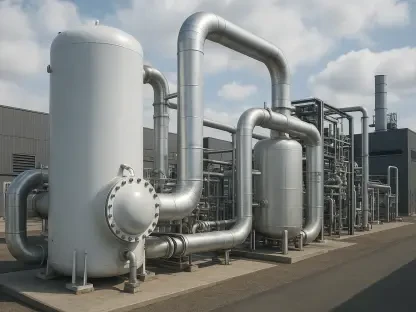
Repurposing a former uranium enrichment facility in Pike County starts with a rigorous environmental assessment and site remediation to ensure the land is safe for new industrial construction. Once the site is cleared, the engineering team must bridge the gap between mid-20th-century industrial design and the needs of a 21st-century power hub. This involves replacing aging heavy-duty infrastructure with modern, high-efficiency gas turbines and building out the high-density electrical architecture required for advanced computing. The goal is to create a seamless interface where the sheer power of the gas plant can be channeled into the low-latency, high-reliability needs of data centers. It is a complex dance of maintaining structural integrity while installing miles of new fiber optics and high-voltage transmission equipment.
Private entities are funding $4.2 billion in transmission upgrades to support the AI boom while pledging to lower local utility rates. How can the grid maintain long-term stability when hyperscalers pay for infrastructure, and what metrics determine if excess capacity is truly benefiting the average residential ratepayer?
The $4.2 billion investment in transmission upgrades by SB Energy and AEP Ohio is a strategic move to ensure that the rapid expansion of AI and data centers doesn’t destabilize the existing grid. Under the Ratepayer Protection Pledge, these hyperscalers are essentially footing the bill for the very infrastructure they require, which prevents the cost from being passed down to local residents. Stability is maintained because these upgrades are designed to handle peak loads far beyond what the current system can manage, creating a buffer that protects against blackouts. We will measure the success of this model by looking at local utility bills; if the partnership works as intended, those rates should remain flat or even decrease as the excess capacity is made available to the general public. It is a rare scenario where the massive energy hunger of the tech sector actually builds a stronger, more affordable foundation for the average American family.
While 9.2 GW is allocated to natural gas, the total package aims for 10 GW of new generation. What specific types of secondary power sources are most compatible with large-scale gas plants to ensure grid flexibility, and how does this mix support the high-density power needs of Southern Ohio?
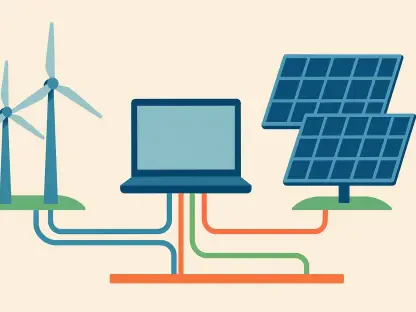
The remaining 0.8 GW of the 10 GW package serves as a critical “flex” component that complements the steady, high-volume output of the 9.2 GW gas plants. To support the high-density power needs of Southern Ohio, we would likely see a mix of battery energy storage systems or perhaps high-capacity solar installations that can provide rapid-response power during peak demand. This combination is essential because while gas provides the reliable baseload needed for 24/7 advanced computing, secondary sources can kick in to manage sudden spikes or provide frequency regulation. This diverse mix ensures that the grid remains resilient and flexible, preventing the kind of volatility that can occur when a system relies on a single energy source. It creates a balanced ecosystem where the gas assets provide the muscle and the secondary sources provide the agility.
New international trade and investment agreements are facilitating these public-private partnerships. Beyond the immediate funding, what are the long-term operational risks of relying on foreign subsidiaries for critical domestic energy infrastructure, and what step-by-step protocols are needed to protect national energy security during construction?
Relying on a foreign subsidiary like SB Energy for such a massive portion of our domestic energy portfolio requires a very disciplined approach to national security. The long-term risk lies in the potential for operational control or strategic decisions to be influenced by foreign interests, which is why the Department of Energy must maintain a heavy hand in oversight. During construction, we need rigorous protocols that include thorough background checks for all contractors and strict cybersecurity standards for the advanced computing components being integrated into the grid. We also must ensure that the physical infrastructure—the pipelines, turbines, and transmission lines—remains under the regulatory authority of U.S. agencies to prevent any external interference. Protecting our energy security means treating this project not just as a financial investment, but as a critical piece of national defense infrastructure.
What is your forecast for gas-fired power generation in the United States?
I forecast that gas-fired generation will remain the indispensable backbone of the U.S. power grid for at least the next two decades, especially as we navigate the massive energy demands of the AI revolution. Projects like this 10 GW development in Ohio demonstrate that gas is the only current technology capable of providing the scale and reliability required to support “hyperscale” advanced computing at a competitive price point. While we will continue to see a rise in renewables, the need for firm, dispatchable power means that natural gas will act as the ultimate stabilizer for a diversifying grid. We are entering an era of “mega-projects” where gas is no longer just a bridge fuel, but a permanent pillar of an infrastructure designed to power the most technologically advanced economy in the world. As long as the demand for 24/7 data processing grows, the demand for the reliable energy provided by natural gas will grow right alongside it.