
The geographic concentration of storage projects in counties like Argeș and Constanța highlights the emergence of specialized energy hubs within the Romanian landscape. This strategic evolution represents a fundamental shift in how the nation manages its power grid, moving from a legacy of rigid fossil fuel production to a flexible, storage-centric architecture. Romania is currently undergoing a rapid transformation of its energy infrastructure, positioning itself as a major contender in the European battery storage market. This momentum is driven by the urgent need to modernize the national power grid and accommodate a growing reliance on intermittent renewable sources like wind and solar. To bridge the gap with regional leaders, the country has embraced a combination of massive private investment, international partnerships, and government-backed grants. This surge in activity marks a transition from minimal storage capabilities to a sophisticated network of utility-scale systems designed for stability.
International Investment and Capital Flows
The acceleration of the Romanian energy sector is characterized by an influx of international capital and technical expertise from across the continent. Prominent firms from Sweden, Austria, Slovenia, and Poland are spearheading high-capacity projects, often in collaboration with local contractors who provide essential domestic technical labor. These developments are supported by significant financial institutions, such as the European Bank for Reconstruction and Development, signaling strong confidence in the economic viability of Romania’s green energy market. As a result, the country is successfully pivoting away from fossil fuels, with new capacity now dominated by solar, wind, and storage solutions. Investors are drawn to the regulatory clarity and the increasing demand for grid services that can mitigate the volatility of renewable generation. This flow of capital ensures that hardware arrives at a pace that matches the rapid construction of wind and solar assets nationwide.
Beyond individual projects, the systemic integration of these technologies requires a deep pool of specialized knowledge that is currently being cultivated within the Romanian workforce. Local engineering firms are no longer just subcontractors but are becoming integral partners in designing the complex control systems that govern battery discharge cycles. This collaboration fosters a robust industrial ecosystem where international best practices meet local logistical expertise. Furthermore, the push for energy independence within the European Union has made Romania a focal point for strategic autonomy in power management. The sheer volume of incoming projects suggests that the local market has reached a maturity level where the risks are well-understood and the returns are predictable. This environment encourages longer-term commitments from institutional investors who seek to diversify their portfolios with stable infrastructure assets while the financial landscape shifts toward green financing models.
High-Capacity Projects and Strategic Infrastructure
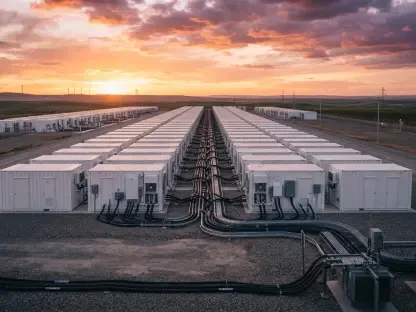
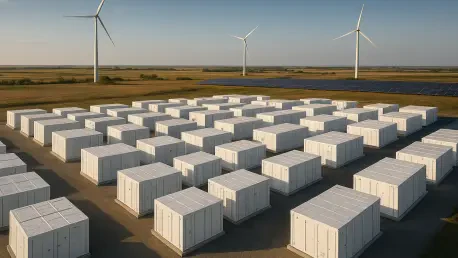
A defining feature of this expansion is the development of massive, high-capacity facilities across specialized energy hubs like Constanța and Giurgiu. Notable projects include Enery’s 400 MW installation in Crucea and a sprawling 543 MW system in Ogrezeni, which is set to become one of Europe’s largest BESS-solar hybrid plants. These facilities utilize advanced infrastructure, such as high-voltage underground lines and containerized battery units, to maximize efficiency while minimizing environmental impact. By focusing on scalability, developers are ensuring that these sites can grow to meet future demand, with some projects designed to reach capacities exceeding 800 MWh. These massive installations act as giant buffers for the national grid, absorbing excess energy during peak production hours and releasing it when the sun sets. The technical sophistication of these sites demonstrates a leap forward in engineering, utilizing modular designs that allow for rapid expansion without disrupting the network.
Beyond private enterprise, the Romanian state is playing a proactive role through its hydropower giant, Hidroelectrica. The company is developing a diverse portfolio of BESS units at key sites like Retezat and Ruieni to create a “hydro-battery” synergy. This approach allows storage systems to compensate for fluctuating water levels and manage peak demand periods effectively. This mix of state-level investment and private commercial optimization ensures a more resilient energy ecosystem, where some facilities focus on market trading while others prioritize national energy security and grid reliability. Integrating batteries with existing hydroelectric infrastructure provides a unique advantage, as it allows for the “black start” capabilities necessary for grid recovery after an outage. Moreover, the proximity of these battery units to high-capacity transmission lines significantly reduces the losses associated with energy transport. This strategy creates a balanced energy profile that is less susceptible to market shocks.
Future Considerations and National Grid Evolution
The rapid expansion of the Romanian energy storage sector established a new benchmark for regional development in Eastern Europe. Policymakers and private investors successfully aligned their interests to create a regulatory environment that favored high-capacity installations. This period of intense growth demonstrated that integrating massive amounts of renewable energy was feasible through a combination of hybridization and state-backed infrastructure projects. The industry recognized that the next logical step involved the diversification of storage technologies beyond standard lithium-ion solutions to include long-duration alternatives. These historical milestones provided the necessary foundation for exploring multi-day storage capabilities and decentralized grid management strategies. By securing these early victories, the nation ensured its energy security while preparing for the complexities of a fully decarbonized system. The lessons learned during this phase of deployment became the blueprint for future grid expansions.
The evolution of the national power grid also required a significant overhaul of digital infrastructure to manage the complexities of decentralized energy assets. Authorities implemented advanced monitoring systems that allowed for real-time adjustments to battery discharge rates based on fluctuating market prices. This digital layer was crucial for optimizing the economic performance of utility-scale storage facilities while ensuring that the physical limits of the transmission lines were never exceeded. Investors observed that the transparency of these systems increased the overall attractiveness of the market, leading to a secondary wave of funding for smaller, localized storage projects. These decentralized units played a vital role in stabilizing the distribution network at the community level, particularly in rural areas where grid connectivity was traditionally weaker. The collective impact of these technological and policy-driven advancements positioned the country as a pioneer in the European green transition.