
Christopher Hailstone is a seasoned authority in grid reliability and utility management, having spent decades navigating the complex intersection of energy policy and infrastructure security. As the mid-Atlantic region faces a heat wave of historic proportions, his expertise provides a vital lens through which to view the current emergency and the desperate measures being taken to prevent a total system collapse. In our conversation, we explore the unprecedented strain on the PJM Interconnection as it nears a twenty-year-old demand record, the tactical decision to prioritize immediate generation over environmental standards, and the emerging role of massive data centers as a last-resort reserve for the public power grid.
The PJM grid is currently bracing for a peak load that could shatter the long-standing record of 165,563 MW set back in 2006. Based on your experience with grid stress, what makes this specific heat wave such a high-stakes moment for our regional infrastructure?
What we are seeing right now is a perfect storm of environmental intensity and systemic demand that tests every component of the grid simultaneously. When temperatures soar and the heat index reaches a staggering 115 degrees, the physical strain on transformers and transmission lines becomes immense, as they lose their ability to cool down effectively. Since June 25, PJM has had to take the aggressive step of recalling all maintenance outages to ensure every available megawatt is online, which highlights just how thin our margins have become. The 165,563 MW record stood for nearly two decades as a symbol of peak capacity, but passing it now suggests we are entering a new era where our current infrastructure is being pushed beyond its original design limits under the weight of a relentless mid-Atlantic summer.
Energy Secretary Chris Wright recently took the rare step of ordering PJM to maximize generation from fossil fuel plants, essentially bypassing certain environmental constraints to meet this emergency. How do you view the trade-offs being made when public safety and grid stability are pitted against long-term climate goals?
It is a difficult, high-stakes trade-off, but in a crisis of this magnitude, the Secretary’s primary mandate is to protect the public interest and prevent a catastrophic loss of power. The DOE order specifically targets fossil fuel plants, including dual natural gas and fuel oil units, because they provide the reliable, dispatchable power needed when the system is under extreme load stress. While it is undeniably painful to see a conflict with environmental standards, the alternative is a widespread grid failure during a weekend where record-breaking heat is forecast to last through Independence Day. We are currently in a defensive posture where these older, “specified resources” act as a necessary shield against the life-threatening consequences of a massive blackout.
One of the most intriguing aspects of the current emergency order is the authority given to PJM to curtail data centers and utilize their backup generation. What does this move signify for the future of how large-scale energy consumers are integrated into the public grid?
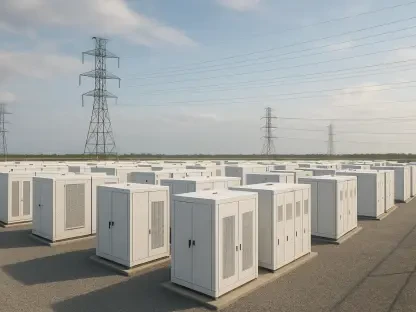
This is a landmark shift that acknowledges the “tens of gigawatts” of backup generation capacity sitting quietly behind the walls of massive data centers and hyperscaler facilities. By potentially disconnecting these large loads from the utility source and forcing them to rely on their own internal power systems, PJM is essentially tapping into a private, distributed power plant to save the public grid. It is a “last resort” measure that happens just before we reach the point of voltage reductions or forced load sheds for residential customers. This strategy transforms these massive energy users from a liability into a tactical reserve, though it requires a high degree of coordination between transmission owners and electric distribution companies to execute without disruption.
With NYISO projecting a peak of 32,410 MW and ISO New England expecting exceptionally tight conditions around 7 p.m. on Thursday, we are seeing a simultaneous crisis across the Eastern U.S. How does this regional synchronization of heat affect the ability of different grid operators to help one another?
The interconnected nature of our grids is usually our greatest strength, but when a heat wave blankets the entire central and eastern U.S., that strength can quickly turn into a bottleneck. Usually, if one region is struggling, it can import power from a neighbor, but when everyone is hitting their peak load at once—like ISO New England bracing for 25,850 MW while PJM is breaking records—there is no surplus to share. This isolation is why Con Edison has had to issue such specific alerts, asking customers to limit their use of large appliances between 2 and 10 p.m. to manage the local load. When the entire seaboard is sweltering, each grid operator is essentially fighting an isolated battle to keep their specific territory stable without the usual safety net of regional energy transfers.
As we see thousands of outages already reported and the threat of severe weather adding to the chaos, what is your forecast for the future of grid reliability during these increasingly common extreme weather events?
My forecast is that we are moving toward a model where grid stability will depend as much on “demand-side” participation as it does on traditional generation. We can no longer rely solely on a centralized system to absorb 115-degree heat spikes, which means the integration of private backup generation and more aggressive conservation measures will become our new standard operating procedure. I expect that the next few years will see a massive push to formalize the roles of data centers and industrial sites as active participants in grid security, essentially turning every large load into a potential source of relief. Without a significant expansion of transmission capacity and a more flexible approach to emergency generation, we will likely see these “tight operating conditions” become a frequent, seasonal reality for the American public.