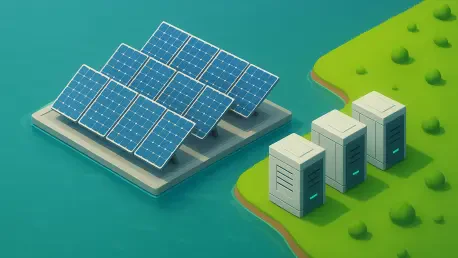

By placing photovoltaic modules on Lake Sake in the Eastern Province, Rwanda is leveraging its water bodies to save valuable land for agriculture while boosting its solar output. This initiative represents a cornerstone of the national strategy to modernize the power grid and meet the growing demands of a rapidly industrializing economy. Currently, the country possesses an installed capacity of approximately 467.14 MW, which is a significant increase from the meager 100.4 MW available in 2010. The government has committed to a $3.2 billion roadmap designed to push this capacity to 1,066 MW by 2034. By diversifying the energy mix, which has historically been dominated by hydroelectric power, Rwanda is insulating its economy against the risks of climate change and seasonal water fluctuations. The 200 MW installation on Lake Sake is the first major step in this transition, marking a significant departure from traditional land-based solar farms. It is a bold move toward a secure and sustainable future.
Technical Execution and Grid Connectivity
Infrastructure Design: Engineering for Aquatic Environments
Constructing a utility-scale solar facility on a moving water surface presents unique engineering challenges that require a high degree of technical precision and innovative material science. The developer selected for the Lake Sake project must implement advanced mooring and anchoring systems that allow the floating structures to adjust to changing water levels and wind conditions without compromising the integrity of the electrical connections. High-performance photovoltaic modules specifically designed for high-humidity environments will be deployed to ensure long-term durability and efficiency. This approach not only maximizes energy capture by utilizing the natural cooling effect of the water but also protects the local ecosystem by carefully managing the placement of the anchoring points. The design phase encompasses a full lifecycle perspective, ensuring that the facility can be maintained and operated efficiently throughout its intended multi-decade lifespan on the lake.
Distribution Logistics: Integrating Advanced Storage and Automation
Integral to this technical framework is the inclusion of an 800-megawatt-hour Battery Energy Storage System, which serves as a vital buffer between the variable output of solar generation and the fluctuating demands of the national grid. By storing energy during the sunniest parts of the day, the system can discharge electricity for up to four hours during the evening peak, when residential and commercial usage is at its highest. This capability is complemented by the integration of sophisticated Supervisory Control and Data Acquisition systems, which provide operators with real-time visibility into the performance of the plant and the state of the 220 kV transmission lines. These automation tools allow for immediate adjustments to maintain voltage and frequency stability across the network. Furthermore, the storage system offers black start capabilities, providing a reliable mechanism to restart the national grid independently in the event of a total system failure.
Project Financing and Partnership Framework
Investment Standards: Public-Private Partnership Dynamics
The financial structure of the Lake Sake project is built upon a Public-Private Partnership model that leverages the efficiency of the private sector while aligning with national development goals. Under an Independent Power Producer scheme, the winning bidder will enter into a 25-year Power Purchase Agreement with the Energy Utility Corporation Limited, the primary off-taker for the country’s electricity. This long-term contract provides the necessary revenue certainty to secure large-scale international financing, making the project attractive to global institutional investors. By delegating the design, construction, and operation to an experienced developer, the Rwandan government minimizes the direct fiscal burden on the state while ensuring that the infrastructure is built to international standards. This arrangement highlights a sophisticated approach to energy procurement, where the focus is shifted from immediate capital expenditure to long-term service delivery and reliable generation.
Long-Term Agreements: Rigorous Selection and Financial Stability
To ensure that only the most capable entities participate in this high-stakes venture, the Energy Development Corporation Limited has established stringent pre-qualification criteria for all prospective bidders. Applicants must demonstrate a robust track record in the renewable energy sector, including at least ten years of experience in the design and management of complex power plants. Financial stability is equally prioritized, with the requirement that firms show an average annual turnover of at least $300 million over the period from 2023 to 2025. Additionally, companies must prove they have immediate access to $60 million in liquid assets and an equivalent amount in established credit lines. These rigorous standards are intended to filter for partners who possess the technical expertise required to manage a $3.2 billion energy roadmap. By restricting joint ventures to a maximum of two companies, the government also ensures streamlined project management and accountability.
Sustainable Growth and Future Energy Strategy
Land Conservation: Maximizing Resource Efficiency
One of the most compelling advantages of floating solar technology in Rwanda is its ability to circumvent the land-use conflicts that often arise with massive ground-mounted installations. In a country where land is a precious commodity for both a growing population and a vital agricultural sector, utilizing the surface of Lake Sake allows for the expansion of energy capacity without displacing farmers or encroaching on protected wildlife habitats. This strategy creates a dual-benefit scenario: the solar panels reduce the amount of water lost to evaporation by shading the lake’s surface, while the water itself keeps the modules cool, thereby increasing their operational efficiency compared to land-based counterparts. By prioritizing this innovative spatial solution, the government is demonstrating a commitment to climate-resilient development that balances industrial needs with environmental stewardship and food security for its citizens on a national scale.
Regional Energy Leadership: Scaling Renewable Innovations
Building on the success of the Lake Sake initiative, the government is already looking toward further expansions, including a secondary 200 MW installation at the Nyabarongo II dam. This forward-thinking strategy positions Rwanda as a regional pioneer in the adoption of floating solar technology, offering a blueprint for other land-linked nations in East Africa that possess significant inland water resources. As the country moves toward its goal of 100% electricity access for all households, these projects provide the necessary high-capacity generation to support new industrial zones and modern irrigation schemes. The integration of renewable energy at this scale not only reduces the carbon footprint of the national grid but also enhances energy independence by reducing the need for imported fuels. This transition reflects a broader vision of a modernized economy where sustainable infrastructure serves as the primary engine for social progress and regional integration.
Strategic Outcomes and Implementation Milestones
The implementation of the Lake Sake floating solar project provided a definitive answer to the challenge of balancing rapid energy growth with limited land availability. By establishing rigorous financial benchmarks and technical standards, the government successfully attracted the high-level investment required to modernize the national grid. Moving forward, the focus shifted to the rigorous monitoring of the Power Purchase Agreement and the integration of the battery storage system into daily grid operations. Stakeholders recognized that the technical success of this project depended on the continuous training of local engineers to manage the SCADA systems and the maintenance of the high-voltage transmission infrastructure. The lessons learned from the Lake Sake installation were immediately applied to subsequent renewable energy tenders, ensuring that the 2034 capacity goals remained within reach. This initiative effectively demonstrated that sustainable technology could be successfully merged with large-scale economic development goals.