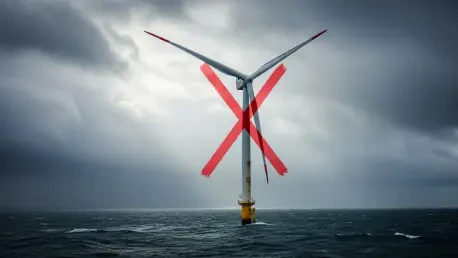

The ambitious landscape of American renewable energy recently encountered a massive financial correction as developers began allocating billions of dollars specifically to terminate existing offshore wind contracts. While the initial vision for these projects promised a rapid transition to carbon-neutral grids along the Atlantic coast, the reality of 2026 reveals a complex intersection of high interest rates and disrupted global supply chains that rendered original price agreements obsolete. This strategic withdrawal is not a sign of permanent failure but rather a calculated maneuver to reset the economic foundation of an industry that grew too quickly under unsustainable financial assumptions. By paying massive exit fees, companies are essentially buying the right to renegotiate or wait for more favorable conditions, highlighting the extreme volatility inherent in large-scale marine engineering projects. This phenomenon has sparked intense debate regarding the long-term viability of current state mandates.
Economic Drivers: The Shift in Project Viability
Part 1: Inflation and the Cost of Capital
The primary driver behind this wave of cancellations remains the sharp divergence between projected installation costs and the current reality of capital-intensive infrastructure. Since early 2026, the cost of borrowing has remained stubbornly high, forcing developers to reconsider projects that were originally greenlit under zero-interest rate policies. For a typical offshore farm, which can cost upwards of four billion dollars to construct, even a minor percentage increase in interest rates translates into hundreds of millions in additional lifetime expenses. Furthermore, the limited availability of specialized wind turbine installation vessels that comply with the Jones Act has created a bottleneck, driving daily charter rates to unprecedented levels. Developers are finding that hardware costs for nacelles and blades have also risen significantly due to the scarcity of rare earth metals and precision electronics. Consequently, the financial models that once justified these investments have essentially evaporated.
Part 2: Market Realignment and Exit Fees
Terminating these agreements often involves paying substantial penalties to state utility commissions, yet many energy firms view these costs as a necessary sacrifice to avoid long-term insolvency. In many cases, developers signed long-term power purchase agreements several years ago with fixed prices that do not account for the current inflationary environment. If a company were to proceed with construction under those old terms, they would likely be selling electricity at a significant loss for the next twenty years. By choosing to pay cancellation fees now, which often range from fifty million to over two hundred million dollars, these corporations can clear their balance sheets and participate in upcoming auction rounds with more realistic pricing tiers. This trend suggests a shift toward more flexible contracting where price adjustments are tied to external economic indicators. This restructuring phase is critical for the industry to move away from the speculative expansion of the past.
Strategic Resilience: Adapting to New Realities
Part 3: Localizing the Specialized Supply Chain
A central component of the current strategic pivot involves the aggressive localization of manufacturing and logistics to reduce exposure to international shipping disruptions. The industry realized that relying on European or Asian production hubs for massive components like monopile foundations was a significant risk factor during periods of geopolitical tension. To address this, massive investments are being redirected into domestic facilities such as the New Jersey Wind Port and other specialized terminals along the Northeast corridor. These regional hubs are designed to provide the necessary staging area for heavy lift operations while simultaneously fostering a workforce skilled in high-tech marine construction. By bringing the supply chain closer to the project sites, developers can significantly lower the fuel costs and logistical complexity associated with transporting oversized components. This shift supports the local economy and creates a more predictable delivery schedule.
Part 4: Implementing Adaptive Policy Frameworks
Effective responses to these challenges necessitated a complete overhaul of how state and federal agencies managed renewable energy procurement and risk sharing. Authorities recognized that fixed-price contracts were insufficient in a volatile economy, leading to the adoption of inflation-indexed adjustments that protected both the developer and the consumer from extreme market swings. This evolution in policy allowed for a more collaborative approach where the risks of unforeseen global events were distributed more equitably across the entire energy ecosystem. Industry leaders focused on transparency and long-term stability rather than rapid, unfunded expansion, ensuring that subsequent projects rested on a firmer financial footing. As the sector moved forward, the lessons learned from the costly cancellations provided the blueprint for a more mature and sustainable offshore wind industry. By prioritizing modular growth and infrastructure resilience, stakeholders ensured the transition remained viable.