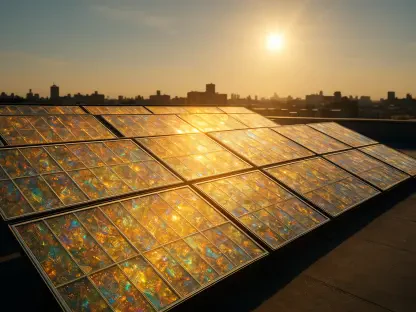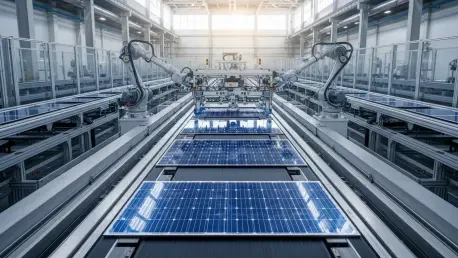

The quiet transformation of the American landscape is visible in the rising steel of Laurens, South Carolina, where a massive industrial shift is taking root to redefine national energy sovereignty. This $350 million solar production facility represents more than a local investment; it is a declaration of intent to end decades of dependence on foreign energy components. By aiming for a 4.5-gigawatt (GW) capacity by 2027, this project targets the heart of the supply chain, propelling Suniva to the forefront as the premier merchant solar cell manufacturer in the country.
The 4.5-Gigawatt Catalyst: American Industrial Resurgence
The facility in Laurens serves as a pivotal anchor in a broader strategy to localize production and mitigate risks associated with international logistics. Once fully operational, the expansion will elevate the company’s total domestic manufacturing capacity to over 5.5 GW. This volume is critical for a nation striving to balance rapid decarbonization with the need for a stable, home-grown industrial base. By scaling up so significantly, the project signals that the era of treating the United States as merely a final assembly point for foreign-made parts is nearing its conclusion.
Furthermore, the scale of this project acts as a magnet for ancillary industries, drawing in suppliers and specialized talent to the South Carolina region. The sheer magnitude of the 4.5-GW expansion demonstrates a level of confidence in the domestic market that was absent only a few years ago. This surge in capacity is designed to meet the growing appetite of American utility companies that are increasingly under pressure to source components that comply with strict labor and environmental standards.
Deciphering the Legislative Drivers: Domestic Manufacturing
Legislative support has proved indispensable in making such large-scale domestic projects economically viable in a competitive global market. The Inflation Reduction Act (IRA), particularly the 45X advanced manufacturing production credit, provides the necessary financial bedrock for companies to compete against subsidized imports. This policy framework incentivizes every step of the process, ensuring that the high costs of American labor and environmental compliance do not become prohibitive barriers to entry.
This policy alignment arrives at a moment when electricity demand is hitting record highs across the country. The proliferation of AI-driven data centers and the massive energy requirements of advanced computing infrastructure have created an urgent need for reliable, carbon-free power. Consequently, the solar cells produced in South Carolina will be essential for meeting these demands without relying on volatile international markets that are often subject to sudden trade restrictions or shipping delays.
Overcoming the Upstream Bottleneck: Energy Security
For years, the domestic solar market suffered from a significant imbalance where the capacity to assemble finished modules far exceeded the capacity to produce the actual cells. Suniva’s focus on merchant cell manufacturing specifically addresses this “upstream” vulnerability, which has long been the weakest link in the American energy transition. By creating a domestic source for high-efficiency crystalline silicon photovoltaic cells, the company provides American module assemblers with a reliable alternative to overseas suppliers.
Establishing this mid-stream capability is a fundamental requirement for achieving true energy security and protecting the power grid from geopolitical interference. When the components of the energy infrastructure are developed and controlled within domestic borders, the risk of supply chain weaponization by foreign entities is greatly diminished. This expansion ensures that the technology powering American homes and businesses is not only clean but also insulated from the fluctuations of global trade tensions.
Resilience and Redemption: Global Competition
The path toward this massive expansion was paved with significant challenges, including a 2017 bankruptcy triggered by the global “dumping” of low-cost foreign products. However, the company’s re-emergence in 2019 demonstrated a level of industrial tenacity that has since become a hallmark of the domestic renewable energy sector. Industry advocates, such as the Coalition for a Prosperous America, highlight this journey as a case study for why robust trade enforcement is necessary to protect domestic innovation from predatory market practices.
Recent analyses from firms like Deloitte suggest that the lessons learned from previous market volatility have shaped a more resilient business model. This model prioritizes long-term stability and supply chain integrity over the immediate lure of the lowest possible price point. By reclaiming its position in the market, the company has proven that American manufacturing can survive and thrive when provided with a level playing field and consistent federal support.
Strategic Frameworks: Maturing Clean Energy Market
The path forward required a synchronized approach to policy and technological investment to ensure the long-term viability of the clean energy market. Stakeholders recognized that stabilizing the transition involved more than just building factories; it demanded rigorous trade oversight and a commitment to scaling upstream technologies. By aligning production with the surging demand for carbon-free power, the industry established a more resilient framework that prioritized domestic reliability and technological independence over short-term cost savings.
In the years leading up to this expansion, the focus shifted toward creating a circular economy where domestic components fueled domestic growth. Decision-makers implemented strategies that bridged the gap between manufacturing capacity and the specific needs of high-tech energy consumers. This evolution ensured that the infrastructure supporting the American energy transition remained robust and locally sourced, providing a blueprint for future industrial expansions that sought to balance economic growth with national security interests.