
When the sky turns a bruised purple and cell towers succumb to the fury of a Category 4 hurricane, the flickering glow of a television often remains the final bridge between citizens and life-saving information. This traditional broadcast reliability has long been the gold standard for public safety, operating as a one-to-many communication system that ignores the congestion or failures of local cellular networks. However, as the television industry aggressively transitions to the ATSC 3.0 standard, a modern protocol known as NextGen TV, many experts and regulators are questioning whether this technological leap forward might inadvertently leave some viewers in the dark during a total communications blackout.
The significance of this transition cannot be overstated, as it represents the first major overhaul of broadcast signals since the digital conversion nearly two decades ago. While NextGen TV promises immersive 4K visuals and targeted interactive features, its reliance on sophisticated data packets has sparked a debate about the “connectivity trap.” If the very system designed to protect the public requires an active internet handshake to function, the inherent resilience of over-the-air broadcasting could be compromised. This tension between advanced functionality and basic utility sits at the heart of recent filings with the Federal Communications Commission.
The Critical Intersection of Broadcasting and Public Safety
For decades, the core utility of a television remained its ability to provide free emergency information without requiring a subscription or a data plan. When wildfires or floods disable fiber-optic lines, the high-power transmitters of local stations continue to pulse signals across the landscape, reaching anyone with a simple antenna. This architecture is the backbone of the Emergency Alert System, ensuring that evacuation orders and weather warnings reach the widest possible audience with minimal latency.
The introduction of ATSC 3.0 aims to enhance this capability by allowing broadcasters to send more detailed information, such as hyper-local maps and rich media alerts, directly to specific neighborhoods. Yet, the increased complexity of these signals has led to concerns that the standard might move toward a model where the television behaves more like a web browser than a traditional receiver. Maintaining the “always-on” nature of broadcast safety is essential for vulnerable populations who may not have reliable or affordable broadband access.
The Regulatory Clash Over ATSC 3.0 and Emergency Messaging
A significant dispute has emerged at the Federal Communications Commission involving major broadcasters and technology providers regarding the future of the airwaves. Weigel Broadcasting, a vocal opponent of a rapid “sunset” for the older ATSC 1.0 standard, has cautioned that the new system might create barriers for average consumers. They argue that the migration should not proceed if it risks transforming a free public service into one that requires a stable, paid internet connection to unlock encrypted content or emergency messages.
Technology companies like Digital Alert Systems have engaged in this regulatory battle, defending the technical integrity of the new standard while acknowledging the gravity of the concerns. The debate centers on whether the added layers of security and data management in NextGen TV create unnecessary points of failure. As regulators weigh these arguments, the focus remains on ensuring that the move to a more advanced broadcasting era does not come at the expense of the basic promise of public safety.
Dissecting the Dispute: Hardware Flaws vs. Standard Reliability
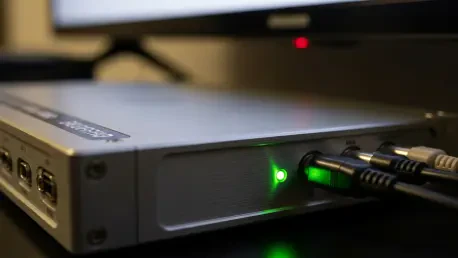
The technical debate intensified following a study by Weigel Broadcasting that tested several low-cost ATSC 3.0 converter boxes in offline environments. The findings were troubling: once disconnected from the internet, certain devices failed to display emergency alerts or even basic programming. This led to the “connectivity trap” theory, suggesting that Digital Rights Management might require a remote server “handshake” to permit any content playback, effectively rendering the device useless when the local internet fails.
In contrast, technical organizations argued that these failures were not indicative of a flaw in the ATSC 3.0 standard itself, but rather a reflection of subpar consumer hardware. They contended that budget-grade tuners often cut corners in their software implementation, failing to prioritize the emergency signal paths defined in the standard. This distinction between a flawed blueprint and poorly built tools is a central point of contention, as it shifts the blame from the technology to the manufacturing process.
Expert Rebuttals on Encryption and Offline Accessibility
The ATSC 3.0 Security Authority and other technical experts have moved to debunk the narrative that NextGen TV is fundamentally tethered to the internet. Their research indicated that the content protection framework was purposefully engineered to treat emergency signals as a priority that bypasses standard encryption hurdles. According to these experts, the protocols allow Emergency Alert System data to be processed and displayed regardless of a device’s network status, provided the receiver follows the official specifications.
Furthermore, these organizations emphasized that the standard includes specific “signaling” data that tells a television how to handle an alert even if the main video stream is encrypted. They maintained that while some early consumer devices might exhibit inconsistent behavior, the underlying architecture of NextGen TV remains a robust tool for crisis communication. The goal of the standard was to provide more information, not less, and the technical community remains confident that a properly built receiver will always deliver the message.
Ensuring Your NextGen TV Hardware Is Emergency-Ready
As the industry moved forward, the responsibility for ensuring reliability shifted from the regulators to the manufacturers and the consumers themselves. It became clear that not all NextGen TV hardware was created equal, and verifying A3SA compatibility was essential for any user looking to maintain a safety net. Certified devices were designed to handle security and emergency protocols without needing external validation from a remote server, ensuring that the television functioned as a standalone lifeline during a disaster.
Staying informed about firmware updates also emerged as a critical step for existing owners, as manufacturers released patches to fix how hardware handled the synchronization of emergency data. For those relying on an antenna, periodic tests of offline functionality became a common recommendation to ensure that local signals remained accessible during a broadband outage. These strategies helped bridge the gap between the sophisticated features of the new standard and the traditional reliability expected by the public.
The evolution of broadcast standards highlighted the necessity of balancing high-tech innovation with foundational reliability. While the debate over NextGen TV hardware initially sparked concern, the technical consensus suggested that the framework for offline emergency alerts was soundly established. Ultimately, the industry moved toward a future where life-saving information remained accessible to all, regardless of their connection to the global web. This transition ensured that even in the quiet of a communication blackout, the airwaves continued to speak to those in need.