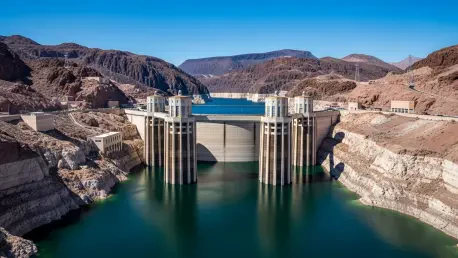

The massive concrete arch of the Hoover Dam, long a symbol of American industrial might and the lifeblood of the Southwest, currently faces a silent but devastating mathematical threshold at Lake Mead. As water levels recede toward 1,035 feet above sea level, the facility nears what engineers call the hydropower cliff, a point where the mechanical physics of power generation begin to fail significantly. This looming crisis is not merely a localized plumbing problem but a fundamental threat to the regional energy grid that supports millions of residents in Nevada, Arizona, and California. For nearly a century, the dam provided reliable base-load power, yet the reality of a multi-decade drought has transformed this engineering marvel into a vulnerability. If the lake reaches this critical elevation, the loss of generation capacity will be swift and severe, forcing a radical transition in how electricity is distributed across the Western United States. The situation highlights a broader conflict between historical water management strategies and the environmental pressures that define the present era, requiring immediate intervention to prevent a catastrophic failure of the regional energy supply chain. Experts emphasize that the speed of the decline has outpaced previous models, creating a sense of urgency that has shifted from long-term planning to active emergency response. Every inch of water lost represents a reduction in the head pressure necessary to drive the massive turbines that keep the lights on in Las Vegas and Phoenix.
Engineering Challenges: The Race to Modernize Infrastructure
The primary technical hurdle lies in the design of the dam’s seventeen power-generating turbines, which were engineered for an era of abundance rather than scarcity. Twelve of these units are decades old and were never intended to operate efficiently when water levels are significantly reduced, as they require a specific amount of hydraulic head to maintain rotation. If Lake Mead drops below the 1,035-foot threshold, these older turbines will become nearly useless because the water pressure will be insufficient to spin them at the required frequency. This would result in an immediate and catastrophic 70 percent loss in the dam’s total power capacity, creating an energy void that cannot be easily filled by existing infrastructure. This is not a gradual decline that utilities can slowly adapt to, but rather a functional failure point that threatens the operational integrity of the entire plant. Engineers are working around the clock to monitor vibration levels and cavitation in the aging hardware, but there is only so much that maintenance can do when the fundamental physics of the reservoir have changed so drastically.
To combat this looming obsolescence, the Bureau of Reclamation has launched a $52 million project to install new wide-head turbines capable of spinning at much lower elevations. These specialized units are designed to work effectively even if the lake drops as low as 950 feet, providing a much-needed buffer against the encroaching hydropower cliff. While these upgrades represent a significant leap forward in mechanical resilience, there is no guarantee they will be finished before the water reaches the critical point of failure. The installation process is complex and time-consuming, requiring each massive turbine to be meticulously balanced and integrated into the existing system. The water is currently disappearing at a rate that may outpace the construction schedule, leaving the regional power grid vulnerable in the short term. Furthermore, the cost of these upgrades must be absorbed by a dwindling pool of energy revenue, creating a difficult financial balancing act for federal managers who must modernize the facility while its primary source of income is literally evaporating into the desert air.
Interconnected Systems: The Domino Effect of Reservoir Management
The situation at Hoover Dam cannot be viewed in isolation, as it is inextricably linked to the health of Lake Powell and the Glen Canyon Dam located further upstream. In a desperate move to protect the infrastructure and power production capabilities of Glen Canyon, federal managers recently took the unprecedented step of cutting water releases from Lake Powell by 20 percent. While this triage approach helped stabilize the upstream reservoir and prevent its own power plant from failing, it effectively starved Lake Mead of its primary water source. This decision has accelerated the decline of the water level in Mead, causing it to drop by approximately one foot every single week during peak consumption periods. This interconnected crisis demonstrates that the management of the Colorado River is now a zero-sum game, where saving one critical piece of infrastructure often comes at the direct expense of another. The policy shift has created a sense of desperation among downstream stakeholders who rely on a consistent flow to maintain both their water supplies and their energy security.
This rapid decline has forced a total rethink of how water is allocated among the seven states that share the Colorado River Basin. For years, legal agreements dictated a specific volume of water that must pass through the system, but those rules were written during an unusually wet period that no longer reflects the current reality. As Lake Mead approaches the hydropower cliff, the traditional priorities of agriculture and municipal use are clashing with the urgent need to maintain reservoir levels for electricity generation. If the lake continues to fall at the current rate, the Bureau of Reclamation may be forced to implement even more drastic cuts to water deliveries, which would have devastating consequences for the region’s multi-billion dollar farming industry. The physical reality of the falling water levels is currently moving much faster than the legal and political processes designed to manage them. This gap between environmental change and bureaucratic response is the central challenge facing the West, as officials scramble to update century-old agreements to survive a future defined by permanent water scarcity.
Economic Impacts: The Rising Cost of Diminishing Resources
The loss of hydropower is already hitting local power districts and consumers in their wallets, signaling the end of an era of low-cost energy for the Southwest. For many decades, the Hoover Dam provided some of the most inexpensive electricity in the country, serving as a foundational economic driver for rural communities and growing metropolitan areas alike. However, as the dam’s output continues to shrink, small utility districts that once relied on this resource for the majority of their power are now forced to navigate the volatile open market. These entities must buy expensive replacement electricity from natural gas plants or invest heavily in new solar projects to bridge the gap. This shift from a stable, federally subsidized resource to a pricey and unpredictable market environment is creating significant financial strain, particularly for low-income residents who are least able to afford rising utility bills. The transition is not just a technical change but a fundamental shift in the economic landscape of the American West, where water and power were once seen as nearly limitless resources.
The financial problem is further compounded by the rigid nature of the dam’s operational costs, which do not decrease in tandem with power production. Because expenses such as infrastructure maintenance, environmental mitigation programs, and debt repayment remain fixed regardless of how much electricity is generated, the price per kilowatt-hour must rise as the total output falls. Experts warn that electricity rates for some customers could potentially triple as the dam produces less energy, forcing a difficult conversation about the long-term affordability of living in the desert. This economic reality is prompting a wave of new investments in local energy independence, as cities look for ways to insulate themselves from the dam’s decline. However, building out new generation and storage capacity takes years and requires massive capital investment, which many smaller municipalities simply do not have. The result is a growing economic divide between wealthy urban centers that can afford to transition to new energy sources and smaller communities that remain tethered to a failing hydraulic system.
Grid Vulnerabilities: Maintaining Stability Without Ramping Power
Beyond the direct cost of electricity, there is deep concern regarding the physical stability of the Western electric grid as the dam’s output becomes less reliable. Hydropower is uniquely valuable to grid operators because it provides essential ramping services, meaning the flow of water can be adjusted almost instantly to balance supply and demand. This capability is vital during the early evening hours when solar power production fades away just as residential electricity use spikes for cooling and lighting. Without the dam’s ability to respond quickly to these sudden shifts, the risk of frequency imbalances and subsequent blackouts increases significantly. Other energy sources, such as nuclear or large-scale coal and gas plants, are far less flexible and cannot be turned on or off with the speed required to manage a modern, solar-heavy grid. The loss of Hoover’s ramping capacity would leave the region’s energy infrastructure brittle and more prone to failure during periods of high stress, such as intense summer heatwaves.
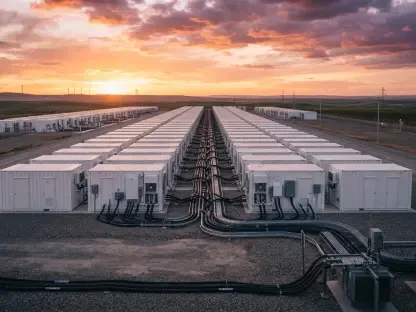
This vulnerability is particularly acute during the wildfire season, when transmission lines are often shut down to prevent fires or are damaged by existing blazes. During these emergencies, local hydropower serves as a critical backstop that can provide immediate energy to stabilize the local network. As the reservoir level approaches the 1,035-foot cliff, the margin for error for grid operators disappears, leaving millions of people at the mercy of a perfectly balanced system with no room for fluctuation. The integration of massive battery storage arrays is often cited as a solution, but the current scale of storage deployment is not yet sufficient to replace the thousands of megawatts that Hoover can provide. The transition period between the era of hydraulic dominance and a storage-based future is fraught with risk, as the old system is failing faster than the new one can be built. Maintaining grid integrity now requires a complex choreography of conservation, demand-response programs, and the strategic use of remaining water resources to prevent a total collapse of the energy network.
Strategic Evolution: Building a Resilient Energy Future
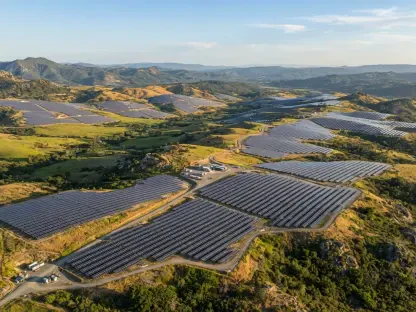
Stakeholders recognized the necessity of decoupling the regional economy from a single, drought-vulnerable energy source by accelerating the integration of utility-scale battery storage and decentralized solar arrays. This shift allowed for a more resilient distribution network that no longer relied exclusively on the hydraulic head of a receding reservoir to maintain frequency stability. Regional planners prioritized the modernization of existing thermal plants to provide temporary backup capacity while permanent long-duration storage technologies matured through heavy investment. These proactive measures ensured that the sudden drop in hydropower output did not lead to widespread grid failure or economic paralysis. By diversifying the energy portfolio, the Western states mitigated the immediate risks posed by the hydropower cliff and established a more sustainable framework for future resource management. This evolution in strategy proved essential for maintaining public safety and economic continuity during a period of unprecedented environmental stress, illustrating the importance of adaptable infrastructure in a changing climate.
The transition also involved a fundamental shift in water conservation policy, where the value of water was finally measured by its energy potential as much as its consumption utility. Agricultural sectors adopted precision irrigation technologies that significantly reduced the volume of water diverted from the Colorado River, allowing more liquid to remain in Lake Mead to support power generation. Utilities implemented aggressive demand-response programs that incentivized consumers to shift their energy usage away from peak hours, reducing the reliance on the dam’s diminished ramping services. These combined efforts successfully bridged the gap until the new wide-head turbines became fully operational, providing a lifeline to the regional grid. Ultimately, the crisis served as a catalyst for a more sophisticated and integrated approach to resource management in the Southwest. The lessons learned during this period of extreme scarcity provided a roadmap for other regions facing similar challenges, proving that technical innovation and policy reform could overcome even the most daunting environmental hurdles.