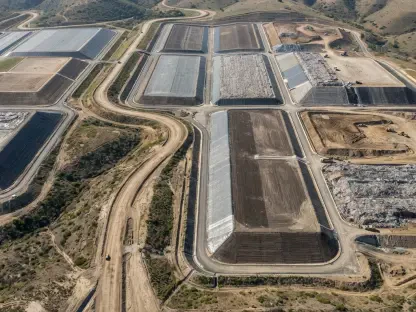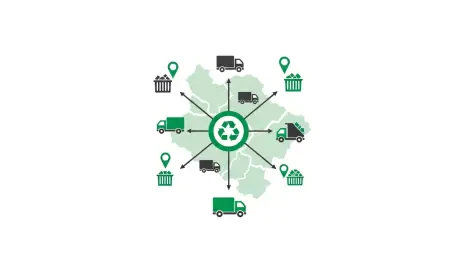

Residents in Houston are currently grappling with a logistical hurdle that has transformed a simple chore into a time-consuming trek across the regional landscape. Ever since the town’s primary private bottle depot closed its doors several years ago, the community has lacked a centralized hub for diverting household waste from the landfill, leaving many to wonder if environmental sustainability is becoming a luxury of convenience. This void has forced local families to haul their glass, plastic, and cardboard nearly twenty kilometers to the Knockholt Landfill, a distance that many argue is prohibitive for those without specialized transport or ample free time. The Houston District Council is now locked in a persistent debate with the Regional District of Bulkley-Nechako over the necessity of restoring these vital services within the town limits. While the regional authority views the current centralized model as a matter of administrative efficiency, the local council maintains that a town without accessible recycling is a town moving backward in its green efforts.
The Regulatory Maze: Why Local Collection Remains Stalled
The primary obstacle cited by the Regional District of Bulkley-Nechako involves a complex web of provincial regulations that govern how materials are processed and sorted. Modern recycling in the province is no longer a simple matter of gathering paper and plastic; it is managed by fifteen distinct non-profit stewardship groups, each dictating specific requirements for every category of waste. These groups demand high purity standards, which are difficult to maintain in the absence of a fully staffed and monitored facility. Without a dedicated supervisor on-site to guide residents and prevent errors, the regional district fears that collected materials will fail to meet the rigorous quality controls set by these stewardship organizations. This labyrinth of regulations creates a situation where any in-town facility would require significant capital investment and labor to ensure that the recycling stream remains free of debris that would render the entire batch unmarketable or ineligible for processing.
Contamination remains the most significant technical hurdle for the regional government when considering the return of unmonitored drop-off bins within Houston’s town core. In previous years, when open-access bins were available, the regional district reported that nearly half of the materials collected had to be discarded due to the presence of non-recyclable items or industrial waste. Furthermore, provincial mandates specifically exclude commercial cardboard and business waste from residential recycling programs, meaning the regional district is not subsidized to handle materials from local enterprises. There is a persistent concern that an unmonitored site would inevitably become a dumping ground for businesses looking to avoid commercial disposal fees, thereby shifting the financial burden onto the residential program. To prevent this, officials insist that any future in-town location must have strict oversight to distinguish between household users and commercial entities, a requirement that complicates the search for a solution.
Human Impact: Navigating Safety Risks and Declining Participation
Safety concerns have taken center stage in the council’s argument, as the journey to the Knockholt Landfill is far from a standard urban commute. The road leading to the facility is a rugged forest service route heavily trafficked by industrial logging trucks, creating a hazardous environment for residents driving small personal vehicles. Council members point out that asking citizens to navigate narrow paths alongside massive timber haulers just to drop off household waste is an unreasonable expectation that compromises public safety. This geographic barrier does more than just delay the recycling process; it introduces a level of physical risk that many residents are simply unwilling to take, especially during the winter months when road conditions deteriorate. By forcing this commute, the regional district has created a system where the most responsible environmental choice is also the most dangerous, leading to a demand for a site that does not require leaving the safety of the town’s paved streets.
The physical distance to the landfill has also led to a measurable decline in community participation, as many residents find the forty-kilometer round trip to be entirely impractical. Councillor Troy Reitsma and other local leaders have observed a troubling trend where glass and paper, once diligently sorted, are now ending up in the standard household trash. When the green option requires an hour of driving and several liters of fuel, the net environmental benefit of recycling is largely negated by the carbon footprint of the vehicle itself. This realization has sparked a sense of apathy among the population, who feel that the system has been designed to fail rather than to facilitate better habits. The council argues that if the goal of the regional district is truly to promote sustainability, then the services must meet the people where they live. Without a local, accessible collection point, the progress made over the last decade in waste reduction is erased by the sheer inconvenience of the current landscape.
Strategic Evolution: Financing and Implementing Localized Solutions
The financial debate between the two levels of government often hinges on the terminology used to describe the allocation of regional funds. The Regional District of Bulkley-Nechako currently spends approximately $120,000 annually to maintain recycling operations at the landfill, but they have shown reluctance to provide what they categorize as a subsidy to private operators within Houston. In contrast, the Houston District Council views these potential payments not as a subsidy, but as a fee for service for an essential public utility. They contend that the regional district is already obligated to provide waste diversion services to all residents, and paying a local business like Rednexx Recycling to facilitate this is a more logical use of taxpayer money than funding a distant facility that many residents refuse to visit. By shifting the perspective to service delivery, the council hopes to unlock the funding necessary to support local partners who provide the monitoring required by provincial standards.
The transition toward a sustainable local recycling model eventually required a fundamental shift in how the council approached regional negotiations. By moving away from general grievances and toward specific, data-backed proposals, the local leadership identified industrial zones capable of hosting modular, monitored facilities. They advocated for technology-driven sorting systems that could mitigate contamination risks, providing a clear path for the regional district to meet its diversion targets without prohibitive labor costs. These steps were designed to ensure that the return of in-town services remained financially viable and environmentally effective for the long term. By fostering a collaborative environment between private businesses and regional authorities, Houston demonstrated that community-led initiatives could overcome bureaucratic inertia. The focus remained on creating a resilient system that balanced provincial regulations with the practical needs of the people, ensuring that the path to a greener future was accessible.