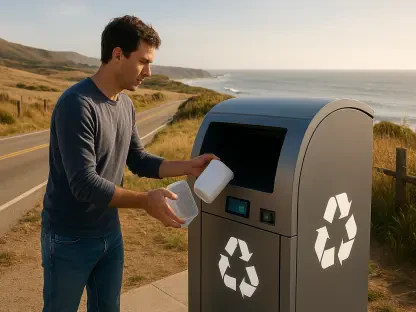

The contemporary industrial sector currently faces an immense challenge in balancing the manufacturing of vital goods with the safe mitigation of hazardous byproducts that pose risks to ecological stability. In this complex environment, Clean Harbors has positioned itself as a central figure by shifting from a traditional disposal model toward a comprehensive circular economy framework. This strategic pivot ensures that hazardous waste is no longer merely an endpoint liability but a source of reclaimed value that fuels modern industrial operations.
The Core Theme of Circular Economy Integration and Carbon Mitigation
The core of this transformation lies in the company’s commitment to achieving a “net climate benefit,” a metric designed to demonstrate that the environmental advantages of its services outweigh the impact of its internal operations. By integrating resource recovery into the heart of its business model, the organization enables its clients to transition away from linear consumption patterns. This approach focuses on capturing value from difficult waste streams, thereby reducing the need for virgin material extraction and lowering the overall carbon intensity of heavy industry.
Furthermore, the integration of circular principles is evidenced by the company’s ability to avoid significantly more greenhouse gas emissions than it generates through its processing and transportation networks. This is achieved through sophisticated incineration technologies and large-scale solvent and oil recycling programs. The resulting operational synergy allows the company to support the decarbonization goals of North American industrial partners while maintaining the rigorous standards required for handling dangerous chemical pollutants.
The Evolution of Industrial Waste Management and Its Global Importance
Industrial waste management has evolved from a niche utility into a vital pillar of corporate sustainability and global regulatory compliance. As social and political pressure to manage “forever chemicals” intensifies, the role of specialized service providers has become more critical than ever. The ability to handle persistent environmental contaminants provides a necessary safety net for the broader economy, allowing diverse sectors to operate without the looming threat of unmanaged environmental degradation.
Moreover, the significance of these services extends beyond simple waste destruction to encompass the recovery of rare resources that are essential for the technological landscape. By serving as the backbone for industrial recycling, the organization manages the complexities of hazardous material handling that individual companies are unequipped to address. This centralized expertise ensures that materials like PFAS and electronic components are treated with a level of precision that safeguards both public health and long-term economic stability.
Research Methodology, Findings, and Implications
Methodology
The analysis of the current industrial landscape is based on performance metrics and operational data disclosed in the 2026 Sustainability Report, which evaluates the 2025 fiscal year. This methodology involved a rigorous examination of quantitative data points, including total resource recovery volumes and the destruction efficiency of specialized hazardous units. Analysts focused on key performance indicators such as the Total Recordable Incident Rate and the net climate benefit factor to provide a holistic view of the company’s impact on both the environment and its workforce.
Findings
The data revealed that the company successfully avoided more than double the greenhouse gas emissions it produced during the previous year. Key achievements included the recycling of 250 million gallons of oil and solvents and the processing of 1.1 million pounds of electronics through specialized hubs. Additionally, the destruction rate for PFAS reached 99.99 percent, setting a high bar for the treatment of persistent contaminants. Operational success was mirrored in human capital metrics, with voluntary workforce turnover reaching a five-year low of 17.28 percent and a record-low safety incident rate of 0.49.
Implications
These findings suggest that the hub-based model for electronics recycling is a scalable solution that can be replicated in various geographic territories to enhance resource recovery. Practically, the results provide a strategic roadmap for other industrial entities to improve their ESG profiles by focusing on internal human capital alongside high-tech environmental solutions. The consistent destruction efficiency for PFAS also establishes a new industry standard, proving that even the most persistent “forever chemicals” can be managed effectively through advanced incineration and professional oversight.
Reflection and Future Directions
Reflection
A review of the 2025 fiscal year highlighted the delicate balance required to manage high-risk emergency responses while maintaining a stable and satisfied workforce. Although the organization successfully reduced turnover through modernized benefits and better communication, the research suggested that maintaining a net climate benefit is an ongoing challenge. The energy-intensive nature of hazardous waste processing requires continuous innovation in logistics and technology to ensure that the carbon avoided continues to outpace the energy consumed in the destruction process.
Future Directions
Future explorations should focus on the expansion of the “CleanFuel” solution and the growth of the e-waste hub model into additional North American regions. Research is also needed to ensure that the 99.99 percent destruction rate for PFAS remains consistent as the volume of waste increases and regulatory requirements become more stringent. Ongoing studies will determine how new technologies can further decouple business growth from environmental impact as the demand for hazardous waste services continues to rise.
Establishing a New Benchmark for Industrial Environmental Leadership
In summary, Clean Harbors demonstrated that industrial sustainability is best achieved through a dual commitment to innovative resource recovery and a safety-first corporate culture. By successfully decoupling business growth from environmental harm, the company solidified its position as an essential partner for the modern industrial landscape. The findings reaffirmed that comprehensive waste management moved from a simple utility to a critical component of the global transition toward a circular economy. Ultimately, the organization proved that high-stakes industrial services can lead the way in environmental stewardship while fostering a resilient and engaged workforce.