
The once-glamorous promise of insect-based burgers and high-end cricket flour has rapidly given way to a more pragmatic and industrial reality focused on the global trash crisis. This fundamental shift marks the dawn of what experts call Insect Farming 2.0, an era where the focus moves away from consumer-facing food products toward the massive-scale processing of organic waste. Instead of positioning larvae as a luxury protein source for the health-conscious, industry leaders are now rebranding these biological agents as essential components of the waste management infrastructure. This transition represents a significant departure from the venture-capital-driven hype of the early 2020s, which prioritized branding over operational reality. By utilizing insects as high-speed bioconverters, companies are finding that the true value lies not in the final meal, but in the service of reducing tons of food waste into manageable, high-value agricultural inputs. This evolution reflects a growing maturity.
Economic Realignment: Gate Fees and Regulatory Nuance
The economic foundations of the insect sector have undergone a total restructuring to ensure long-term viability in a competitive global market. Originally, startups attempted to match the price point of traditional fishmeal or soy protein, but high production costs made this nearly impossible without heavy subsidies. Today, the most successful firms have inverted their revenue models by prioritizing “gate fees”—the money paid by food producers and municipalities to take away their organic waste. This ensures that the facility is profitable before a single gram of protein is even harvested. By treating the resulting larvae and lipids as secondary by-products rather than the primary product, these companies can offer their protein at market-competitive rates while maintaining healthy margins. This shift has turned the industry from a risky livestock venture into a stable, service-oriented business model that mirrors traditional waste management practices found in the city.
Navigating the regulatory maze has also become significantly easier as firms distance themselves from the traditional definitions of animal husbandry. When classified as livestock farmers, insect producers often faced stringent and costly regulations designed for cattle or swine, which rarely applied to the biological needs of black soldier fly larvae. However, by reframing their operations as bioremediation or waste processing facilities, they can often bypass these restrictive rules while qualifying for environmental grants and tax incentives. This strategic pivot allows companies to set up shop in industrial zones rather than agricultural ones, placing them closer to the urban centers where the majority of food waste is generated. This proximity reduces logistical costs and carbon footprints, making the entire supply chain more efficient. Regulators are beginning to recognize that insects offer a unique solution to the growing problem of landfill saturation, leading to faster permit approvals.
Operational Resilience: Technological Innovation and Global Scale
On the global stage, China has established itself as the preeminent leader in large-scale insect waste processing through a highly integrated national food security strategy. Unlike the fragmented markets in other regions, the Chinese approach utilizes a coordinated supply chain where massive breeding hubs provide a consistent supply of young larvae to satellite waste processing facilities. This decentralized model allows for specialized labor and optimized environments, leading to higher yields and lower operational overheads. The government has played a crucial role by providing clear guidelines and integrating insect farming into its broader circular economy targets. As a result, Chinese firms have achieved a scale that Western startups are only beginning to envision, processing thousands of tons of organic matter daily. This industrial maturity provides a blueprint for how to handle the massive volumes of urban food waste that modern megacities produce, turning a liability into a resource for farms.
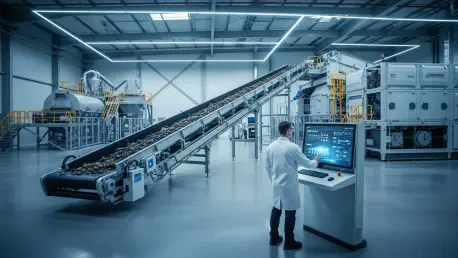
Technological evolution is at the heart of this industrial pivot, with new systems being designed specifically to handle the unpredictable nature of organic waste. Early insect farms often struggled with inconsistent feedstocks, as the nutritional content of urban waste varies significantly compared to standardized agricultural products. Modern setups, such as the FlyBox Fortress system, have introduced advanced sensors and AI-driven monitoring to adjust the environment in real-time, ensuring optimal growth regardless of the input material. One of the most significant breakthroughs involves the capture and reuse of metabolic heat within the larval colonies. Mature larvae generate a substantial amount of heat as they feed, which facilities now harvest to warm the younger insects. This self-sustaining thermal loop significantly reduces external electricity needs, solving a primary cost hurdle. By prioritizing low-cost sustainability over high-tech complexity, the sector has finally found a path to commercial scale.
Regulatory Landscape: Landfill Mandates and Infrastructure Opportunities
The legislative environment is shifting rapidly as governments worldwide implement aggressive bans on sending organic matter to landfills to meet their ambitious climate goals. This regulatory pressure is creating a massive and urgent gap in waste treatment capacity, as traditional composting and landfilling are no longer viable options for many municipalities. For businesses, the cost of disposing of food waste is skyrocketing, creating a powerful incentive to partner with insect farming companies that offer a more efficient and environmentally friendly alternative. These firms are now being viewed not just as protein producers, but as essential infrastructure providers similar to water treatment plants or power stations. By securing long-term service contracts with local governments, insect processors are insulating themselves from the price volatility of the global protein and lipid markets. This transition toward a service-based business model provides the financial predictability needed for hub growth.
The industry eventually moved past the era of high-tech speculation and entered a phase characterized by strategic stability and de-risking. Leaders recognized that relying solely on the fickle consumer market for alternative proteins was a mistake that nearly derailed the entire sector during its infancy. Instead, they focused on diversifying income by prioritizing industrial efficiency and establishing themselves as reliable partners within the global waste supply chain. This transition required a rigorous focus on cost reduction and the development of specialized hardware that could handle continuous waste processing. Municipalities were encouraged to integrate insect bioconversion units directly into their long-term urban planning strategies to maximize efficiency and minimize land use. Investors learned to value these operations based on their role in the circular economy rather than their potential to disrupt the meat industry. This proactive approach allowed the sector to remain resilient.