
The sheer volume of organic matter typically discarded in domestic refuse bins represents a significant untapped resource that modern municipal strategies are now beginning to reclaim with remarkable efficiency. In the historic county of Lincolnshire, the recent implementation of a dedicated food waste recycling initiative has demonstrated how rapidly a community can pivot toward more sustainable waste management practices when provided with the right tools and information. Launched as a strategic move by the local county council, the program has successfully completed its initial phase, diverting thousands of tonnes of food scraps from traditional landfill sites. This shift does not merely address local disposal challenges but serves as a broader blueprint for regional environmental stewardship. By focusing on operational fluidity and public enthusiasm, the council has managed to create a framework where individual household actions contribute to a measurable collective impact on the region’s overall carbon footprint.
Quantifiable Growth and Public Adoption
Measuring Impact: Diversion and Household Engagement
Within the first ninety days of the weekly collection service being introduced, residents across the designated trial areas have already successfully diverted over 3,440 tonnes of food waste from the general rubbish stream. This total reflects an average weekly collection rate of approximately 275 tonnes, highlighting a steady and reliable flow of organic material into the recycling system. Data analysis suggests that the participation rate has stabilized at about 60% of targeted households, which indicates that a significant majority of the population has embraced the change as a standard part of their weekly routine. This rapid adoption is particularly evident during peak periods, such as bank holidays, where waste volumes typically surge. The consistency of these figures provides the council with a robust dataset to plan for future expansions, ensuring that the infrastructure remains capable of handling increased loads as more neighborhoods join the scheme across the entire region.
Education and Public Trust: Building Sustainable Habits
Success in waste management is rarely about logistics alone; it depends heavily on the willingness of the public to change long-standing disposal habits through clear and transparent communication strategies. Public sentiment regarding the new food waste program has been overwhelmingly positive, with 83% of surveyed participants reporting high levels of satisfaction with the ease of use and the reliability of the collection crews. A major driver behind this success has been the proactive educational campaign titled “Rubbish Rumours,” which utilizes a series of targeted videos to demystify the recycling process and provide practical advice to households. Consequently, approximately 97% of users now report feeling entirely confident in identifying which materials belong in their food caddies. This high level of literacy has kept contamination rates remarkably low, which is crucial for maintaining the quality of the raw organic material required for downstream processing.
Refining Daily Operations
Logistics and Maintenance: Ensuring Service Continuity
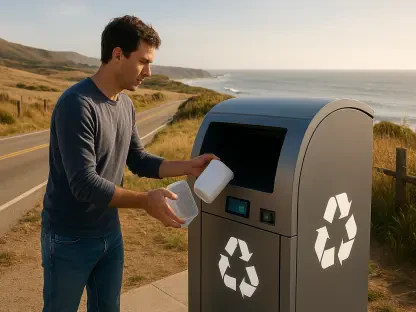
To maintain the program’s efficiency and hygiene, the council encourages residents to set out their caddies every week, regardless of how full they are. This practice prevents odors and ensures a consistent flow of material for energy production. Additionally, the council has clarified that standard plastic liners are acceptable because they are mechanically removed at processing facilities, saving residents the extra expense of specialized compostable bags. Managing a county-wide rollout involves overcoming minor logistical hurdles, such as securing lightweight caddies during high winds and adjusting to new collection routes. The council has worked closely with crews to ensure caddies are placed in visible, secure spots after emptying to prevent them from blowing away. While a small number of missed collections occurred during the initial settling-in period, transparent communication has helped maintain public trust as the logistical framework matures and residents adjust.
Operational Hygiene: Standardizing Household Participation
The council’s focus on streamlining the user experience has been instrumental in keeping engagement levels high and operational costs manageable. By allowing the use of ordinary plastic bags as liners, the program has removed a significant financial barrier that often hinders the long-term success of similar environmental schemes. This pragmatic decision acknowledges that household convenience is a primary driver of compliance in municipal recycling efforts. Furthermore, the emphasis on weekly collection schedules has helped to normalize the process, making it as routine as traditional refuse disposal. This regularity is vital for the health of the collection ecosystem, as it prevents the stagnation of organic matter which can lead to sanitation issues in residential neighborhoods. The integration of these simple, accessible guidelines has allowed the council to focus its resources on optimizing the transport and processing stages of the entire waste lifecycle.
Transitioning to a Circular Economy
Resource Conversion: From Waste to Renewable Energy
At the heart of this initiative is a commitment to a circular economy, where food waste is transformed into valuable resources rather than sitting in a dump. Through a partnership with BioteCH4, the organic matter is processed via anaerobic digestion to create renewable biogas and nutrient-rich fertilizer. This closed-loop system supports local agriculture and reduces fossil fuel reliance, proving that thoughtful waste management can yield significant economic and environmental rewards for the entire region. The biogas produced is funneled into the grid to power homes, while the bio-fertilizer provides a sustainable alternative to synthetic options for regional farmers. This synergy between urban waste management and rural agricultural needs creates a resilient economic model that benefits all stakeholders. By valuing every tonne of waste as a potential source of energy, Lincolnshire is effectively decoupling growth from environmental degradation.
Strategic Advancements: Future Directions in Resource Management
The initial success of the food waste collection scheme established a clear pathway for future advancements in regional sustainability and resource efficiency. Decision-makers analyzed the operational data from the pilot phases to identify specific areas where the collection network could be strengthened through better route optimization and enhanced vehicle technology. It was observed that the integration of digital tracking systems allowed for real-time monitoring of collection progress, which significantly reduced the time required to resolve resident inquiries. Looking ahead, the focus shifted toward expanding these services to high-density housing developments and commercial sectors to capture even larger volumes of organic matter. By treating food waste as a strategic asset rather than a disposal problem, the region laid the groundwork for a more resilient and self-sufficient local economy that met increasingly stringent targets.