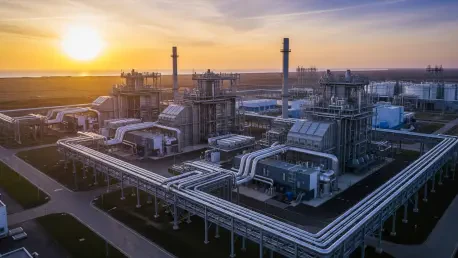

The rapid acceleration of industrial growth across the Palmetto State has pushed the existing electrical grid to its absolute limits, necessitating a monumental shift in how the region approaches its long-term energy security. This week, state regulators and utility leaders finalized a landmark agreement to construct a massive five-billion-dollar natural gas facility designed to bridge the gap between traditional coal-fired generation and the renewable future that lies ahead. As major manufacturing hubs for electric vehicles and battery technology continue to expand within the state borders, the demand for reliable, baseload power has surged to levels that previous forecasts simply did not anticipate. This massive investment represents a calculated gamble on natural gas as a bridge fuel, aiming to provide a consistent supply of electricity while the state simultaneously invests in solar and wind projects that are not yet capable of carrying the full industrial load.
Strategic Imperatives for Regional Energy Stability
Economic Drivers: Supporting Industrial Growth
South Carolina has become a focal point for the global manufacturing sector, attracting multi-billion-dollar investments from automotive titans and high-tech battery producers who require massive, uninterrupted power feeds. These facilities operate on a twenty-four-hour cycle, meaning that any fluctuation in the power supply or any threat of rolling blackouts could result in millions of dollars in lost productivity and damaged equipment. The decision to approve this new five-billion-dollar natural gas plant reflects a pragmatic response to these industrial requirements, ensuring that the infrastructure remains robust enough to support the sheer scale of modern manufacturing. By providing a stable energy foundation, the state maintains its competitive edge in the national market, signaling to global corporations that South Carolina is capable of meeting their utility needs. This move is less about a preference for fossil fuels and more about the immediate reality of current energy consumption.
Grid Resilience: Managing the Transition from Coal
As the energy landscape undergoes a fundamental transformation, the decommissioning of aging coal plants has left a significant void in the baseload capacity of the regional grid. Natural gas has emerged as the most viable immediate replacement because it can be ramped up or down quickly to compensate for the variability of renewable sources like solar and wind. This flexibility is critical in a climate where weather patterns are becoming increasingly unpredictable, leading to spikes in heating and cooling demands that can strain less adaptable power sources. The new facility will utilize advanced turbine technology that offers higher thermal efficiency than older models, effectively reducing the overall carbon footprint per megawatt-hour produced compared to the plants it is replacing. This shift ensures that the grid remains resilient during peak usage periods while the state waits for large-scale battery storage technology to become more cost-effective and widely available for deployment.
Regulatory Framework and Environmental Oversight
Policy Challenges: Balancing Interests and Carbon Goals
The approval process for a project of this scale involved rigorous scrutiny from the Public Service Commission and various legislative bodies tasked with protecting consumer interests. These regulators had to weigh the immediate need for power against the long-term financial burden placed on utility ratepayers who will ultimately fund the construction through their monthly bills. Extensive public hearings and expert testimony provided a platform for debating the merits of natural gas versus an accelerated shift toward purely renewable options. The resulting consensus emphasized that while a green transition is the ultimate goal, the current technology does not yet support a full departure from fossil fuels without risking systemic instability. Legislators worked to implement safeguards that ensure the utility companies remain accountable for cost overruns and environmental compliance throughout the construction. This regulatory oversight was essential for gaining the public trust required.
Future Pathways: Integrating Clean Energy Solutions
The successful approval of the five-billion-dollar natural gas plant established a clear precedent for how South Carolina navigated the tension between rapid industrial growth and environmental stewardship. Strategic planners recognized that the path to a sustainable future required a reliable foundation that only modern natural gas technology could provide in the immediate term. To move forward, the state prioritized the development of a hybrid grid that successfully integrated this new baseload capacity with an expanding portfolio of renewable assets. Utility providers focused on implementing advanced monitoring systems that allowed for the seamless blending of diverse energy sources, ensuring that the transition did not compromise affordability for the average citizen. By addressing the technical and economic hurdles early in the process, the region secured its position as a leader in the modern energy economy. This decisive action provided the necessary stability for long-term planning.