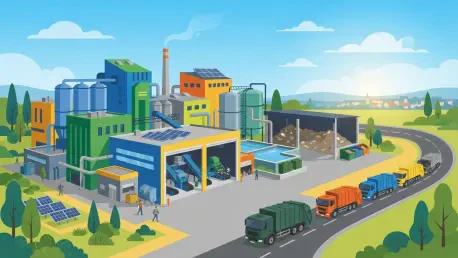

Planning recommendations for the new Worksop facility include strict limits on heavy truck movements, restricting arrivals and departures to 50 per day to protect local traffic flow. This regulatory measure highlights the careful approach taken by Nottinghamshire County Council as it evaluates a proposal from Envale UK Limited to revitalize a long-dormant industrial site on Shireoaks Road. The project represents a sophisticated intersection of industrial modernization and environmental policy, aiming to transform waste management through high-tech recycling solutions. However, the path to implementation is fraught with significant local resistance, as demonstrated by a sizable petition signed by 1,230 residents and hundreds of formal letters expressing concern. While the planning officers have signaled their support for the development, the tension between regional economic goals and the preservation of residential quality of life remains palpable. This case underscores the challenges of situating infrastructure.
Technical Innovation: The Pyrolysis Process
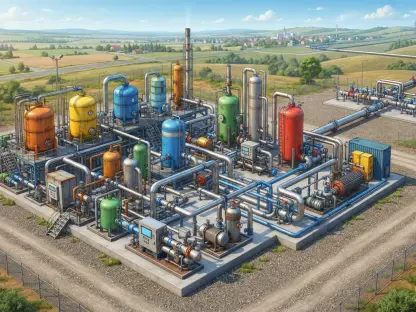
The core of the Envale UK Limited project is defined by a chemical recycling plant that utilizes advanced pyrolysis technology to address the global plastic waste crisis. By heating non-recyclable plastic materials to approximately 500 degrees Celsius in a specialized oxygen-free environment, the facility avoids the traditional emissions associated with incineration. This thermal decomposition process breaks down the waste into gaseous and liquid components that can be further refined into 14,000 tonnes of high-quality petrochemical feedstock every year. The ultimate objective is to support a circular economy by providing the necessary raw materials for the production of new plastics, thereby reducing the reliance on virgin fossil fuels. This approach transforms a discarded byproduct into a valuable resource, aligning with broader industrial goals to minimize environmental footprints. By focusing on molecular recovery rather than simple combustion, the plant sets a new technical standard.
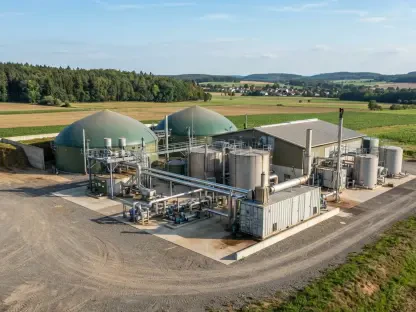
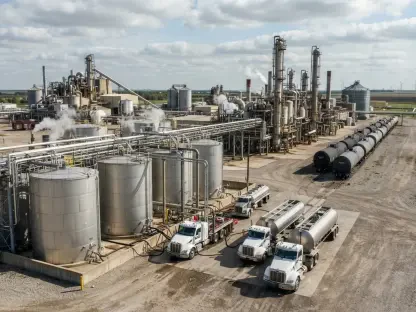
In addition to the chemical recycling unit, the proposed site will incorporate a robust energy recovery facility designed to manage over 24,000 tonnes of residual waste that cannot be processed otherwise. The heat and electricity generated through this secondary thermal process are intended to power the entire plastic recycling plant, making the operation largely self-sufficient in terms of energy consumption. Any surplus electricity generated by the facility will be diverted to the national grid, contributing to the regional power supply and enhancing the project’s utility to the broader community. Architecturally, the development is planned to feature two primary industrial buildings connected by an enclosed conveyor system, which helps to contain noise and dust. To ensure proper ventilation and emission management, the design includes two industrial flues that will rise 30 meters above the ground, serving as a prominent but necessary feature of this modernized industrial infrastructure.
Public Opposition: Community and Institutional Resistance
Despite the technical merits presented by the developers, the proposal has encountered an extraordinary level of community opposition spearheaded by local campaign groups. Residents organized under the ‘Shireoaks and Rhodesia Against Plastic Pyrolysis’ banner have articulated deep-seated fears regarding potential air pollution, persistent odors, and the long-term health implications for families living nearby. A primary point of contention is the physical proximity of the industrial site to existing residential neighborhoods, where some gardens on Robertson Grove sit a mere six meters from the facility’s boundary. This geographic reality has fueled concerns that even the most stringent mitigation measures may not be enough to shield residents from the daily sights and sounds of a major waste processing hub. The sheer volume of public participation, including a massive petition and widespread formal objections, reflects a community that feels its well-being is being sacrificed for industrial progress.
Institutional pushback has complemented the grassroots resistance, with several prominent local organizations and councils filing formal objections against the Shireoaks Road development. Bassetlaw District Council has been particularly vocal, expressing concerns that the projected emissions and noise levels would negatively impact not only the quality of life for residents but also the operations of nearby businesses. Furthermore, the Nottinghamshire Wildlife Trust has registered its opposition, pointing to the potential ecological risks associated with such an intensive industrial process located so close to sensitive natural areas. These institutional critics argue that while the need for recycling infrastructure is undeniable, the chosen location is fundamentally unsuitable for heavy waste processing due to the delicate balance of the local environment. This collective resistance highlights a significant disconnect between the developer’s vision and the community’s tolerance for industrial activity.
Safety Standards: Historical Context and Regulatory Oversight
The historical legacy of the Shireoaks Road site further complicates the current planning application, as the land carries a troubled past that residents have not forgotten. Once a thriving coal products manufacturing plant and brickworks, the site was eventually repurposed for waste transfer, but its reputation was marred by a catastrophic fire following enforcement actions against a previous operator. This history of industrial accidents has left a lasting impression on the local consciousness, fostering a climate of skepticism regarding current fire safety and management protocols. While the new owners, affiliated with the Associated Waste Group, have made significant strides by removing approximately 60 percent of the legacy waste from the area, the shadows of previous failures remain. Planning officers have pointed out that the current proposal actually involves a dramatic reduction in heavy vehicle traffic compared to older permits, yet this statistical improvement has done little to ease the fears.
To ensure the facility met modern safety standards, the planning committee integrated several rigorous fail-safe conditions designed to protect both the environment and the public. All waste processing and storage activities were mandated to occur within fully enclosed indoor spaces, with roller shutter doors remaining closed at all times except during active vehicle transit to minimize odor and noise. Furthermore, the facility was required to obtain separate environmental permits from the Environment Agency to monitor emissions continuously, ensuring that air quality remained within strictly defined legal limits. Moving forward, the developer must finalize a comprehensive legal agreement regarding biodiversity monitoring and carbon capture readiness by February 2027 to maintain compliance. This decision established a framework for future industrial projects where technological advancement must be balanced with transparent safety measures and proactive community engagement to succeed in the long term.