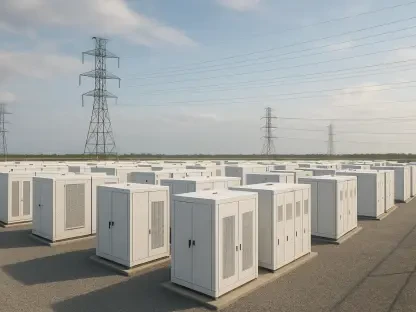

The sheer magnitude of the impending electricity gap across the Eastern United States has transformed the PJM Interconnection from a quiet grid overseer into a central protagonist in a high-stakes economic drama. As the steward of the largest power grid in the country, PJM currently faces a daunting reality: a projected capacity shortfall of 50 to 60 gigawatts (GW) by the early 2030s. This looming deficit is not a product of gradual attrition but rather a sudden explosion in energy demand driven by industrial reshoring and the relentless expansion of massive data center campuses. To prevent a catastrophic failure of the regional energy supply, PJM has introduced a significant “backstop procurement” strategy to secure 14.9 GW of new electricity resources. This initiative serves as a vital bridge toward long-term stability, yet its success depends on navigating a complex web of market dynamics and regulatory scrutiny.
Addressing the Impending Energy Crisis in the PJM Interconnection
The PJM Interconnection, which coordinates the movement of wholesale electricity in 13 states and the District of Columbia, is at a critical juncture where reliability meets rapid industrialization. The rise of artificial intelligence and cloud computing has accelerated the demand for power at a rate that traditional planning cycles simply cannot match. Northern Virginia, a primary component of the PJM territory, has become the global epicenter for data processing, requiring a scale of energy delivery that was almost unimaginable just a few years ago. This surge creates a precarious situation where the existing grid infrastructure must support both the legacy residential load and a new wave of energy-intensive commercial consumers.
In response to these pressures, the newly proposed procurement plan functions as a proactive insurance policy against grid instability. By targeting nearly 15 GW of new capacity, PJM aims to mitigate the risks associated with the decommissioning of older fossil-fuel plants and the slower-than-expected integration of renewable sources. This move signals a shift in how grid operators must function in an era of volatility, moving away from passive market observation toward active resource acquisition. The strategy highlights a fundamental truth: without a significant injection of new generation and demand-response capabilities, the economic engine of the Mid-Atlantic and Midwest could face persistent reliability threats.
The Evolution of Grid Reliability and the Shift Toward High-Energy Demand
To understand the urgency of the current situation, one must look at how the energy landscape has fundamentally altered. Historically, grid operators relied on predictable, incremental growth patterns that allowed for gradual infrastructure expansion. However, the current transition is marked by a dual pressure: the aggressive retirement of traditional baseload power plants and a vertical spike in demand from high-tech sectors. This shift has rendered older reliability models obsolete, as the speed of technological adoption in the private sector outpaces the bureaucratic and physical timelines of utility construction.
The geographic concentration of demand has further complicated these historical patterns. In the past, electricity consumption was relatively distributed across urban and suburban centers; today, localized “megaloads” from data center clusters can strain specific transmission nodes to their breaking point. This evolution requires a more granular approach to grid management, where localized shortfalls can have systemic consequences for the entire 13-state region. PJM’s pivot toward backstop procurement is a recognition that the standard capacity auction system, while efficient in the past, lacks the agility to handle the current industrial revolution.
Analyzing the Mechanisms of the Backstop Procurement Plan
A Two-Phased Approach: Securing New Resources
The proposed strategy operates through a structured, two-part methodology intended to maximize participation from various market players. The first phase, which begins in September, focuses on a six-month bilateral contracting period. During this window, power suppliers and large-scale industrial consumers are encouraged to engage in direct negotiations. PJM, alongside specialized consultants like Charles River Associates, acts as a confidential facilitator to match these parties, ensuring that private sector solutions are exhausted before more intrusive interventions occur. This initial stage prioritizes market-driven outcomes and allows for flexibility in how new capacity is financed and deployed.
If the bilateral phase fails to meet the required 14.9 GW threshold, the process transitions into a central procurement phase in March. This second stage is a PJM-managed competitive bidding process designed to fill any remaining gaps in the regional supply. By providing this two-tiered structure, the grid operator creates a safety net that ensures the necessary resources are secured regardless of whether private contracts materialize. This approach balances the efficiency of private markets with the ultimate responsibility of the grid operator to maintain a reliable flow of electricity to millions of end-users.
Ensuring Financial Stability: The Contract for Differences Model
The financial backbone of this procurement plan relies on a “contract for differences” framework, a sophisticated model designed to offer long-term price certainty. Under this arrangement, selected developers agree to bid their capacity into the standard PJM auctions at a price of zero. While they receive the market clearing price, the contract provides a mechanism where they are either paid a supplement or required to refund excess earnings to match a pre-negotiated strike price. This stability is essential for de-risking the massive capital investments required for new power plants, repowered generators, or advanced battery storage facilities that must be operational by June 2031.
By stabilizing revenue streams, PJM makes it significantly more attractive for developers to break ground on projects that might otherwise be seen as too risky in a volatile market. The eligibility criteria for these projects are intentionally broad, including not just new generation but also demand-response programs where large consumers agree to reduce their usage during peak periods. However, the plan specifically excludes the delayed retirement of aging plants, focusing instead on bringing net-new or upgraded supply into the system to ensure the grid’s long-term modernization.
Navigating Regulatory Hurdles: The Over-Procurement Debate
Despite the technical merits of the plan, it faces considerable opposition from stakeholders concerned about the financial impact on the public. Financial analysts and state regulators have voiced fears that the 14.9 GW target might lead to “over-procurement,” essentially forcing residential ratepayers to subsidize a surplus of energy that may not be needed if demand forecasts prove too aggressive. There is a persistent tension between the cost of being “too safe” and the economic risk of a shortage, creating a difficult political environment for the Federal Energy Regulatory Commission (FERC) as it reviews the proposal.
To mitigate these concerns, PJM has incorporated a mandatory review period that allows utilities to scrutinize and challenge the load growth projections before the final filing. This process ensures that the procurement targets remain grounded in the most accurate data available, preventing unnecessary price hikes. The debate underscores a broader challenge in modern energy policy: the difficulty of allocating the costs of grid reliability fairly between the massive industrial loads driving the demand and the average household consumer who relies on the grid for basic daily needs.
The Changing Landscape of Infrastructure and Regulatory Reform
Looking forward, PJM’s strategy is a piece of a larger puzzle involving the streamlining of national energy infrastructure. The initiative is designed to work in tandem with the “Expedited Interconnection Track” and other recent regulatory reforms aimed at reducing the years-long backlog of power projects waiting to join the grid. This alignment suggests a future where the physical construction of power plants is no longer the primary bottleneck, but rather the speed at which the regulatory and administrative systems can process these additions. As we move closer to the 2031 deadline, the integration of technological innovations like small modular reactors and long-duration storage will be critical to filling the gaps.
Furthermore, there is a growing consensus among policymakers that those responsible for the surge in demand—specifically large tech companies and data center operators—should bear a more significant portion of the infrastructure costs. This shift in cost-allocation principles, supported by various state governors and federal agencies, seeks to protect the general public from the financial burden of rapid industrial expansion. As the grid becomes more complex and interconnected, the regulatory environment will likely continue to evolve toward a “user-pays” model that aligns infrastructure investment with actual consumption patterns.
Strategic Recommendations for Stakeholders and Consumers
For businesses and utility providers, the shift toward a more interventionist procurement model requires a change in strategic planning. Organizations should no longer assume that surplus energy will be available at low costs and must instead prioritize energy efficiency and localized generation. Participation in demand-response programs offers a significant opportunity for industrial consumers to turn their flexibility into a financial asset while supporting the overall stability of the regional grid. Utilities, meanwhile, must remain deeply engaged with the forecast review process to ensure that their specific service territories are not overburdened by inaccurate regional projections.
General consumers should stay informed regarding state-level regulatory decisions, as these will ultimately determine how the costs of these massive infrastructure projects are reflected in monthly utility bills. Advocacy for transparent cost-allocation and the support of diverse energy sources will be key to maintaining a balanced energy market. In a world where electricity is the foundational currency of the digital economy, being an informed consumer is no longer just about choosing a provider; it is about understanding the systemic forces that keep the lights on and the economy moving.
Securing the Future of the Largest U.S. Power Grid
The introduction of this backstop procurement plan marked a pivotal moment in American energy management, signaling that the era of passive grid oversight ended. By attempting to secure a massive 14.9 GW of new supply through a combination of market-driven negotiations and central auctions, PJM established a new precedent for proactive crisis management. The strategy successfully addressed the immediate anxiety surrounding the massive projected shortfall, though it necessitated a delicate balance between industrial growth and ratepayer protection. Stakeholders realized that the financial mechanisms, such as the contract for differences, provided the necessary confidence for developers to initiate projects that otherwise stalled in the planning stages.
Ultimately, the initiative demonstrated that grid reliability remained a shared responsibility requiring coordination between regulators, private developers, and the public. The move to expedite interconnection and align infrastructure costs with specific demand drivers helped stabilize the regional economy. As the grid moved closer to its 2031 targets, the lessons learned from this procurement cycle provided a blueprint for other regional operators facing similar pressures from the digital revolution. The strategy proved that in an increasingly electrified world, the ability to anticipate and meet massive shifts in demand was the most critical factor in maintaining national economic resilience.