
The landscape of American residential energy underwent a seismic shift as record-high utility rates and complex legislative overhauls forced the nation’s largest solar provider to abandon traditional sales for a long-term subscription model. This strategic redirection comes at a time when the “creation cost” for a single new subscriber has climbed to a staggering $49,348. While such a high acquisition cost might signal distress for smaller entities, for Sunrun, it represents a calculated bet on the long-term value of energy ownership. By moving away from the volatile “boom-and-bust” cycles that have historically plagued solar installations, the company is positioning itself as a stable alternative to traditional power providers.
Homeowners are increasingly finding the upfront cost of solar ownership prohibitive, especially as general electricity prices have surged by 9% recently, significantly outstripping general inflation. This environment has made the solar subscription—where the provider owns the hardware and the resident pays for the power—far more attractive than traditional purchasing. The shift represents a fundamental change in the residential market, moving from a retail product focus to a service-based utility model. This transition allows the company to capture recurring revenue while providing consumers with the price certainty they crave in an era of unpredictable utility hikes.
The $49,000 Shift: Why Sunrun Is Betting on Ownership Over Sales
The rising cost of customer acquisition has fundamentally altered the math for residential solar deployment in the wake of the “One Big Beautiful Bill Act” (OBBBA). In earlier market phases, the goal was high-volume sales with quick handoffs to homeowners, but the current legislative landscape has rendered that approach increasingly fragile. Sunrun has recognized that by retaining ownership of the systems it installs, it can generate decades of predictable cash flow that far outweighs the initial $49,348 investment required to bring a customer onto the platform. This strategy effectively insulates the business from the erratic surges and dips associated with one-time equipment sales.
Moreover, the persistent upward pressure on traditional utility rates acts as a powerful tailwind for this subscription-first approach. As central grids struggle with aging infrastructure and rising fuel costs, the value proposition of a fixed-rate solar subscription becomes a primary driver for lead generation. Consumers are no longer just looking for “green” energy; they are looking for financial protection against a utility sector that seems unable to contain its own costs. By controlling the asset, Sunrun can offer a hedge against this inflation, turning a high customer acquisition cost into a durable competitive advantage.
Navigating the “One Big Beautiful Bill Act” (OBBBA) and Market Volatility
The expiration of the 25D federal tax credit for customer-owned systems at the end of last year sent shockwaves through the residential solar sector, specifically targeting those who preferred direct ownership. This legislative termination created a vacuum in the market, as the incentives that once made solar an easy sell for small, local dealers vanished overnight. Consequently, the industry saw a 25% dip in subscriber additions during the early months of 2026, a trend exacerbated by a “lull” in lead generation that traces back to the uncertainty surrounding the OBBBA’s initial passage.
Beyond tax credits, the industry faces severe headwinds from 50% tariffs on imported steel and aluminum, which have driven domestic installation costs to new heights. The OBBBA essentially streamlined the market by making it difficult for smaller installers to navigate the new regulatory hurdles, effectively clearing the field for larger players with the capital to absorb these costs. This volatility has proven that the traditional model of selling solar as a home improvement project is no longer viable under the current trade and tax regime, forcing a total reconsideration of how clean energy reaches the American household.
The Strategic Pivot: Third-Party Ownership as a Competitive Moat
While the OBBBA hindered direct sales, it inadvertently fortified the Third-Party Owned (TPO) model, which continues to benefit from robust federal tax structures. Sunrun has leveraged this distinction to build a formidable competitive moat, transitioning its sales strategy away from external affiliate installers and toward a 20% larger internal “direct business” sales force. By bringing the sales and installation process in-house, the company can ensure strict compliance with “foreign entity of concern” requirements and domestic content mandates that are now mandatory for securing federal incentives. This centralization is a direct response to the need for total quality control in a highly regulated environment.
The effectiveness of this pivot was reflected in the financial markets, where Sunrun’s stock climbed 10% despite an overall installation volume decrease of 19%. Investors clearly valued the move toward higher-margin, long-term subscriptions over the raw volume of equipment moved. This shift toward the TPO model allows the company to act as a sophisticated financial entity that happens to install solar panels, rather than a construction firm vulnerable to every fluctuation in hardware pricing. By mastering the complexity of the new law, the company has turned regulatory compliance into a barrier to entry for potential competitors.
From Equipment Installer to Infrastructure Titan: The Rise of Distributed Power Plants
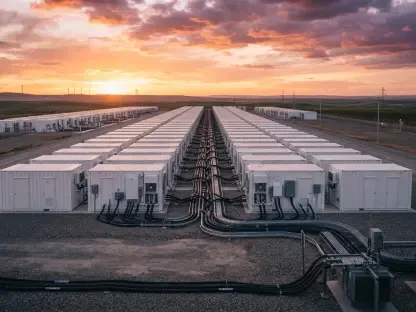
The modern solar company is evolving into something far more significant than a mere rooftop installer; it is becoming a manager of a massive, networked energy resource. With 4.3 GWh of networked storage capacity currently under management, Sunrun is effectively operating a “grid in your garage” that can be dispatched to support the broader utility network. CFO Danny Abajian recently identified this as an “inflection point” where residential solar transitions from a niche luxury to a pillar of utility-scale reliability. This distributed power plant model transforms individual batteries into a national resource that can be tapped during times of peak demand.
Looking toward 2028, the objective is to reach 10 GWh of managed capacity, further cementing the role of residential solar in national infrastructure. This transition provides a crucial service to a grid that is increasingly strained by extreme weather and rising demand. For the subscriber, this means their home becomes a small but vital part of a larger energy solution, often resulting in lower costs and higher reliability. As electricity prices continue to outpace general inflation, the ability to manage and dispatch stored energy at scale becomes one of the most valuable assets in the modern energy economy.
Framework for Resilience: How Sunrun’s Strategy Adapts to Trade and Regulatory Shifts
To maintain market dominance in a volatile geopolitical environment, Sunrun has developed a framework focused on mitigating the impact of Section 232 duties and Southeast Asian module tariffs. By centralizing operations and focusing on the “Infrastructure-as-a-Service” model, the company has created a buffer against the unpredictability of international trade policy. This approach allows for the absorption of temporary cost spikes without passing them directly and immediately to the consumer, a feat that smaller competitors simply cannot match. The complexity of modern clean energy laws has, in many ways, become the very thing that protects the company’s market share.
Building a moat through scale and compliance expertise is now the primary objective as the industry enters a more mature, albeit more difficult, phase of growth. The transition from a hardware-centric business to a service-centric one has redefined what it means to be a leader in the renewable sector. As long as utility prices remain high and trade tensions persist, the ability to navigate these shifts while providing “price certainty” to the end-user will remain the gold standard for success. The move toward a subscription-based, networked energy future represents the final maturation of the residential solar market.
The strategic redirection toward third-party ownership and networked storage successfully provided a blueprint for surviving the most turbulent legislative period in a decade. Management focused on internalizing the sales force and maximizing tax equity through subscriptions, which effectively neutralized the loss of traditional consumer credits. This evolution allowed the company to pivot from being a simple equipment vendor to a critical manager of distributed energy infrastructure. Future efforts were directed toward expanding the virtual power plant capacity to meet the rising demands of an unstable national grid. Leaders prioritized domestic content compliance as a means to secure long-term financial stability against global trade fluctuations. These decisions collectively ensured that the organization remained resilient while the broader residential solar market struggled to find its footing under the new regulatory regime.