
The pursuit of a carbon-neutral planet has shifted from a speculative ambition to an engineering race where the atmosphere itself serves as the primary resource for extraction. Direct Air Capture (DAC) stands at the center of this transition, offering a mechanical solution to the invisible accumulation of greenhouse gases. Unlike traditional carbon capture at the source, DAC functions as a wide-net utility, scrubbing carbon dioxide from ambient air regardless of where the emission originated. This capability has elevated the technology from a niche experimental concept to an essential pillar of the European Union’s 2050 climate-neutrality roadmap.
Fundamental Principles and the Evolution of Direct Air Capture
Direct Air Capture operates on the premise that global decarbonization requires more than just stopping new emissions; it necessitates the removal of legacy carbon already circulating in the atmosphere. The technology utilizes chemical or physical processes to bind CO2 molecules. While the concentration of carbon in the open air is significantly lower than in industrial flues, advancements in solvent chemistry have made it possible to isolate these molecules at scale. This evolution marks a shift from passive observation to active atmospheric management, positioning DAC as a corrective mechanism for decades of industrial output.
As international climate goals become more stringent, the perceived necessity of DAC has intensified. It is no longer viewed merely as a luxury for wealthy nations but as a required safety net for achieving net-zero targets. The technology represents a bridge between current industrial realities and a future where the carbon cycle is balanced. By targeting the historical “overhang” of emissions, DAC provides a unique pathway to address the sectors of the economy that remain stubbornly resistant to electrification or hydrogen conversion.
Technical Framework and Functional Components
Carbon Isolation: Sorbent Performance
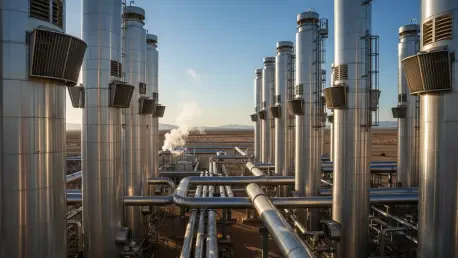
The core efficiency of a DAC system depends heavily on the performance of its carbon isolation mechanisms. Most modern facilities utilize either liquid chemical sorbents or solid physical filters that trap CO2 as air is pulled through large fans. These materials must be highly selective, capturing carbon while ignoring more abundant gases like nitrogen and oxygen. The energy intensity of this phase is a primary engineering hurdle, as the sorbents must eventually be heated or depressurized to release the captured gas, allowing the material to be reused for the next cycle.
Carbon Sequestration: Product Integration
Once the carbon is successfully isolated, the focus shifts to its ultimate destination, which defines the long-term impact of the facility. In sequestration-heavy models, the concentrated CO2 is pumped into deep underground geological formations where it mineralizes over time, effectively removing it from the biological cycle forever. Alternatively, integration strategies involve repurposing the captured gas as a feedstock for industrial products. This includes the creation of synthetic aviation fuels or the injection of carbon into concrete, turning a liability into a functional asset within the circular economy.
Economic Projections: Shifting Industry Trends
The financial landscape of Direct Air Capture is currently defined by a steep learning curve and high initial capital requirements. Current operational costs often exceed $1,000 per tonne, a figure that remains prohibitive for widespread commercial adoption without significant government subsidies. However, aggressive modeling suggests that as the technology matures through 2028 and beyond, economies of scale could drive prices toward a breakthrough target of $100 per tonne. This projected price drop is driving a surge in venture capital, as investors bet on the eventual commodification of carbon removal.
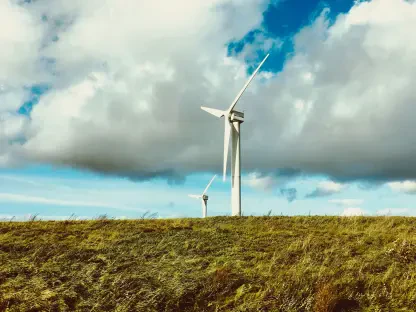
Despite this optimism, industry behavior is increasingly shaped by the tension between investing in removal versus prevention. Critics argue that the massive financial resources required for DAC might be more effectively spent on expanding existing renewable energy infrastructures. This debate has created a strategic divide: some view DAC as a vital insurance policy, while others see it as a potentially expensive distraction from the immediate need to scale up onshore wind and utility-scale solar power.
Real-World Applications: Sector Deployment
Direct Air Capture is finding its most significant utility in heavy industries where emissions are notoriously difficult to abate, such as steel manufacturing and long-haul shipping. For these sectors, complete decarbonization via electrification remains technically or economically unfeasible in the near term. Utility-scale pilot programs are now being strategically integrated into industrial hubs, allowing these facilities to offset their residual footprints through localized carbon removal. This deployment strategy helps maintain industrial productivity while adhering to tightening regulatory frameworks.
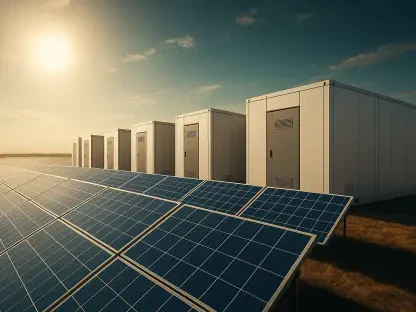
Within the European Union, DAC has moved beyond the laboratory and into the policy framework as a legitimate tool for compliance. Strategic pilot programs are testing the feasibility of modular DAC units that can be deployed near renewable energy sites to minimize transmission losses. By focusing on these specific applications, the industry is moving away from generalized atmospheric cleanup and toward a more focused, tactical application of the technology where it provides the highest value for the cost.
Technical Hurdles: Environmental Obstacles
The most significant challenge facing the widespread adoption of DAC is the massive energy requirement inherent in the process. This creates a “fossil fuel paradox” where a DAC facility could inadvertently increase net emissions if it relies on a carbon-heavy power grid for its operation. The sheer volume of electricity needed to run massive fan arrays and thermal regeneration cycles means that the technology’s net benefit is entirely dependent on the cleanliness of the energy source powering it. Without dedicated renewable energy, these systems risk becoming counterproductive.
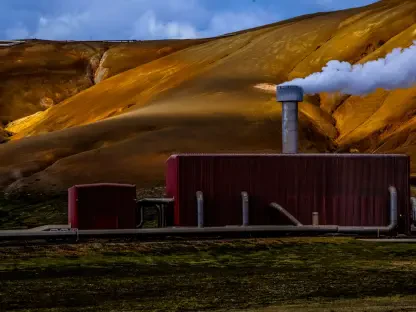
Beyond energy consumption, there are growing concerns regarding the local environmental impact of large-scale facilities. The processes involved in carbon isolation can release toxic air pollutants, such as sulfur dioxide and nitrogen oxides, which pose risks to public health in surrounding communities. Furthermore, when compared to the direct benefits of wind and solar power—which provide clean energy while simultaneously reducing pollution—DAC often fails the cost-effectiveness test for immediate public health gains. Balancing these environmental trade-offs remains a critical hurdle for developers.
Future Outlook: Strategic Trajectory
The strategic trajectory of Direct Air Capture suggests a move toward specialized, high-efficiency systems that operate with a smaller physical and energetic footprint. Breakthroughs in material science, particularly the development of metal-organic frameworks, offer the potential to lower the heat required for sorbent regeneration. This would significantly reduce the operational costs and the overall energy burden. In the long term, DAC is expected to serve as the global “cleanup crew,” mopping up the final traces of atmospheric carbon once primary emission sources have been neutralized by renewables.
As the energy grid continues to decarbonize, the viability of DAC will naturally improve, allowing it to function as a truly carbon-negative technology. The integration of DAC into smart grids could also provide a form of demand-side management, where capture units operate during periods of excess renewable generation. This synergy would transform DAC from an energetic burden into a flexible asset that helps stabilize the grid while simultaneously addressing the historical carbon debt of the industrial age.
Final Assessment: Review Summary
The review determined that Direct Air Capture functioned as a technically viable but economically strained solution for atmospheric restoration. While the core mechanisms of CO2 isolation proved effective in controlled pilot environments, the massive energy demands highlighted a critical dependency on grid purity. The analysis showed that the technology’s success was not a matter of mechanical capability but rather one of strategic prioritization and financial scaling. It was clear that DAC could not serve as a primary defense against climate change as long as cheaper, more efficient renewable alternatives remained underutilized.
Ultimately, the findings suggested that the most effective path forward involved a two-pronged approach where emission reduction preceded carbon removal. The verdict established that while DAC is an essential tool for the future, its immediate deployment must be coupled with the rapid expansion of wind and solar energy. To move the industry forward, stakeholders should prioritize the development of low-energy sorbents and ensure that every new DAC facility is paired with a dedicated, zero-emission power source. This ensures that the technology fulfills its promise of cleaning the air without adding to the very problem it was designed to solve.