
The long-standing architectural paradigm of centralized power generation is rapidly dissolving as distribution-connected energy storage emerges as a surgical tool for grid stabilization. This transition is not merely a technical upgrade but a fundamental shift in how electricity is managed within complex regional transmission organizations like the PJM Interconnection. As energy demands soar due to the expansion of data centers and the electrification of heating, traditional centralized infrastructure often struggles to keep pace. Distribution-connected storage provides a modular, flexible response to these pressures.
By integrating batteries directly into the distribution network—the level of the grid that serves neighborhoods and local businesses—utilities can address localized constraints before they escalate into regional failures. This review examines how this technology has evolved from a niche experimental application into a cornerstone of modern grid strategy, specifically focusing on its ability to offer reliability and economic efficiency where it is needed most.
Evolution and Fundamentals of Distribution-Scale Storage
The emergence of distribution-scale storage represents a departure from the “bigger is better” philosophy that dominated the early battery market. Historically, developers focused on massive installations connected to high-voltage transmission lines, but these projects often became mired in lengthy interconnection queues that could last several years. In contrast, distribution-connected assets are designed to interface with lower-voltage lines, allowing for a more granular and rapid response to grid fluctuations within localized areas.
These systems rely on sophisticated lithium-ion battery chemistries and advanced power electronics that allow for instantaneous switching between charging and discharging. Within the PJM Interconnection, where load growth is among the highest in the country, these fundamentals provide a necessary buffer. By placing storage closer to the end consumer, the technology reduces the physical distance electricity must travel, thereby minimizing energy loss and maximizing the utility of every megawatt generated.
Key Technical Components and Operational Strategies
Peak Demand Management and Load Shaving
The primary technical function of distribution-connected storage is peak shaving, an operational strategy designed to smooth out the volatility of daily demand cycles. During the middle of the night or other periods of low usage, the batteries draw power from the grid when electricity is cheapest and most abundant. This stored energy is then released during the late afternoon or early evening when demand peaks, effectively reducing the maximum load seen by the utility.
This process does more than just lower costs; it fundamentally alters the emission profile of the grid. By providing power during peak windows, these systems reduce the necessity of firing up “peaker plants,” which are often older, less efficient, and more carbon-intensive. Consequently, the technology serves as a bridge toward a cleaner energy mix, allowing utilities to maintain reliability without relying on the most polluting segments of their generation fleet.
The VPP+ Model and System Scalability
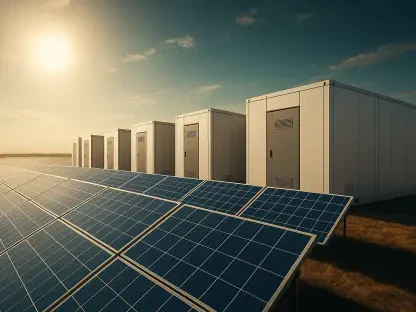
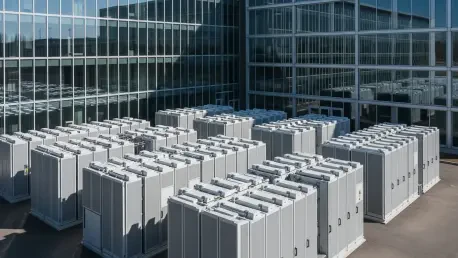
A significant innovation in this sector is the “VPP+” or Virtual Power Plant plus model, which bridges the gap between residential battery systems and utility-scale solar-plus-storage farms. This approach focuses on “right-sized” projects, typically ranging from 5 MW to 30 MW. These assets are large enough to provide substantial relief to the grid but small enough to be deployed on existing utility footprints, such as substations or brownfield sites, without requiring massive land acquisitions.
This scalability is what makes the technology unique compared to traditional infrastructure. While a new transmission line might take a decade to plan and build, a VPP+ portfolio can be commissioned in a fraction of that time. This agility allows utilities to react to sudden industrial developments or population shifts with a speed that was previously impossible, creating a dynamic resource that acts like a single large power plant while maintaining the resilience of a distributed network.
Emerging Trends in Grid Integration
One of the most notable trends in recent years is the deliberate move to bypass transmission-level bottlenecks by prioritizing distribution-level assets. Large-scale transmission upgrades in the United States have become prohibitively expensive and administratively complex, leading to a backlog of renewable projects. By connecting at the distribution level, developers can leverage existing local infrastructure, significantly shortening the development cycle and reducing the upfront capital risk.
Furthermore, the integration of advanced software platforms has enabled these distributed assets to communicate in real-time with regional grid operators. This trend toward “software-defined power” means that a fleet of batteries spread across a state can act as a unified resource. This intelligence allows for more precise frequency regulation and voltage support, ensuring that the influx of variable renewable energy does not compromise the stability of the older portions of the grid.
Real-World Applications and Sector Impact
Municipal and Cooperative Utility Deployment
The impact of this technology is perhaps most visible within rural electric cooperatives and municipal departments. For example, the partnership between Lightshift Energy and the Blue Ridge Power Agency demonstrates how smaller utilities can leverage storage to protect their members from rising capacity charges. By deploying 25 MW across several Virginia sites, these utilities are not just buying batteries; they are securing an economic hedge against the volatile pricing of the wholesale market.
These deployments provide a level of energy sovereignty that rural communities previously lacked. Because cooperatives often buy power from larger entities, they are vulnerable to transmission costs set at the federal or regional level. Owning and operating distribution-connected storage allows these smaller players to control their own “peak” and potentially save hundreds of millions of dollars over the lifetime of the equipment, which can then be passed on to consumers as lower rates.
Industrial Resilience and Data Center Support
The data center industry has become a primary driver for distribution-connected storage, as these facilities require immense amounts of steady power. In regions where the grid is already strained, data center operators are increasingly turning to storage to mitigate their impact on the local community. By using batteries to handle their own load spikes, these industrial giants can expand their operations without forcing the utility to build new, expensive substations.
Beyond data centers, semiconductor manufacturers and large-scale industrial plants use these systems to ensure high-quality power. Even a micro-second dip in voltage can ruin a batch of delicate silicon wafers or disrupt a manufacturing line. Distribution-level storage acts as a high-capacity uninterruptible power supply, providing the millisecond-fast response required to keep modern industry running smoothly while the broader grid experiences fluctuations.
Challenges to Widespread Adoption
Despite the clear benefits, several hurdles remain that could slow the expansion of distribution-connected resources. Regulatory frameworks within regional transmission organizations are often slow to adapt, and many current rules were written for a world of large, central power plants. Negotiating the “dual-use” of these batteries—serving both the local utility and the regional market—presents a complex legal and accounting challenge that can discourage smaller players from entering the space.
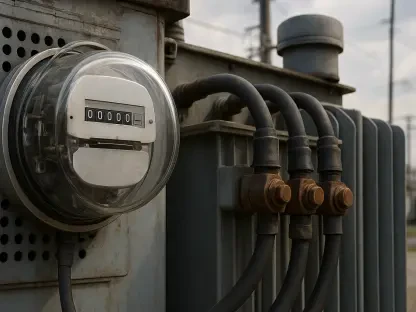
Technical synchronization also remains a hurdle, as the distribution grid was not originally designed to handle two-way power flows of this magnitude. Upgrading transformers and protection equipment to handle battery discharge adds to the initial capital requirements. While costs are falling, the upfront investment is still significant for small municipal departments, making the development of innovative financing models and public-private partnerships essential for continued growth.
Future Outlook and Strategic Development
The trajectory of this technology suggests that distribution-connected storage will eventually become the default solution for grid expansion. Instead of spending billions on massive transmission towers that often face intense public opposition, utilities are looking toward decentralized “pockets” of energy. This strategic deferral of infrastructure spending could save rate-payers billions of dollars while creating a grid that is inherently more resistant to physical or cyber threats.
Looking ahead, the development of long-duration storage technologies, such as flow batteries or advanced iron-air chemistries, will further enhance this model. While current lithium-ion systems are excellent for four-hour peaks, longer-duration assets would allow distribution networks to survive multi-day weather events or prolonged outages. This evolution will likely redefine the role of the utility from a simple provider of electricity to a sophisticated orchestrator of distributed energy assets.
Conclusion and Final Assessment
The shift toward distribution-connected energy storage proved to be a pivotal moment in the modernization of the electrical grid. By prioritizing agility and localized impact over massive scale, this technology addressed the immediate challenges of load growth and infrastructure aging. The economic analysis indicated that the localized approach not only saved billions in transmission costs but also provided a more equitable way for municipal and rural utilities to participate in the energy transition.
Ultimately, the successful deployment of these systems reshaped the utility business model. The industry moved away from a rigid, top-down structure and toward a flexible, responsive ecosystem where storage acted as the primary stabilizer. This transition underscored the reality that the most effective way to manage a complex, modern grid was to solve problems at their source, rather than relying on the distant and overburdened transmission network of the past.