
Why This Market Move Matters Now
Rate plans rarely mix a sizable price increase with a promise to pause, yet DTE’s proposed $474.3 million electric rate hike, paired with a conditional two-year filing freeze, forced Michigan’s power market to confront a simple tension: how to fund a faster transition while easing pressure on monthly bills. The company tied the pause to the arrival of at least one major data center by the end of 2027 and the receipt of necessary approvals, arguing that large loads would help carry the cost of grid and generation upgrades.
For investors, large customers, and households, the stakes run beyond a single docket. The proposal sits within a broader shift toward cleaner generation and storage, stricter expectations on reliability, and an emerging policy push to space out rate cases. This analysis set out to quantify where the market was heading, evaluate the plausibility of DTE’s assumptions, and map out what different outcomes would mean for bills, reliability, and capital allocation.
The result was a market narrative built on three pillars: capital intensity and timing, load growth and risk transfer, and a regulatory environment increasingly focused on performance and predictability. Each pillar affected not just near-term rates but also the trajectory of Michigan’s energy transition and the cost to achieve it.
Policy Backdrop and Filing Cadence
Michigan allowed utilities to file rate cases every 12 months, a cadence that frustrated customers as new increases landed before prior ones fully washed through bills. A pending bill, SB 768, would mandate at least three years between filings, with commission leadership describing the concept as a strong starting point for reform. If enacted, it would standardize spacing and diminish the novelty of voluntary pauses.
This policy shift intersected with DTE Electric’s track record of five filings in seven years, amplifying public scrutiny. However, the same cadence helped finance modernization and resilience programs that had been delayed for years, creating a policy paradox: fewer filings improved predictability but risked starving complex, multi-year upgrades of timely funding.
From a market-structure view, the likely endpoint was a more disciplined cycle with stronger planning transparency, clearer cost tracking, and stricter accountability for outcomes tied to reliability and affordability. That structure rewarded efficient capital sequencing and penalized cost drift.
Investment Thesis and Capital Plan
DTE’s capital plan between 2026 and 2030 rose to $30 billion, up roughly 25% from the prior five-year outlook. About half targeted cleaner generation, while roughly $11 billion focused on distribution upgrades to harden circuits, automate switching, and reduce restoration times. The plan’s hallmark assets included the coal-to-gas conversion at Belle River and the 220‑MW Trenton Channel Energy Center, positioned as the largest stand-alone battery in the Great Lakes region at launch.
The portfolio shift aligned with national trends: by 2033, DTE aimed to retire coal, expand gas for dispatchable capacity, and lift renewables to 42%. In 2023, the mix stood at 45% coal, 19% nuclear, 19% gas, and 14% renewables, underscoring the scale of the pending pivot.
Capital intensity carried two trade-offs. First, near-term bill pressure rose before longer-term operating savings from cleaner fleets and storage arrived. Second, demand uncertainty—especially from large loads—could leave assets underutilized if growth underdelivered, stressing the case for modular, milestone-based buildouts.
Conditional Freeze and Data Center Economics
DTE framed the two-year pause as an affordability lever unlocked by large loads. One data center supply contract had commission approval and another awaited action, and the company projected nearly $9 billion in grid contributions through 2045 tied to these projects. The argument was straightforward: anchor customers widen the rate base and share in upgrade costs that benefit the broader system.
Consumer advocates countered that the freeze came only after a sizable hike and depended on variables outside the utility’s control, such as fuel costs, market purchases, and delivery charges that could still climb. They warned that tying a pause to uncertain construction timelines invited a risk transfer from hyperscale operators to everyday ratepayers.
The investment logic worked if three conditions held: timely interconnections, enforceable cost-sharing, and transparent accounting for shared versus customer-specific assets. Without those guardrails, the affordability dividend risked dilution.
Reliability Performance and Execution Risk
Reliability remained the credibility test. DTE reported a 60% drop in outage times in 2025 versus the prior year, attributing progress to targeted grid work. Yet a 2024 audit found restoration performance worse than average, stoking concerns about the efficiency and equity of investments across neighborhoods.
For regulators, the key question was not whether to spend but where and how. Capital that hardened the most outage-prone circuits, shortened restoration curves, and layered storage for local resiliency scored highest. Projects that improved headline metrics but left pockets of chronic underperformance exposed faced tougher scrutiny.
Outcome-based regulation gained momentum: cost recovery tied to verified reliability gains, geographic transparency in performance, and third-party validation of benefits. That framework favored utilities that could convert capital outlays into durable service improvements at predictable cost.
Storage Market Trajectory and Procurement Outlook
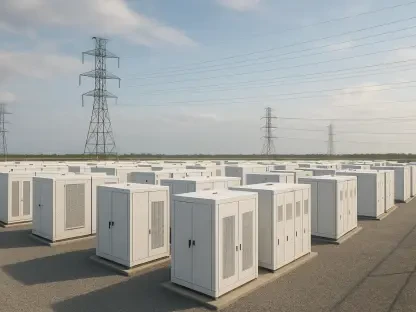
Storage moved from pilot to platform. DTE planned an RFP for up to 480 MW of stand-alone storage, with bids due July 8 and contracts expected in the first quarter next year. Over the long term, the target rose to 2,950 MW by 2042, positioning batteries as the linchpin of renewable integration and peak support.
As procurement scaled, standardization around interconnection, warranties, augmentation, and MISO market participation mattered as much as price. The most competitive offers often blended merchant value with utility reliability services, compressing lifecycle costs and smoothing bill impacts.
The market also favored siting storage at stressed nodes where a single asset could defer substation upgrades, shave peaks, and improve power quality. Such stacked benefits reduced the chance of stranded investment if load forecasts softened.
Regulatory Scenarios and Financial Implications
Three scenarios defined the financial arc. If SB 768 passed, a three-year filing interval reduced headline volatility and made DTE’s voluntary two-year freeze less consequential, though still relevant for pacing. If data center buildouts met milestones, contributions buffered rate pressure and improved cost absorption. If milestones slipped, interim financing needs and backfill costs could surface, tempering the affordability narrative.
Inflation, interest rates, and federal incentives shaped capital costs and customer bills. Declining storage costs and tax credits supported the shift toward batteries, while rising labor and materials kept pressure on transmission and distribution budgets. Disciplined competitive solicitations for storage and renewables acted as a key hedge against overruns.
For equity and credit analysts, the focus stayed on capex execution, demand realization from large loads, and regulatory alignment on performance metrics. Strong alignment typically tightened allowed-return spreads and stabilized outlooks.
Strategic Takeaways and Next Steps
The clearest path to balanced outcomes combined milestone-based co-investment with anchor customers, outcome-linked cost recovery for reliability, and competitive procurement to discipline prices. On the ground, that meant contracts with curtailment rules, interconnection deadlines, and transparent allocation of shared asset costs.
For communities, zoning and workforce coordination for data centers and storage mattered, but so did conditioning incentives on local reliability gains and energy efficiency. For households and small businesses, engagement around clear bill impact disclosures and neighborhood-level reliability targets proved pivotal.
Regulators benefited from mandating scenario-driven demand modeling that explicitly captured data center uncertainty and from requiring public reporting on whether grid hardening and storage placements reduced outages where customers actually lived.
Conclusion
The market read on DTE’s filing pointed to a high-stakes trade: near-term rate pressure funding a faster transition built on gas flexibility, expanding renewables, and scaled storage, tempered by a conditional freeze staked to data center milestones. The most durable path, as this analysis showed, blended standardized filing intervals, accountable reliability metrics, and milestone-based contributions from large loads to minimize cost drift. Executed well, that mix lowered long-run operating costs and improved service quality; executed poorly, it amplified volatility and invited cost shifts onto customers least able to absorb them. The prudent course therefore centered on enforceable contracts, transparent asset allocation, and competitive procurements that had contained risk while converting capital into measurable reliability gains.