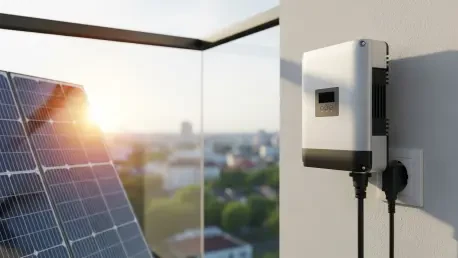

The sight of sleek photovoltaic panels hanging from apartment railings has transitioned from a niche hobby for tech enthusiasts into a standard feature of the German urban landscape. This shift represents a fundamental change in how energy is produced and consumed, allowing renters who were previously locked out of the solar market to generate electricity directly from their balconies. The phenomenon, often referred to as “Balkonkraftwerk,” has gained massive momentum due to a combination of falling hardware costs and a societal push toward energy independence. Unlike traditional rooftop installations that require complex permits and significant capital, these plug-and-play systems offer an immediate entry point for millions of citizens. As households across Berlin and Munich embrace this decentralized model, the cumulative effect is beginning to put a noticeable dent in national grid demand during peak sunlight hours. This movement is not just about technology; it is a cultural transformation that empowers the average person to participate in the energy transition.
The Evolution: Simple Technology Meets High Demand
Engineering: The Plug-and-Play Mechanism
At the heart of this surge is the technical simplicity of the micro-inverter, a device that converts the direct current generated by the panel into the alternating current used by household appliances. These systems typically consist of one or two solar modules and an inverter that plugs directly into a standard wall socket, bypassing the need for an electrician in many jurisdictions. This streamlined approach has eliminated the most significant barriers to entry for urban dwellers, making renewable energy as easy to install as a new television or kitchen appliance. Furthermore, advancements in bifacial glass technology have allowed these panels to capture reflected light from building facades, increasing efficiency even in less-than-ideal orientations. The portability of these units also ensures that tenants can take their investment with them when they move, providing long-term value. This portability is a key driver for younger demographics living in rental properties today.
Grid Integration: Managing Decentralized Feed-in
Integrating hundreds of thousands of small-scale generators into the national infrastructure presented initial challenges for utility providers accustomed to centralized power plants. However, the adoption of smart meters and real-time monitoring software has allowed grid operators to better predict and manage the influx of localized power. By distributing generation across a vast number of points, the grid becomes more resilient against localized failures, as the dependency on a few large nodes decreases. The sheer volume of these mini-power plants now contributes several gigawatts of capacity to the national total, proving that micro-generation is a viable component of a modern energy strategy. This democratization of the grid ensures that even those with limited space can contribute to national climate goals while reducing their monthly utility bills. The scalability of this model suggests a future where every available sun-drenched surface becomes a productive asset.
Policy Frameworks: Enabling Mass Adoption
Legislation: Removing Bureaucratic Hurdles
The acceleration of the balcony solar movement was significantly bolstered by legislative reforms that simplified registration processes and increased the allowable power limit for plug-in systems. Government agencies recognized that the path to a carbon-neutral economy required removing the red tape that previously discouraged small-scale adopters. By raising the threshold for simplified registration to 800 watts, authorities made it possible for a standard two-panel setup to cover a substantial portion of a household’s base load. This policy shift was complemented by the standardization of technical requirements, ensuring that hardware manufacturers could produce units that are safe and compatible across the entire market. Local municipalities have also stepped in, offering direct subsidies and financial incentives to low-income households to ensure that the energy transition remains equitable. These coordinated efforts at both the federal and local levels created a stable environment.
Future Outlook: Scaling Beyond Domestic Use
The success of residential balcony systems established a robust foundation for expanding micro-generation into commercial sectors where facade space remained underutilized. Stakeholders realized that the lessons learned from urban residential areas applied equally well to office buildings seeking to lower operational costs. Strategic investments in battery storage integration became the next logical step, allowing users to store excess daytime energy for use during the evening hours. Architects and urban planners eventually integrated solar-ready designs into new construction projects, treating the building envelope as a continuous power source rather than a passive shield. This forward-looking approach ensured that renewable energy became an invisible yet ubiquitous part of daily life. Policymakers focused on creating shared energy communities where neighbors traded surplus power, further stabilizing the local grid. By treating every citizen as a producer, the transition achieved high public support.