
The power grid is often called the most complex machine ever built, yet its reliability depends on a delicate balance of physical physics and digital foresight that has been refined over decades. The Electricity Infrastructure Operations Center (EIOC) at the Pacific Northwest National Laboratory (PNNL) recently reached a significant milestone, celebrating twenty years of dedicated service to the modernization of the United States energy landscape. Since its inception, this facility has served as a vital bridge between the theoretical explorations of the laboratory and the high-pressure environment of utility control rooms. It provides a unique, risk-free space where engineers and data scientists can stress-test new technologies without the threat of causing a real-world blackout. This capability has become increasingly vital as the nation shifts from a centralized coal-and-gas model toward a highly distributed, digitized, and decarbonized infrastructure that demands unprecedented levels of coordination and resilience across the entire country.
Evolution of the National Grid Laboratory
Part 1: Historical Context and Foundational Vision
When the EIOC first opened its doors, the concept of a smart grid was largely a theoretical construct rather than a tangible reality for the majority of consumers and utility providers. Back then, the digital economy was in its earliest stages, and the massive data requirements of today’s artificial intelligence and electric vehicle fleets were nearly impossible for most to imagine. PNNL leadership recognized early on that the existing infrastructure, designed in the mid-20th century for unidirectional power flow, would eventually buckle under the weight of modern technological demands. To address this, they established a specialized facility where researchers could follow the path of the electron across complex systems in real-time. This approach ensured that every new software solution or communication protocol was firmly grounded in the physical laws governing electrical distribution, preventing the disconnect that often occurs between theoretical code and actual hardware performance.
Part 2: Infrastructure Growth and Simulation Sandbox
The physical footprint of the facility has evolved significantly to keep pace with the growing complexity of the national energy network it serves. What began as a modest operation has expanded into a sophisticated hub within the PNNL 3820 Systems Engineering Building, featuring dual, fully configurable control rooms. These spaces are outfitted with high-fidelity simulation tools and industry-standard engineering software that allow for the creation of a digital twin of regional power grids. Within this controlled sandbox, researchers use a combination of real-world telemetry and synthetic data to model everything from routine maintenance to catastrophic cascading failures. Because these experiments are conducted in a protected environment, developers can afford to take risks and innovate rapidly. This methodology has turned the center into a cornerstone of national energy strategy, providing the data necessary to justify major infrastructure investments across the nation.
Core Pillars of Research and Operational Training
Part 1: Innovation in Situational Awareness Tools
A primary achievement of the center’s two-decade history is the development of wide-area situational awareness tools that allow operators to see grid health in high resolution. Early research into transactive energy and synchrophasors enabled the detection of sub-second oscillations that could signal an impending failure long before traditional sensors would react. More recently, the laboratory introduced the Dynamic Contingency Analysis Tool (DCAT) and the Electrical Grid Resilience and Assessment System (EGRAS). These advanced platforms provide predictive capabilities, allowing utilities to simulate complex scenarios during extreme weather or cyberattacks. By identifying the most vulnerable nodes in a network, these tools empower operators to deploy resources more effectively, drastically reducing the duration and scope of potential outages. This shift from reactive to proactive management represents a fundamental change in how national energy security is maintained in a digital age.
Part 2: Human Factors and Cognitive Decision Support
Beyond the deployment of advanced algorithms, the center places significant emphasis on the human element of grid management through specialized training and cognitive research. Working alongside groups like Total Reliability Solutions, PNNL researchers study how control room operators process information and make critical decisions under extreme physiological and mental stress. By analyzing eye-tracking data and decision latency, the facility helps design more intuitive user interfaces that reduce the risk of human error during emergencies. This human in the loop philosophy ensures that technology serves the operator, rather than overwhelming them with a deluge of raw data. Furthermore, the center acts as a neutral ground where state legislators and utility commissioners can witness the practical implications of new policies. This collaborative environment helps align regulatory frameworks with technological capabilities, ensuring that the transition is both legally and operationally sound.
Adapting to a Rapidly Changing Energy Landscape
Part 1: Integrating Decentralized Energy and Intelligence
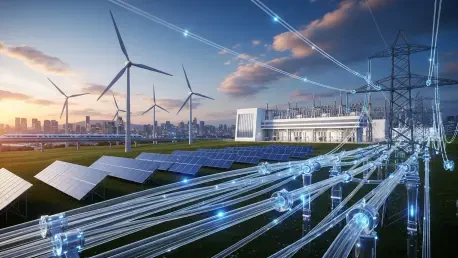
The electrical landscape has undergone more dramatic changes in the current decade than in the previous fifty years combined, primarily due to the rise of decentralized energy. With millions of rooftop solar panels and residential battery systems now feeding back into the system, the grid has become a two-way street of immense complexity. To manage this, the EIOC has integrated artificial intelligence and machine learning to process the massive telemetry datasets generated by these distributed resources. These AI systems help balance supply and demand in real-time, optimizing the use of renewable energy while maintaining the strict frequency standards required for stability. Moreover, the facility has intensified its focus on cybersecurity, recognizing that every digital connection represents a potential entry point for adversaries. By stress-testing the grid against simulated sophisticated attacks, researchers can develop self-healing protocols that isolate compromised segments before a breach spreads.
Part 2: Federated Testbeds and Collaborative Security
The facility successfully established a new standard for how the public and private sectors interacted to solve national problems. It became clear that localized solutions were no longer sufficient for a continental-scale challenge, prompting a shift toward collaborative, cross-border research. Moving forward, utilities prioritized the adoption of federated testbeds and simulation models that allowed for data sharing without compromising proprietary information. Investing in standardized AI protocols became the most effective way to manage the intermittent nature of solar and wind power across different regions. By following the blueprint established over the last twenty years, the industry achieved a level of resilience that previously seemed out of reach. This period of rapid evolution demonstrated that the integration of human-centric design and high-fidelity data was the only way to safeguard the energy future. These established strategies served as the foundation for a more flexible and secure electrical network.