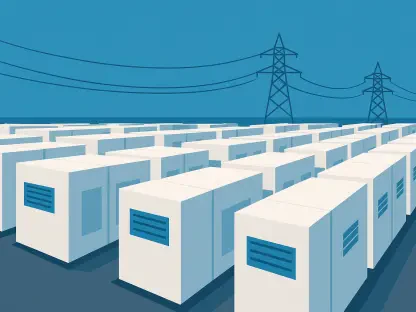

High-capacity battery systems proved their worth by discharging nearly 12,000 megawatts of power, maintaining system stability as solar output dropped during the evening. This operation occurred during a week of record electrical demand, where the ERCOT system faced severe pressure from a prolonged heat dome that tested every available megawatt. Unlike previous years when the sunset often signaled a critical tightening of reserves, the rapid deployment of lithium-ion and iron-flow storage facilities provided a seamless transition. These assets absorbed excess photovoltaic production during the peak solar hours between 10:00 AM and 3:00 PM, creating a significant energy buffer for the traditional evening spike. This tactical shift has fundamentally altered the risk profile of the Texas grid, turning what was once a period of vulnerability into a controlled maneuver. Engineers noted that the grid frequency remained remarkably stable even as traditional thermal generators struggled with ambient temperatures exceeding 105 degrees. The success of this deployment signifies a turning point for grid resilience in a state known for its independent energy management. By capturing energy when it is most abundant, the storage fleet has neutralized the supply cliffs that previously caused market prices to surge to their caps during the early evening hours.
Reliability Metrics: Strategic Energy Deployment
Battery Systems: The New Frequency Standard
The primary strength of the current battery fleet lies in its ability to provide instantaneous frequency response, a task that traditional gas turbines often perform with less agility. When solar production began its natural decline at dusk, these storage systems ramped up their output within milliseconds to fill the widening gap between supply and demand. This rapid injection of power prevented the frequency from dipping below the standard 60 hertz, which is essential for avoiding automated load-shedding protocols that impact residential neighborhoods. Furthermore, the modular nature of these battery sites allows them to be strategically placed near high-demand centers like Dallas and Houston, reducing the burden on long-distance transmission lines that are prone to congestion. By operating in this high-speed capacity, the battery installations have effectively replaced the need for some older, less efficient peaker plants that were once the only defense against evening brownouts. The data from 2026 indicates that this storage-led stabilization has significantly reduced the volatility of wholesale energy prices during these high-stress intervals. This operational efficiency not only protects the consumer from sudden cost spikes but also ensures that the physical hardware of the grid is not subjected to the damaging oscillations that occur when supply and demand fall out of synchronization.
Solar Integration: Sustaining Midday Reserves
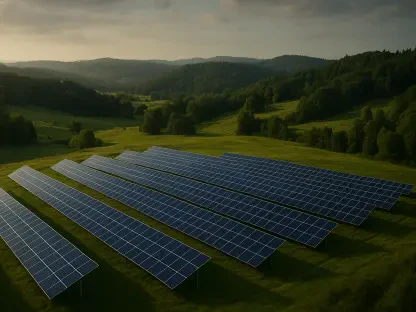
Solar installations across West Texas and the coastal plains contributed over 20,000 megawatts during the hottest hours of the day, directly offsetting the air conditioning loads of millions. This massive injection of renewable energy allowed thermal power plants to operate at slightly lower intensities during the midday peak, reducing the risk of mechanical failure due to overexertion in extreme heat. The synergy between solar and battery storage creates a feedback loop that enhances overall system reliability. For instance, when clouds move across large solar farms, battery systems can instantly compensate for the momentary drop in voltage, ensuring a steady stream of electricity to the high-voltage backbone. This diversification strategy has proven essential as the state continues to see an influx of energy-intensive industries, such as advanced data centers and semiconductor manufacturing facilities. By leveraging the abundance of sunshine and the precision of modern storage, the grid has transitioned into a more resilient framework that no longer relies on a single fuel source for stability during extreme weather events. The combination of these technologies has effectively flattened the demand curve, allowing for a more predictable and manageable energy environment for grid operators who must balance a complex array of inputs around the clock.
Resilience Planning: Building a Decarbonized Future
Decision-makers focused on the integration of smarter grid software to further optimize the coordination between distributed storage and large-scale wind farms. They recognized that while the current battery capacity was sufficient for recent peaks, the projected growth in demand required a sustained commitment to infrastructure expansion. State regulators encouraged the adoption of long-duration energy storage technologies, such as compressed air and thermal bricks, to handle multi-day weather disruptions that exceeded the four-hour discharge limits of standard batteries. Stakeholders also prioritized the hardening of transmission lines to ensure that renewable energy produced in rural regions could reliably reach urban industrial hubs without significant loss. The successful management of the 2026 summer demand provided a clear roadmap for other independent system operators across the country. Future efforts remained centered on enhancing the transparency of real-time data to allow commercial consumers to adjust their usage patterns in response to grid health signals. These combined actions secured the energy landscape by emphasizing modularity and rapid response over the rigid, centralized models of the past. Moving into 2027 and 2028, the focus shifted toward maximizing the potential of vehicle-to-grid technologies and residential storage to create a multi-layered defense against future climate-related stresses.