
Christopher Hailstone is a seasoned authority in energy management and electricity delivery, bringing decades of hands-on experience to the complex challenges of grid reliability and security. As a leading utilities expert, he has navigated the shifting landscape of renewable integration and the technical demands of modernizing aging infrastructure. In this discussion, we explore the implications of invoking the Defense Production Act to address the supply chain crisis, the strategic allocation of limited federal funding, and the balancing act between fossil fuel production and the transition to a high-tech, resilient power grid.
The following conversation examines how executive wartime powers could reshape the domestic manufacturing of critical grid components like transformers and high-voltage transmission lines. We delve into the friction between short-term infrastructure needs and long-term energy goals, the role of advanced technologies in meeting the massive surge in electricity demand from data centers, and the financial signals necessary to convince private manufacturers to expand their domestic capacity.
With transformer backlogs currently stretching over a year, how will invoking the Defense Production Act specifically incentivize manufacturers to expand their domestic capacity? Please walk us through the step-by-step process of how purchase commitments or subsidies might shorten these lead times for utility companies.
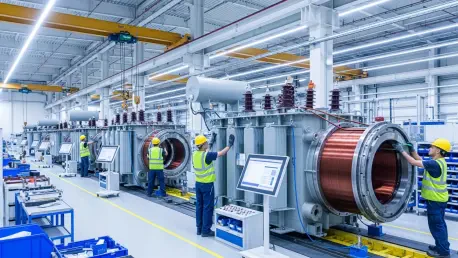
The activation of the Defense Production Act, specifically Title 3, acts as a powerful catalyst by de-risking the massive capital investments required for new factory floors. Currently, manufacturers are staring at backlogs that are double the historical lead times, creating a paralyzing bottleneck for utilities trying to maintain or expand their service. By using purchase commitments, the government essentially steps in as a guaranteed buyer, providing the financial certainty a company needs to break ground on a new facility without fearing a sudden market shift. We are also looking at direct subsidy payments for domestically produced materials, which helps offset the higher costs of American labor and specialized steel compared to cheaper, slower-moving imports. This multi-step process—from securing the funding to installing government-purchased equipment in private plants—creates a sensory shift in the industry, moving from a vibe of scarcity and “making do” with old equipment to an active, buzzing environment of expansion.
Estimates suggest available funding for these initiatives is roughly $323 million for the 2026 fiscal year. Given the massive scale of infrastructure needs, how should these limited funds be prioritized between grid components and fossil fuel production? What metrics should determine which projects receive financial support first?
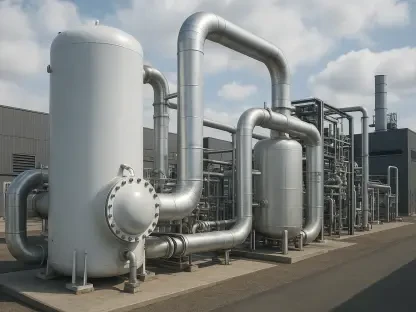
The reality is that $323 million is a relatively small drop in a very large bucket when you consider the sheer scale of the American power grid. To make this money move the needle, we have to prioritize projects based on “reliability-per-dollar,” focusing first on the most critical failure points like aging substations and overloaded distribution transformers. There is a palpable tension here, as these limited funds could easily be “drowned out” if they are spread too thin across competing priorities like coal supply chains or liquefied natural gas infrastructure. Metrics for success should be tied to lead-time reduction; if a project can demonstrably cut a 12-month wait for a transformer down to six, it should jump to the front of the line for a grant or loan. We must be surgical in our application of this capital, ensuring that the components essential for a secure and affordable grid take precedence over broader political aspirations for fossil fuel exports.
Domestic electricity demand is projected to jump 24% over the next decade, largely driven by new data centers. How can grid-enhancing technologies and advanced conductors bridge the gap while new manufacturing facilities are being built? Please share specific examples of how these technologies improve reliability during peak demand.
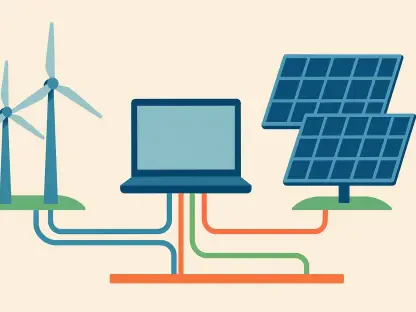
The hunger for power coming from the data center sector is unprecedented, with forecasts suggesting a massive 224 GW increase in summer peak demand over the next ten years. Since we cannot build new power plants or massive transmission lines overnight, grid-enhancing technologies, or GETs, serve as a vital bridge by squeezing more efficiency out of the wires we already have. For instance, advanced conductors can carry significantly more electricity than traditional steel-core cables without sagging, allowing us to increase capacity on existing rights-of-way. During a sweltering summer peak, sensors can provide real-time data on line temperature and wind conditions, enabling operators to safely push more “electrons” through the system than static ratings would normally allow. This approach turns the grid into a smarter, more flexible machine that can survive the 24% surge in demand while the “brick and mortar” manufacturing plants for transformers and switchgear are still under construction.
Current federal directives aim to bolster both baseload power generation and fossil fuel supply chains simultaneously. How do these wartime powers impact the long-term trajectory of grid modernization and the clean energy transition? Describe the practical trade-offs involved when distributing finite resources across these competing energy priorities.
Using wartime powers to support fossil fuels while simultaneously trying to modernize the grid creates a complex and often contradictory set of signals for the energy sector. On one hand, protecting baseload power generation is a defensive necessity to ensure the lights stay on; on the other hand, focusing heavily on coal and gas supply chains can derail the momentum of the clean energy transition. The practical trade-off is often found in the logistics: if our domestic manufacturing capacity is diverted to build equipment for gas transmission, that is less capacity available for high-voltage transmission components needed for wind and solar. There is a sense of urgency in the industry to ensure that these executive actions don’t just prop up the status quo, but actually provide the “tools in the toolbox” needed for a more resilient, low-carbon future. Balancing these priorities requires a delicate touch to avoid a scenario where the drive for immediate fossil fuel stability inadvertently chokes off the innovation needed for the next generation of energy.
Beyond direct grants, the government can install and purchase equipment for both public and privately owned industrial facilities. What specific financial mechanisms or regulatory shifts will be most effective for encouraging private sector expansion? Explain how long-term political signals might influence the investment decisions of major electrical manufacturers.
For major players like Eaton and Hitachi, the most effective mechanism isn’t just a one-time grant, but the long-term assurance that the federal government is committed to a domestic industrial base. The authority to install government-purchased equipment directly into private facilities is a game-changer because it allows manufacturers to scale up without the massive debt load typically associated with heavy industrial expansion. However, these companies are also looking for clear political signals that extend beyond a single administration’s memo; they need to know that the demand for “One Big Beautiful” grid infrastructure won’t evaporate in four years. If the government can couple DPA actions with long-term regulatory certainty—such as streamlined permitting for transmission—it creates an emotional and financial environment where CEOs feel confident enough to hire thousands of workers. Without that stable signal, the private sector remains hesitant, fearing that today’s subsidized factory might become tomorrow’s stranded asset.
What is your forecast for the stability of the U.S. power grid over the next five years?
I anticipate a period of high-stakes volatility where the grid will be pushed to its absolute limits by the 24% surge in demand, particularly in regions where data center growth outpaces new generation. While the invocation of the Defense Production Act will eventually ease the transformer shortage, the “lag time” between policy and physical equipment on the ground means the next three years will be particularly tight. We will likely see an increased reliance on grid-enhancing technologies to prevent localized brownouts during extreme weather events. However, if the $323 million in DPA funding is used effectively to unblock the supply chain, we could see a significant stabilization by 2029 as domestic manufacturing finally catches up with our national energy appetite. Success depends entirely on whether we can move past the political friction and treat grid reliability as the non-partisan national security priority that it truly is.