
The architectural landscape of European suburbs is undergoing a quiet but radical transformation as traditional wooden and stone boundaries are being replaced by high-tech photovoltaic partitions that capture energy from the low-lying sun. Property owners who previously viewed their garden fences as mere markers of privacy or security now see them as active participants in the domestic power grid, serving as decentralized micro-plants that mitigate the impact of fluctuating utility rates. This fundamental shift in residential design reflects a broader societal push toward total energy self-sufficiency, moving beyond the limitations of rooftop installations which often face constraints regarding orientation, structural integrity, or historic preservation mandates. By integrating solar technology into the very perimeters of a home, residents are finding ways to utilize previously overlooked surfaces to generate electricity during those critical hours when demand is highest and production from overhead panels begins to taper off into the evening twilight.
Geopolitical Pressures: Catalyzing the Shift to Self-Sufficiency
The rapid adoption of solar fencing is largely driven by a volatile global energy market and an urgent need for regional energy independence that has redefined local policy across the continent. Recent geopolitical shifts have intensified anxieties regarding fossil fuel imports, pushing households to take control of their own power supply to avoid the unpredictability of international pipelines. Economic data from the current fiscal cycle highlights the success of this shift, with solar energy saving the continent billions of dollars in utility costs in the months leading up to the present. This has transformed the monthly electric bill from a standard expense into a metric of a household’s defense against global market shifts. Families are no longer passive consumers; they are active producers who contribute to the stabilization of the local grid while shielding themselves from the sudden price spikes that have historically plagued the winter months when heating demands are highest.
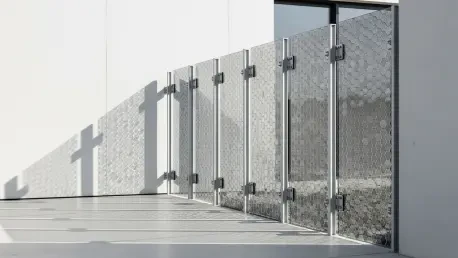
Technically, the movement is powered by sophisticated vertical solar systems that stand upright rather than being tilted on a roof, allowing them to capture light from angles that traditional panels miss. These fences often utilize bifacial panels, which are designed to collect sunlight from both the front and back sides, making them incredibly efficient during the morning and evening hours when the sun is at a lower horizon. While they may not catch the midday sun as directly as rooftop units, their ability to generate power during peak residential demand times makes them a strategic addition to any modern property. By catching the early morning light as the sun rises and the late afternoon glow as it sets, these vertical arrays provide a consistent stream of energy that aligns perfectly with the typical daily routine of a household, ensuring that the electricity is used immediately rather than being sent back to a grid that might already be saturated with midday solar energy production.
Retail Accessibility: Scaling From Gardens to Infrastructure
The barriers to entering the solar market are lowering as governments and retailers move toward a plug-in model that simplifies the transition for the average homeowner. Solar panels are increasingly appearing in common retail chains, turning what was once a complex engineering project into a simple consumer product that can be integrated into a backyard with minimal effort. These products are built for the long haul, often featuring multi-decade guarantees and high-wattage capabilities that rival traditional solar installations in both durability and output. This commodification of green technology means that a property owner can purchase a solar fence section as easily as they would a lawnmower or a set of patio furniture. The standardized mounting systems and integrated micro-inverters allow for a level of modularity that was previously impossible, enabling homeowners to start with a few panels and expand their perimeter as their energy needs or budget allow over the coming years.
This technology is also proving to be highly scalable, moving quickly from private gardens to massive industrial perimeters where the surface area for energy collection is nearly limitless. Large firms have already completed projects covering miles of vertical solar installations at major transit hubs and logistics centers, such as Frankfurt Airport, which has become a model for this application. By converting security fences into energy producers, commercial entities can offset massive operational costs without the need for additional land or new building permits. These industrial-scale fences do more than just provide security; they act as noise barriers and windbreaks, adding multiple layers of utility to a single structure. The success of these large-scale deployments demonstrates that vertical solar is not just a niche consumer trend but a robust industrial solution that can be deployed along railways, highways, and around vast manufacturing complexes to power the very infrastructure they protect.
Practical Realities: Overcoming Environmental and Grid Constraints
Despite the promising outlook, solar fences are not without their practical challenges, as their performance is highly sensitive to environmental factors that do not affect rooftop panels. Shading from trees, nearby buildings, or even parked cars can significantly reduce the energy output of a vertical system, requiring careful site analysis before installation. Furthermore, because these fences are highly visible to neighbors and passersby, they are often subject to stricter planning regulations and aesthetic standards than panels hidden away on a roof. Local municipalities are currently working to update zoning laws to accommodate these structures, balancing the need for renewable energy with the desire to maintain the visual character of residential neighborhoods. Designers are responding by creating panels that mimic the appearance of traditional fencing materials, such as dark glass or matte finishes, to help these functional power plants blend seamlessly into the suburban environment.
The broader success of this decentralized energy boom is also hampered by aging infrastructure and grid bottlenecks that have struggled to keep pace with the rapid influx of green power. Thousands of clean energy projects currently face delays across the continent due to a lack of modernized connection systems and efficient battery storage to handle the intermittent nature of solar production. However, solar fences remain a vital piece of the puzzle, providing a double benefit as both a property boundary and a hedge against volatile energy prices in an increasingly electrified world. To fully realize the potential of this technology, future development must focus on localized storage solutions that allow neighborhoods to share the energy generated by their fences. This collaborative approach would reduce the strain on the central grid while ensuring that no watt of clean energy goes to waste, turning entire communities into self-sustaining energy ecosystems that are resilient to external shocks and localized power outages.
Future Integration and Strategic Maintenance Protocols
The implementation of these systems resulted in a significant reduction in household dependency on external energy providers as homeowners began to treat their boundaries as productive assets. Property owners established rigorous maintenance schedules to ensure debris and dust did not hinder the long-term performance of their vertical installations. This proactive approach involved regular cleaning and the use of specialized coatings that repelled water and grime, maintaining peak efficiency throughout the seasons. Neighborhoods that adopted these technologies saw a marked decrease in collective energy costs, which allowed for more localized investment in smart grid upgrades. As the technology matured, the integration of small-scale battery units became the standard for every new fence installation, enabling residents to store the morning surplus for use during the night. This transition fostered a new culture of energy literacy, where citizens closely monitored their production and consumption patterns to maximize the utility of their invested solar hardware.
Strategic planning for future expansions dictated that developers prioritize bifacial technology in all new housing projects to ensure maximum energy density within limited urban spaces. Architects collaborated with energy consultants to orient properties in ways that optimized fence exposure to both eastern and western light paths. The focus shifted toward creating durable, aesthetic designs that satisfied both utility requirements and strict municipal visual codes, paving the way for wider social acceptance. Municipalities provided tax incentives for those who upgraded their existing barriers to solar-ready versions, further accelerating the transition away from passive materials. By viewing the perimeter not just as a limit but as a source of power, the community established a resilient framework that supported the broader goals of national energy autonomy. These steps ensured that the decentralized energy model remained sustainable and adaptable to the evolving needs of an electrified society, proving that even the most mundane structures could play a vital role in global energy security.