
The meteoric rise of generative artificial intelligence has moved beyond the digital realm and is now colliding with the physical constraints of the global electrical grid, creating a bottleneck that threatens to stall the next era of technological advancement. As massive data centers proliferate to support large language models and complex neural networks, they are beginning to strain the limits of existing power generation and transmission systems worldwide. This surge represents a critical juncture where digital ambition meets the hard reality of physical capacity, forcing a reassessment of the entire tech industry’s growth trajectory. By the end of 2024, global electricity consumption for data centers reached approximately 415 terawatt-hours, a figure that is now projected to more than double by the end of the current decade. This relentless growth highlights a structural mismatch between the agility of software development and the sluggishness of utility-scale infrastructure. While AI models can be trained and updated in cycles measured in weeks, the construction of a new power plant or the upgrading of a high-voltage transmission line often requires a decade or more of planning and permitting.
This gap between technology and utility timelines is quickly becoming the most significant hurdle for companies aiming to scale their computing power. From 2026 to 2028, the industry must navigate an environment where energy availability, rather than chip production or software ingenuity, determines the pace of progress. The sheer volume of electricity required to cool high-density server racks and power thousands of specialized processors is forcing developers to rethink where they build and how they operate. Organizations are finding that securing a reliable source of power is no longer just an operational detail handled by facility managers, but a core strategic challenge that reaches into the highest levels of corporate leadership. Without a fundamental shift in how the energy-compute nexus is managed, the anticipated economic gains from artificial intelligence could be severely curtailed by the rising costs and limited availability of the electricity needed to run these advanced systems.
The Financial Risk of Power Constraints
The Collapse: Return on Investment
Organizations that have invested heavily in the latest generation of hardware now face the risk of seeing those expensive assets become liabilities if they cannot secure the power to run them. When high-performance compute clusters sit idle or are forced to run at reduced capacity due to energy shortages or grid throttling, the projected return on investment quickly evaporates. This shift converts high-end technology into stranded capital that fails to generate its intended economic value, creating a significant drag on corporate balance sheets. Financial stakeholders are increasingly scrutinizing the “power-readiness” of tech projects, as a multi-million dollar GPU cluster is effectively worthless without the megawatt-scale electricity required to operate it. This dynamic is forcing a more conservative approach to hardware procurement, where the acquisition of new chips is strictly tied to the confirmed availability of long-term energy contracts and grid interconnection permits.
Market volatility is also emerging as a major execution risk for the tech sector as AI workloads create massive, unpredictable spikes in energy demand. Unlike traditional IT services, which have relatively stable power profiles, the training and inference phases of large AI models can cause sudden surges that traditional grid models are simply not equipped to handle. In competitive energy markets, these surges have already pushed wholesale electricity prices to record highs during peak computing periods, forcing firms into expensive and reactive procurement strategies. This financial instability makes it difficult for companies to forecast operating expenses, as the cost of energy can fluctuate significantly depending on grid load and time of day. To mitigate these risks, large-scale operators are increasingly looking for ways to isolate themselves from market volatility through direct ownership of generation assets or highly structured long-term pricing agreements.
Capital Requirements: Grid Investment Costs
The cost of bridging the gap between current grid capacity and the needs of the AI era is astronomical, with recent industry estimates suggesting that over $700 billion in global grid investments will be necessary by 2030. These funds are required not just for generation, but for the fundamental upgrading of transmission lines and substations that have remained unchanged for decades. These infrastructure projects are often tied up in lengthy permitting processes and local regulatory hurdles that can delay a single project for several years. For tech companies, this means that even if they are willing to pay for the upgrades, the physical reality of construction timelines can create a multi-year bottleneck. The financial burden of these upgrades is also being shifted toward the consumers of large-scale power, as utilities seek to recover the costs of rapid expansion from the data center operators driving the demand.
This immense capital requirement is creating a divide between the largest tech conglomerates and smaller startups that may not have the resources to fund their own infrastructure. Companies that can afford to subsidize grid upgrades or build private high-voltage connections are gaining a massive competitive advantage in the race for computing supremacy. This is leading to a consolidation of the AI landscape, where the ability to manage the financial complexities of energy infrastructure is as important as the ability to design sophisticated algorithms. Without coordinated public and private investment, the strain on the grid could lead to a situation where only a handful of the world’s wealthiest organizations have the power necessary to participate in the high-end AI market. The result is an environment where the price of entry is no longer just technical talent, but the ability to bankroll the modernization of the world’s aging electrical infrastructure.
Evolving Infrastructure and Thermal Management
High-Density Computing: Physical Challenges
The physical design of the data center is being completely rewritten to handle the extreme requirements of modern AI workloads. Traditional server racks that once pulled minimal power are being replaced by high-density clusters that demand up to fifteen times more electricity per unit than their predecessors. This transition is forcing a complete overhaul of how buildings are wired and how electrical loads are distributed throughout a facility. Architects and engineers are now designing data centers with massive electrical backbones capable of supporting hundreds of kilowatts per rack, a density that was unheard of just a few years ago. This shift in density also changes the footprint of these buildings, as more space is now dedicated to power distribution and cooling equipment rather than the server racks themselves, creating a new set of challenges for facility planning and land acquisition.
As power density skyrockets, traditional air-cooling systems are becoming increasingly obsolete for high-end AI chips that generate immense amounts of heat. This has triggered a mandatory shift toward liquid cooling and immersion systems, which are significantly more efficient at removing heat but far more expensive to install and maintain. These systems require specialized plumbing, leak detection sensors, and a higher upfront capital commitment, which further squeezes the financial margins of AI projects. The transition to liquid cooling also limits the ability of operators to use older, air-cooled data centers for modern AI training, effectively rendering a large portion of existing global data center stock unsuitable for the latest hardware. This requirement for specialized thermal management is creating a premium on modern facilities that can support the complex mechanical infrastructure needed to keep next-generation processors within their operating temperature ranges.
Operational Complexity: Infrastructure Costs
Beyond the immediate challenges of cooling, the operational complexity of these new facilities is driving up ongoing maintenance and equipment expenses. Larger switchgear, more robust backup generators, and specialized electrical maintenance teams are now required to keep these high-heat, high-power environments stable and operational. Even in regions where electricity rates remain relatively low, the cost of the physical infrastructure required to manage the thermal output can make AI operations prohibitively expensive for many firms. The need for constant uptime in these environments means that any failure in the cooling or power system can lead to catastrophic hardware damage, necessitating redundant systems that further increase the total cost of ownership. This operational overhead is becoming a defining factor in the sustainability of AI-driven business models as companies realize that the energy bill is only one part of the total cost of power.
The increased stress on internal electrical components is also leading to shorter lifecycles for infrastructure equipment, as the constant high-load environment accelerates wear and tear. Switchgear and transformers are being pushed to their limits, requiring more frequent inspections and earlier replacement than in traditional enterprise data centers. This reality is forcing operators to adopt more advanced predictive maintenance technologies to avoid unplanned outages that could derail a massive AI training run. The specialized skills required to maintain these environments are also in short supply, leading to increased labor costs and a competitive market for technicians who understand both the digital and physical aspects of high-density computing. As a result, the operational side of the AI revolution is becoming a sophisticated engineering discipline that requires a deep understanding of thermodynamics and power electronics.
The Strategic Crisis of Grid Interconnection
The Waiting Game: Interconnection Queues
Securing a connection to the local power grid has become the most significant hurdle for new data center projects across the globe. In established tech hubs like Northern Virginia or Dublin, the wait time to get a large-scale facility online has ballooned from an average of two years to nearly a decade in some extreme cases. This delay forces companies to gamble on their long-term infrastructure needs and hardware roadmaps long before they even know what their future software requirements or model architectures will be. The backlog in interconnection queues is largely due to the inability of utilities to quickly upgrade the surrounding transmission network to accommodate the sudden massive loads that AI facilities require. For a developer, this means that a project could be fully funded and ready for construction, but sit dormant because the grid lacks the capacity to deliver the necessary voltage.
This strategic crisis is creating a scenario where speed-to-market is frequently sacrificed in favor of utility availability, regardless of other geographic advantages. Companies are often forced to choose between waiting years for power in a prime location with high connectivity or moving their projects to remote areas where power is available but infrastructure is lacking. This trade-off can lead to increased latency and other technical hurdles that can undermine the real-time performance of the AI models themselves, particularly for inference-heavy applications. The unpredictability of these wait times also complicates long-term corporate planning, as a project slated for completion in 2027 might not see its first megawatt until 2030 or later. This has led to a land grab for “shovel-ready” sites that already have approved power permits, driving the price of such real estate to unprecedented levels in the current market.
Geographic Shifts: Location Trade-Offs
The saturation of traditional power markets is driving a fundamental shift in the geography of the global data center industry as developers look for alternate regions. This search for energy has led many operators to explore emerging markets that have historically been overlooked by the tech sector but possess robust energy surpluses. However, moving into these new territories involves navigating a complex web of local regulations, varying political stability, and often underdeveloped telecommunications infrastructure. The result is a more fragmented global footprint where a single company might have its training clusters spread across three different continents based solely on where it could find a stable 50-megawatt connection. This geographic dispersion adds a layer of logistical complexity, as hardware and personnel must be deployed to increasingly remote and diverse locations to keep the AI machines humming.
Furthermore, the shift to remote areas often places data centers far from the engineers and specialized labor needed to maintain them, necessitating the development of remote-management capabilities and local training programs. While a remote site might offer immediate power, it may lack the low-latency fiber connections required for certain types of distributed AI training. This creates a technical bottleneck where the speed of data transfer between distant sites becomes the limiting factor rather than the compute power itself. Companies are now forced to employ sophisticated architects to design systems that can function effectively across these high-latency gaps, further increasing the engineering effort required to scale AI. This geographic reality is reshaping the industry into a two-tier system where prime locations are reserved for latency-sensitive applications, while the “heavy lifting” of model training moves to wherever the grid can sustain it.
New Frontiers in Energy Sourcing
The Nuclear Shift: Power Purchase Agreements
To bypass the inherent instability of the traditional electrical grid, tech giants are increasingly turning to long-term Power Purchase Agreements (PPAs) to lock in both supply and pricing. These multi-year contracts help firms manage their financial exposure by securing dedicated streams of clean energy, often directly from the generator. Both physical and virtual agreements are being utilized to balance the carbon footprint of massive compute clusters, allowing companies to meet their sustainability goals while ensuring their servers never go dark. This move signals a transition where tech companies are no longer just customers of utilities but are active participants in the financing and development of new energy projects. By providing the long-term revenue guarantees that developers need to secure financing, the tech industry is becoming one of the primary drivers of new renewable and low-carbon energy capacity globally.
A major strategic shift is also occurring toward nuclear energy as a reliable, 24/7 source of carbon-free baseload power that matches the constant operational profile of an AI data center. Leading companies have already signed landmark deals to restart retired nuclear reactors or are investing heavily in Small Modular Reactors (SMRs) to provide dedicated energy for their specific sites. Nuclear power is seen as the only viable option that provides the high energy density and stability required for the next generation of massive GPU campuses. Major players like Google and Microsoft are betting on these next-generation nuclear technologies to solve their long-term energy needs independently of the traditional grid. By partnering with innovative reactor designers and seeking specialized regulatory approvals, they hope to create localized power sources that can be deployed faster and more flexibly than traditional large-scale nuclear plants, effectively turning data center campuses into self-sustaining energy islands.
Decentralized Power: Microgrids and On-Site Generation
Faced with nearly decade-long wait times for grid access, many operators are choosing to take power generation into their own hands by deploying on-site solutions. Natural gas turbines and advanced fuel cells are being utilized as “bridge” solutions to provide immediate electricity while a company waits for its permanent grid connection to be finalized. This approach allows critical projects to move forward even when the local utility is operating at maximum capacity and cannot provide a standard hookup. While these on-site fossil-fuel-based solutions can be more expensive and complicate carbon-neutral goals, the cost of a three-year delay in launching an AI product often outweighs the additional expense of private power generation. For many, this is a necessary survival strategy in a market where the first to market with a new AI capability gains a massive competitive advantage.
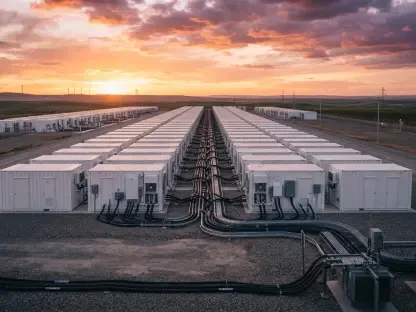
Microgrids are also becoming a standard feature for resilient AI infrastructure, combining local generation with large-scale battery storage and sophisticated control systems. These systems allow a data center to disconnect from the main grid during periods of high stress, peak pricing, or utility-driven curtailment, ensuring that training runs are never interrupted. By managing their own energy ecosystem, operators gain a significant advantage in both uptime and cost predictability, as they can arbitrage energy prices or sell excess capacity back to the grid during low-demand periods. The integration of massive battery arrays also provides the fast-acting power needed to smooth out the sudden load changes inherent in AI processing. This transition toward self-generation and decentralized management represents a fundamental shift in the identity of tech companies, as they are now forced to become energy experts to ensure their digital survival.
Optimizing Efficiency and Workload Management
Software Innovation: Carbon-Aware Platforms
Beyond the search for more power, the industry is focusing heavily on making AI models and their training processes significantly less energy-intensive. Developers are creating “carbon-aware” scheduling platforms that automatically shift non-urgent computing tasks to times of the day when renewable energy is most abundant on the grid. This software-led approach helps to mitigate the environmental impact of massive training cycles without sacrificing overall progress or increasing the load during peak utility hours. By synchronizing heavy workloads with the peaks of wind and solar production, companies can reduce their carbon footprint and take advantage of lower energy costs. This intelligent management of compute time is becoming an essential tool for any organization looking to scale its AI capabilities in a responsible and financially sustainable manner.
Hardware optimization is also playing a critical role in the efficiency push, with a move toward smaller, more specialized AI models that require far less energy per calculation. New chip architectures are being designed specifically to reduce power waste during idle periods and to maximize the performance-per-watt of every operation. These specialized chips often strip away the general-purpose features of traditional CPUs and GPUs in favor of streamlined circuits that only handle the specific mathematical functions required for neural networks. These efficiencies are essential for maintaining the economic viability of large-scale AI deployments, as they allow for more “intelligence” to be generated from the same amount of electricity. As the industry matures, the focus is shifting from raw power and model size to the more sophisticated metric of energy-adjusted performance, which better reflects the real-world constraints of the modern era.
Model Refinement: Specialized Hardware Efficiency
The drive for efficiency is also manifesting in the development of model-pruning and quantization techniques, which reduce the size and complexity of AI models without a significant loss in accuracy. By making these models lighter, they require fewer computational cycles to provide an answer, which directly translates into lower energy consumption during the inference phase. This is particularly important as AI moves from central training facilities to edge devices and consumer electronics, where power and heat constraints are even more rigid. Software engineers are working closely with hardware designers to ensure that the mathematical shortcuts taken in the code can be fully exploited by the silicon, creating a synergistic effect that drives down total power demand. This holistic approach to efficiency is proving that software ingenuity can, in some cases, partially offset the physical limitations of the power grid.
The industry is also seeing a rise in specialized AI silicon that moves data more efficiently between memory and processing units, a common source of energy waste in traditional computing architectures. By reducing the physical distance and energy required for data movement, these new designs can significantly lower the overall power profile of a data center. These innovations are being driven by a realization that simply adding more chips is no longer a viable path to scaling if each chip consumes hundreds of watts of power. Instead, the focus has shifted to “doing more with less,” where every watt consumed must contribute directly to productive computational work. This transition to highly optimized hardware and software stacks is allowing the industry to continue growing even as the total available power becomes a scarcer and more expensive resource.
The Shifting Geography of the AI Industry
The Nordic Migration: Cold Climates and Renewables
The saturation of traditional markets has driven a massive influx of investment into regions with abundant, cheap energy and naturally cool climates, most notably the Nordic countries. Locations in Sweden, Norway, and Finland offer a unique combination of stable hydropower reserves and low ambient temperatures, which significantly reduces the energy required for cooling. By utilizing the cold outside air for much of the year, operators in these regions can achieve much lower Power Usage Effectiveness (PUE) ratings than their counterparts in warmer climates. This move allows tech companies to tap into some of the most stable and carbon-neutral grids in the world, providing a long-term solution to the energy constraints faced in more traditional tech hubs. The shift to the Nordics is not just about cost but about the long-term security and sustainability of the power supply.
However, moving massive compute operations to these remote northern locations involves significant trade-offs, particularly regarding the time it takes for data to travel to major population centers. Companies must carefully balance the need for cheap, clean power with the requirement for fast response times for their global user base, a challenge known as the “latency-energy trade-off.” This has led to the adoption of a two-tier infrastructure strategy where the intensive training of AI models happens in remote, energy-rich areas, while the live “inference” or user-facing tasks stay closer to major metropolitan areas. This hybrid approach allows firms to maximize their energy efficiency during the most power-hungry phases of development while still providing a high-quality experience for their customers. The result is a more globally distributed network of data centers that are strategically located to optimize for both physics and economics.
Infrastructure Strategy: Training Versus Inference
The distinction between training and inference is becoming a primary factor in where new infrastructure is built and how it is connected to the grid. AI training, which requires months of sustained high-power usage, is being increasingly pushed toward regions with “baseload” energy surpluses, such as those with significant nuclear or geothermal assets. These sites do not need to be near the end-user, as the “output” of the training process is simply a digital model that can then be easily transferred elsewhere. In contrast, the inference phase—where the model actually answers a user’s question—needs to be located as close to the user as possible to ensure a seamless and responsive experience. This requires a much broader network of smaller, localized data centers that can operate within the power constraints of existing urban grids.
This two-tier strategy is reshaping the telecommunications landscape, as it requires massive high-speed data links between the remote training hubs and the urban inference sites. The demand for “backhaul” capacity is skyrocketing as models are constantly updated and deployed across these distributed networks. This creates a new set of challenges for network providers, who must now build high-capacity fiber routes to locations that were previously considered unimportant. The geographic shift is also impacting regional economies, as remote areas that were once dependent on traditional industries are now becoming high-tech hubs for the AI revolution. This digital migration is creating a new global map of technological power, where the regions that can provide the most stable and affordable electricity are becoming the new centers of the digital economy.
The Regulatory and Policy Environment
Grid Governance: New Tariff Structures
Governments and regulatory bodies are beginning to intervene more aggressively to ensure that the massive power needs of AI do not drive up electricity costs for regular citizens or destabilize local grids. Regulators are introducing new tariff structures that require tech companies to pay a much larger share of the total cost for grid upgrades and maintenance. These policies are designed to prevent the “socialization” of infrastructure expenses, where residential taxpayers would otherwise end up subsidizing the expansion of the utility network to benefit large corporations. By forcing data center operators to internalize these costs, regulators hope to incentivize more efficient building practices and more responsible location choices. These new financial mandates are adding another layer of cost and complexity that companies must navigate when planning their next multi-billion dollar project.
In addition to financial measures, some jurisdictions are implementing stricter environmental and efficiency standards that data centers must meet to receive a license to operate. These rules often mandate specific levels of water usage efficiency and carbon intensity, effectively banning the use of older, less efficient technologies in new facilities. This regulatory pressure is accelerating the adoption of liquid cooling and other advanced technologies, as the cost of compliance is now a mandatory part of doing business. Governments are also looking at how they can leverage the massive investment power of the tech industry to help meet national renewable energy goals. In many cases, new data center permits are only granted if the operator also agrees to fund a corresponding amount of new green energy generation, creating a “linkage” between digital growth and environmental progress.
Grid Resilience: Curtailability and Mandates
In some regions, new laws are being enacted that require large data centers to be “curtailable,” meaning they must have the technical capability to shut down or reduce their power consumption during energy emergencies. This turns the data center into a participant in grid reliability, as they can act as a massive “demand-response” tool for utilities during heat waves or periods of low renewable generation. While this adds a layer of operational risk for the AI company, it is often the only way to get a new project approved in areas where the grid is already operating near its limit. These mandates require operators to build in even more flexibility and redundant backup capacity to ensure their internal workloads are not permanently damaged when the grid requires them to scale back.
This regulatory environment is also fostering a closer partnership between the tech industry and utility providers, as they must work together to manage the daily fluctuations of the electrical network. Some companies are even exploring the idea of using their massive on-site batteries to help stabilize the grid, providing “frequency regulation” services that help prevent blackouts. This evolving relationship is turning data center operators from simple consumers into critical components of the modern energy system. However, the complexity of navigating these different regulatory regimes across multiple countries and states is becoming a major administrative burden for global tech firms. Success in the AI era now requires a sophisticated legal and policy team that can manage these shifting mandates while still maintaining a competitive pace of technological development.
Secure and Resilient Energy Strategies
The industry recognized that energy management had evolved from a simple facility expense into a defining factor for corporate survival and strategic dominance. By the middle of the decade, leaders in the sector moved to integrate power procurement and grid stability directly into the core of their technological roadmaps. Organizations that failed to secure a sustainable and reliable power strategy found themselves unable to compete, as electricity became the ultimate currency of the digital age. This transition prompted massive investments in decentralized generation and advanced thermal systems, which eventually allowed the AI revolution to continue without overwhelming legacy utility grids. The lessons learned from this era highlighted the necessity of a holistic approach where software, hardware, and infrastructure worked in concert to overcome physical limits. Stakeholders eventually shifted their focus toward long-term resilience, ensuring that the next wave of innovation remained decoupled from the vulnerabilities of aging energy systems. In doing so, the industry established a more robust foundation for a world where computational power and physical energy are inextricably linked.