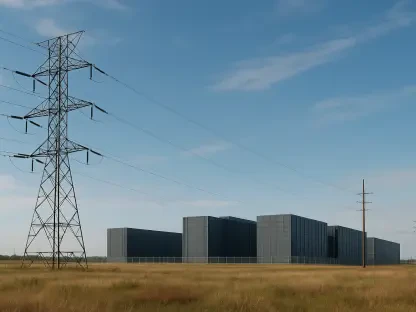

The parched landscapes of South Texas have long served as a stark reminder that the Rio Grande is no longer the reliable lifeline it once was for the millions of residents and thriving agricultural industries that call this border region home. With the river currently supplying approximately ninety percent of the water used across the Rio Grande Valley, the systemic vulnerability of the area has reached a critical breaking point. To address this looming catastrophe, the RGV-Desal project has emerged as a massive billion-dollar initiative designed to provide a drought-proof alternative for the region. Situated at the northern end of South Padre Island, this facility is engineered to produce fifty million gallons of fresh drinking water every single day, effectively mirroring the scale of the largest desalination plants in the country. By utilizing the vast resources of the Gulf of Mexico, the project aims to fundamentally shift the region toward a more sustainable and secure future for all.
Private Investment: Shifting the Financial Burden
One of the most distinctive aspects of the RGV-Desal initiative is its financial architecture, which deviates from the traditional reliance on taxpayer-funded bonds and public debt. Instead, this one-billion-dollar facility is structured as a private venture between U.S. Desalination LLC and IDE Technologies, marking a significant departure from how massive infrastructure is typically developed in Texas. By utilizing private equity, the developers are absorbing the substantial financial risks associated with the design and construction phases, ensuring that local taxpayers are not left with the bill if the project faces delays or technical hurdles. However, the long-term viability of this private model remains contingent on securing robust water purchase agreements with local municipalities and industrial entities. These entities must decide if the high upfront cost of desalination is a justifiable investment in exchange for a guaranteed water supply that remains unaffected by the droughts.
To achieve the goal of converting seawater into high-quality drinking water, the facility will implement state-of-the-art reverse osmosis technology on a scale rarely seen in the United States. This process involves forcing seawater through specialized semi-permeable membranes at extremely high pressure, effectively stripping away salts and other impurities to leave behind fresh water. While this method is renowned for its reliability and its ability to function regardless of rainfall totals or river levels, it is also energy-intensive and mechanically complex. The technical success of the plant depends on maintaining these sensitive membrane systems while managing the massive energy requirements needed to power the high-pressure pumps. Despite these operational demands, project leaders assert that the technological maturity of reverse osmosis makes it the most viable path forward for a region that can no longer gamble on the erratic flows of a dying river system that is increasingly strained by growth.
Economic Viability: Balancing Cost and Necessity
While the promise of a drought-proof water supply is undeniably attractive, the economic reality of seawater desalination presents a formidable challenge for regional water managers. Current estimates indicate that water produced through this billion-dollar facility could cost three to four times as much as traditional treated surface water or even brackish groundwater. This significant price gap stems from the high energy costs and the specialized infrastructure required to handle corrosive saltwater environments over many decades of operation. For cities across the Rio Grande Valley, the decision to integrate this expensive resource into their portfolios involves a complex balancing act between affordability for residents and the necessity of industrial growth. If local economies continue to attract water-intensive sectors, such as advanced manufacturing or large-scale data centers, the higher cost of desalinated water may eventually be viewed as a necessary insurance policy against the total depletion of existing freshwater reservoirs in the area.
Beyond the financial considerations, the RGV-Desal project must navigate a rigorous regulatory environment to ensure that the coastal ecosystem of South Padre Island is protected. Two primary environmental concerns dominate the conversation: the impact of the seawater intake system on local marine life and the safe disposal of brine, which is the highly concentrated salt byproduct of the desalination process. State regulators require extensive proof that the intake pipes will not inadvertently trap or kill small organisms that form the base of the marine food web. Additionally, the discharge of brine must be managed with precision to avoid creating hypersaline zones that could disrupt the delicate balance of the Gulf’s coastal waters. Developers are tasked with implementing advanced diffusion technologies that quickly mix the brine back into the open ocean, minimizing the footprint of the plant’s operations and maintaining public trust for long-term production needs.
Regional leaders collaborated on a comprehensive strategy that transformed the way South Texas approached its most critical resource challenges during this pivotal era. They prioritized the development of the seawater desalination plant as a means to decouple the local economy from the fluctuations of the Rio Grande. As the facility reached its full operational capacity, the dependence on river water decreased, allowing for more stable agricultural production and industrial expansion. Scientists and environmental engineers worked together to refine the brine disposal processes, ensuring that the Gulf of Mexico remained a vibrant and healthy ecosystem. The construction of a sprawling pipeline network successfully connected the coastal facility to inland municipal hubs, providing a high-volume supply that was previously unattainable. Ultimately, these actions established a resilient framework that protected the region from the devastating effects of persistent drought, securing a reliable water future for all inhabitants.