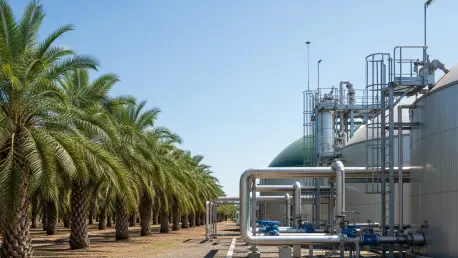

Millions of metric tons of organic waste from palm oil production are being transformed into a high-performance energy source that could redefine the power grid in Southeast Asia. Across the expansive plantations of Malaysia, the industry has historically struggled with the management of a liquid byproduct known as Palm Oil Mill Effluent, or POME. This viscous, organic-rich substance typically requires extensive treatment to prevent ecological damage, yet it is now the primary feedstock for a groundbreaking renewable energy initiative. The Terengganu State Palm Oil Mill Biogas Upgrading Project represents a pioneering effort between Malaysia and South Korea to turn this environmental liability into a valuable resource. By utilizing advanced anaerobic digestion and filtration systems, the project captures methane that would otherwise contribute to global warming. This transition from waste to energy marks a significant shift in regional industrial policy, highlighting how agricultural residues can fuel a sustainable and carbon-neutral future for the entire nation.
The Partnership Model: Building a Strategic Waste-to-Energy Alliance
The success of the Terengganu initiative depends on a strategic partnership that effectively merges Malaysian biological assets with South Korean engineering expertise. This collaboration is led by the Malaysian Bioeconomy Development Corporation in conjunction with a specialized South Korean consortium featuring Polaris Bio and the Sudokwon Landfill Site Management Corporation. The project serves as a model for international cooperation, where Korean partners provide the necessary capital and sophisticated gas-upgrading technologies while local Malaysian entities manage the supply chain and site integration. This synergy ensures that the technical systems are perfectly adapted to the unique characteristics of local palm oil mills. High-level support from both governments was recently solidified during a diplomatic ceremony in Putrajaya, where officials emphasized the role of such alliances in driving green growth. By combining resources, these nations are setting a new benchmark for how cross-border projects can solve industrial challenges.
Beyond the technical exchange, this “waste-to-wealth” model is fostering a robust circular economy that benefits both the agricultural and energy sectors. By converting mill effluent into Bio-Compressed Natural Gas, the partnership has created a new revenue stream for plantation owners who previously viewed waste management solely as a financial burden. This economic shift encourages wider adoption of green technologies across the industry, as the incentive is no longer just environmental compliance but also fiscal profitability. Local Malaysian firms are gaining hands-on experience with world-class renewable systems, which enhances the domestic workforce’s technical literacy in sustainable energy. Meanwhile, South Korean participants are gaining a foothold in the Southeast Asian market, demonstrating the scalability of their biogas solutions in a real-world setting. This mutual benefit ensures the long-term stability of the project, as both parties are deeply invested in the commercial and ecological success of the biogas upgrading infrastructure.
Infrastructure Growth: Economic Scale and Technical Implementation
The Terengganu facility is merely the first step in a broader RM700 million investment plan aimed at revolutionizing the way Malaysia produces and consumes energy. This significant financial commitment is earmarked for the development of twenty additional biogas upgrading plants, which will eventually form a nationwide network of clean energy production. By decentralizing energy generation and placing it close to the source of the feedstock, the country can reduce its reliance on centralized fossil fuel plants and expensive transmission lines. This rollout is also expected to stimulate the local economy by creating high-skilled positions in the renewable energy sector, from mechanical engineering to environmental monitoring. National energy security is a key driver of this expansion, as domestic biogas can replace imported natural gas in various industrial applications. As the network grows, it will provide a stable and predictable energy supply that is shielded from the volatility of international hydrocarbon markets, ensuring economic stability.
Technically, the project focuses on refining raw biogas into Bio-CNG, a high-purity fuel that is indistinguishable from conventional natural gas in terms of performance. The upgrading process involves removing carbon dioxide, water vapor, and other impurities to ensure the final product meets the strict specifications required for industrial and automotive use. One of the primary advantages of this fuel is its complete compatibility with existing natural gas infrastructure, including pipelines, storage tanks, and internal combustion engines. This means that factories and transportation companies can switch to renewable biogas without the need for costly upgrades to their current equipment or hardware. By providing a “drop-in” solution, the project lowers the barrier to entry for businesses looking to reduce their carbon footprint. The ability to use the same distribution networks that already serve fossil fuels makes Bio-CNG an incredibly efficient and pragmatic choice for a rapid transition to a low-carbon economy across the country.
Environmental Milestones: Global Climate Goals and National Roadmap
This initiative holds the distinction of being the first Malaysia-Korea project recognized under Article 6.2 of the Paris Agreement, providing a clear regulatory path for international carbon trading. Such recognition is vital for the project’s financial and legal standing, as it allows for the formal transfer of carbon credits between the participating nations. This alignment with global climate frameworks is matched by its integration into the National Energy Transition Roadmap, which sets an ambitious target for renewable energy to constitute forty percent of the energy mix by 2035. With commercial operations scaling up toward the 2029 target, the project is on track to eliminate 384,000 tonnes of greenhouse gas emissions every year. This reduction is a cornerstone of the national strategy to modernize the agricultural sector while meeting international environmental obligations. By formalizing these efforts through international treaties, the project ensures transparency and accountability in its contribution to global climate mitigation efforts.
The successful implementation of the Terengganu biogas project demonstrated how targeted international partnerships effectively resolved the long-standing tension between industrial waste and environmental health. Stakeholders realized that the integration of Bio-CNG technology into the existing palm oil supply chain was not only a technical necessity but also a strategic economic advantage. The project moved the discourse from theoretical sustainability to practical, large-scale application, providing a replicable model for other methane-heavy industries across Southeast Asia. Experts concluded that the primary lesson learned was the importance of aligning national energy roadmaps with private sector technical capabilities to ensure long-term project viability. Future considerations focused on expanding this decentralized energy model to include other agricultural byproducts, thereby deepening the impact of the circular economy. These early successes paved the way for a more resilient energy grid, ensuring that subsequent investments prioritized infrastructure compatibility and cross-border regulatory alignment for maximum climate impact.