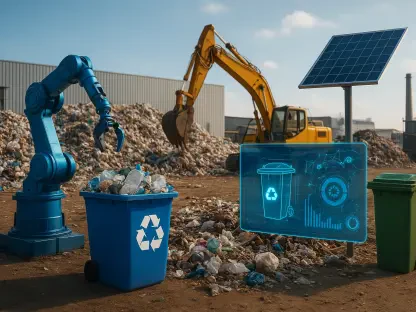

The towering cranes and skeletonized steel frames of modern urban development often distract the public eye from a silent, petrochemical crisis accumulating beneath the gravel and scaffolding of every major job site. While heavy machinery and steel beams dominate the visual landscape, a more persistent material is quietly piling up in the shadows: plastic. In recent cycles, the market absorbed approximately 7.1 million metric tons of plastic, and a staggering 22.3% of that volume was dedicated to construction-related products. For decades, the industry has operated on a linear “dispose-only” model, treating high-quality polymers as mere debris rather than assets.
However, current data suggests that the sector is not just a major polluter but also a massive, untapped reservoir of recyclable resources that could redefine the economics of building materials. The sheer volume of waste generated by single-use protective films and structural components represents a significant lost opportunity for resource recovery. As the industry faces mounting pressure to reduce its environmental footprint, the focus is shifting toward the recovery of these high-value polymers that were once destined for a landfill.
The Heavy Toll of the Hidden Job-Site Waste Stream
The environmental cost of modern building practices is often obscured by the temporary nature of construction. Every delivery arrived wrapped in protective films, and every pallet was bound by high-tensile strapping, creating a constant flow of synthetic waste. Historically, this stream remained hidden because it was mixed with wood, drywall, and concrete in massive, unsorted bins. This lack of separation ensured that even the most durable plastics were contaminated beyond the point of easy recovery, forcing a reliance on virgin plastic production for new projects.
Recent economic shifts have highlighted that treating these materials as trash is no longer sustainable. Experts have noted that the construction industry has remained one of the largest consumers of plastic globally, yet its recycling rates have lagged behind the packaging and automotive sectors. By continuing this linear trajectory, firms have effectively discarded millions of dollars in raw materials every year. The transition to a circular model requires a fundamental change in how site managers view the contents of their waste containers.
Why the Construction Industry Is a Sleeping Giant for Circularity
The shift toward a circular economy depends on identifying high-volume waste streams that have been historically overlooked. Construction sites are uniquely positioned for this transition because they generate vast quantities of specific, high-value plastics like Low-Density Polyethylene (LDPE) and Polypropylene (PP). A groundbreaking 14-month pilot study conducted by Light House in Vancouver revealed that construction sites can serve as a viable source for premium recycled materials. By connecting real-world job site logistics with the manufacturing sector, the industry addressed the global plastic crisis while securing a domestic supply of raw materials.
This untapped potential is particularly relevant as global supply chains remain volatile. Recovering plastic from local job sites provides a steady, predictable stream of feedstock for manufacturers, moving beyond the fragmented research that has previously limited North American progress. When companies began to view these materials as commodities rather than costs, the financial incentive for circularity became clear. This realization transformed the construction site from a waste generator into a critical node in the manufacturing supply chain.
Decoding the Pilot: High Recyclability Versus Operational Realities
During the Vancouver pilot, researchers monitored eight construction sites and successfully diverted roughly 38,000 kilograms of plastic from landfills. The analysis produced a startling revelation: 77% of the plastics collected were technically recyclable. These materials primarily consisted of lumber wraps, pallet strapping, and geotextiles. However, the study also identified a significant 21% contamination rate, often caused by the harsh realities of a heavy industrial environment. Materials dragged through mud or exposed to the elements quickly lose their market value, proving that the success of a recycling program is often determined by handling.
Operational success required a shift in how workers interacted with packaging materials the moment they were removed from a shipment. If a lumber wrap remained on the ground for even a few hours, it risked becoming too soiled for standard processing equipment. The pilot demonstrated that clean, source-separated plastics have a high market demand, but achieving that purity requires a disciplined approach to site management. This highlighted the friction between fast-paced construction schedules and the precision needed for effective material recovery.
Breaking the Infrastructure Barrier and Embracing Circularity-by-Design
Current recycling infrastructure was largely designed to handle residential waste, leaving industrial films and packaging without a clear processing pathway. Experts from organizations like Recycling Alternative argued that specialized facilities were necessary to manage the unique volume and contamination profiles of construction waste. Despite these hurdles, the pilot demonstrated a successful “closed-loop” narrative. LDPE and PP waste were processed into plastic pellets, which were then used to manufacture specialized devices that reduce the amount of cement required in new projects.
This “circularity-by-design” proved that the waste from one job site could directly become a high-performance resource for the next, provided the industry invested in sector-specific recovery systems. The success of this model hinged on the ability of manufacturers to trust the quality of the recycled feedstock. When construction waste was processed into standardized pellets, it became indistinguishable from virgin material in terms of performance. This breakthrough allowed for the creation of a local, closed-loop system that reduced both carbon emissions and the need for raw material extraction.
Strategic Frameworks for Implementing a Circular Plastic System
Closing the loop required a combination of on-site logistical precision and external market incentives. Construction firms maximized recovery by placing collection bins in high-traffic, convenient locations and using divided roll-off containers to save space on cramped urban sites. Beyond the job site, government intervention remained essential to stabilize the market. This included implementing landfill bans on specific recyclable plastics and establishing variable tipping fees that made sorted waste more affordable than mixed debris. Public procurement standards that prioritized products with recycled content provided the market push needed for competition.
The industry moved toward a future where every project plan included a comprehensive material recovery strategy. Stakeholders recognized that the transformation of the sector depended on the cooperation of haulers, manufacturers, and policy creators. The successful implementation of these frameworks ensured that the high-quality polymers used in construction remained within the economy for as long as possible. Ultimately, the industry shifted its perspective, viewing the job site not just as a place of assembly, but as a primary source of the very materials needed to build the next generation of infrastructure.