
Massachusetts Commits to a Resilient Grid Through Record-Breaking Storage Contracts
Massachusetts has solidified its position at the forefront of the global energy transition by finalizing landmark utility-scale storage contracts that redefine regional grid resilience. The state’s primary utility providers—Eversource Energy, National Grid, and Unitil—recently filed long-term agreements for three massive projects that serve as a blueprint for modern energy management. This initiative integrates approximately 1,068 MW of power capacity and 4,472 MWh of storage into the New England power pool, aiming for full operational status by the end of the decade. By securing these deals, the Commonwealth successfully navigated the complex intersection of regulatory mandates and technological scalability. This development marks a transition from experimental pilot programs to an industrialized approach that manages, stores, and deploys clean power with unprecedented precision.
The Evolution of New England’s Power Landscape and the Path to 2030
The transition to a decentralized and flexible power grid represents a necessary response to the historical constraints of the Northeast energy market. For decades, the region struggled with transmission bottlenecks and a heavy reliance on high-emission peaking plants that only operated during extreme weather events. As Massachusetts accelerated its pursuit of the decarbonization goals established by the Department of Energy Resources, the vulnerability of the old system became increasingly apparent. Earlier legislative efforts provided the framework, but the current procurement cycle represents a significant leap in ambition. These contracts address the immediate need for carbon-free load balancing while preparing the infrastructure for a massive influx of renewable generation.
Analyzing the Impact and Mechanics of the Storage Procurement
Technical Prowess: Analyzing the Scale of Trimount, Energizar, and Salt Cod
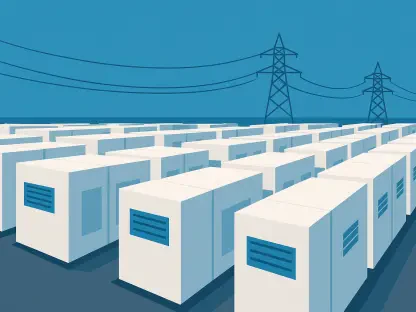
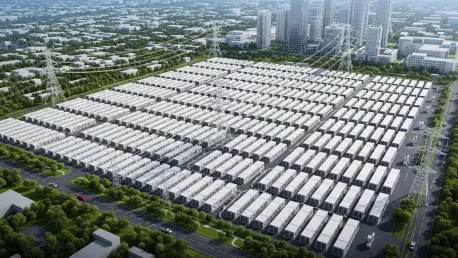
The procurement is anchored by three landmark installations that establish a new benchmark for energy storage in the Northeast. Jupiter Power’s Trimount project in Everett, with a massive 700 MW/2,800 MWh capacity, stands as the centerpiece of the initiative and the largest facility of its kind in the region. Flatiron Energy adds significant depth with the 250 MW Energizar facility and the 168 MW Salt Cod project. These installations utilize lithium-ion technology to provide a reliable four-hour discharge duration, which is essential for bridging the gap between peak solar production and evening demand spikes. Together, these assets provide a buffer that ensures a steady supply of energy regardless of weather conditions.
Repurposing the Past: Transforming Industrial Sites into Green Infrastructure
A defining characteristic of this market movement is the intelligent repurposing of retired fossil fuel and industrial sites. The Trimount facility occupies a former oil terminal, while the Salt Cod project utilizes the site of the retired Montaup Power Plant. This strategy leverages existing interconnection points, which significantly reduces the time and cost associated with grid integration. By revitalizing underutilized coastal land, developers minimize the environmental footprint of new construction while maintaining the industrial identity of these energy hubs. This circular approach to infrastructure development demonstrates how legacy assets can be successfully integrated into a modern, sustainable economy.
Economic Viability: Balancing Utility Rates and Grid Reliability
Beyond environmental metrics, these storage deals provide a robust economic foundation for regional energy users. Financial forecasts indicate that the deployment of these batteries will likely lead to a modest reduction in monthly utility bills over the next fifteen years. The projects mitigate expensive transmission congestion costs in southeastern Massachusetts and Greater Boston, which historically drove up prices during peak usage. By providing a carbon-free alternative to traditional peaker plants, the utilities create a more stable and predictable energy market that benefits both commercial and residential sectors. This stability is crucial for attracting long-term industrial investment in the region.
Looking Ahead: The Role of Storage in a Shifting Energy Market
The trajectory for energy storage in the Northeast remains aggressive, with the state targeting 5 GW of capacity by 2030 and 10 GW by 2035. While the regional offshore wind industry has encountered logistical hurdles and project cancellations, the storage sector has demonstrated remarkable resilience and growth. This divergence suggests that battery infrastructure will serve as the primary stabilizer for the grid in the near term. Future trends indicate an increasing focus on long-duration storage technologies and regulatory adjustments designed to incentivize private investment in grid-edge modernization. As the market matures, the integration of these “giant batteries” will become the standard for utilities across the country.
Strategies for Success: Navigating Utility-Scale Storage Deployment
Energy professionals can derive several actionable insights from the Massachusetts procurement model. The successful focus on brownfield redevelopment provides a clear roadmap for navigating zoning complexities and environmental remediation requirements. Furthermore, the collaboration between state regulators and private utilities illustrates the importance of clear, long-term policy signals in de-risking capital-intensive infrastructure projects. Stakeholders must prioritize projects that offer multiple revenue streams, such as frequency regulation and peak shaving, to maximize the value of storage assets in a competitive market. Embracing a unified approach to grid modernization ensures that technological advancements translate into tangible public benefits.
Final Considerations: Solidifying the Clean Energy Future
The securing of these massive energy storage deals marked a definitive win for Massachusetts and a significant milestone for the broader New England region. By integrating over 1,000 MW of storage capacity, the state effectively future-proofed its grid against the volatility of fossil fuel markets and the intermittency of renewable sources. The transition from oil terminals to battery hubs symbolized a profound shift in priorities, proving that industrial heritage could be successfully reimagined for a green economy. As these projects moved toward completion, they stood as a testament to the power of strategic planning and utility-scale innovation in the fight against climate change. Actionable next steps for the industry involved scaling these models to neighboring states to ensure regional reliability.